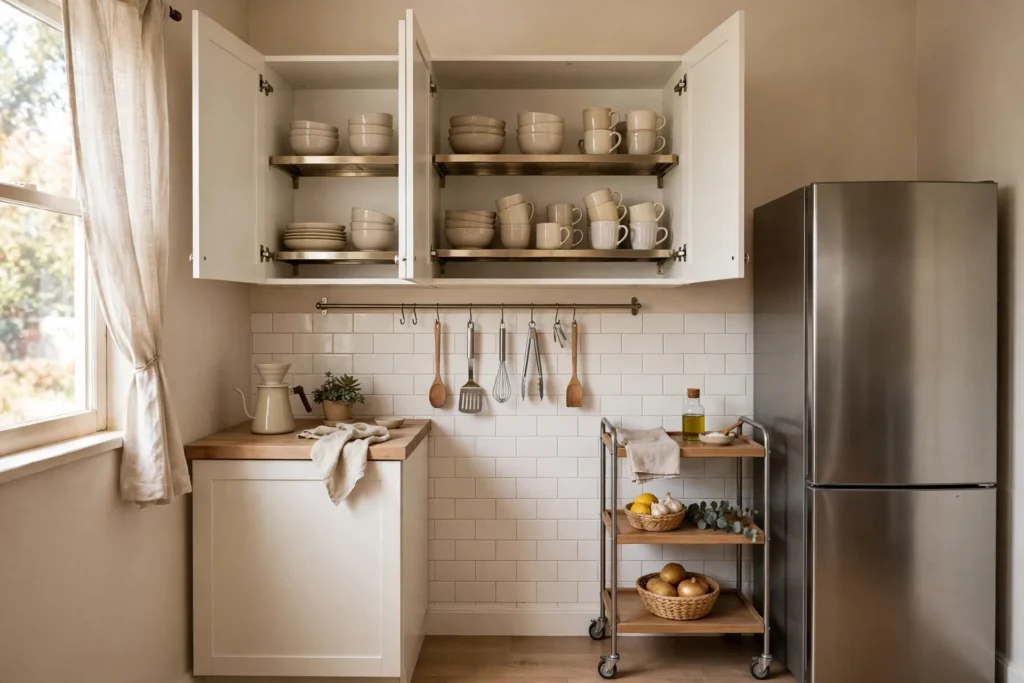

A counter shelf adds a second level to your kitchen counter without any drilling or remodeling. It lifts spices, mugs, and tools off the surface, so you gain storage and keep prep space clear. In this guide, you will learn which shelf types work, what fits on each tier, and how to style them so they look neat, not cluttered.
Why a Counter Shelf Works in Small Kitchens
Small kitchens rarely lack items. They lack surfaces. The average small galley or studio kitchen holds only a small stretch of usable counter, and daily items soon cover it. A shelf riser fixes this by adding vertical storage in the same footprint. As a result, you gain 30 to 50 percent more usable storage without taking extra counter space.
In addition, a countertop shelf needs no drilling, no permanent glue, and no professional help. That makes it ideal for renters, budget kitchens, and anyone who wants change without a remodel. You can move the shelf, fold it flat, or take it with you when you move. For that reason, shelf risers are often the first organizer small kitchen owners buy.
Finally, a shelf keeps daily items within arm’s reach while you cook. Spices, oils, and coffee supplies sit at eye level instead of hiding in deep cabinets. This saves time and cuts the frustration of moving three items to reach one. For a full small kitchen plan, see our guide to small kitchen storage ideas.
Counter Shelf Types: Pick the Right One
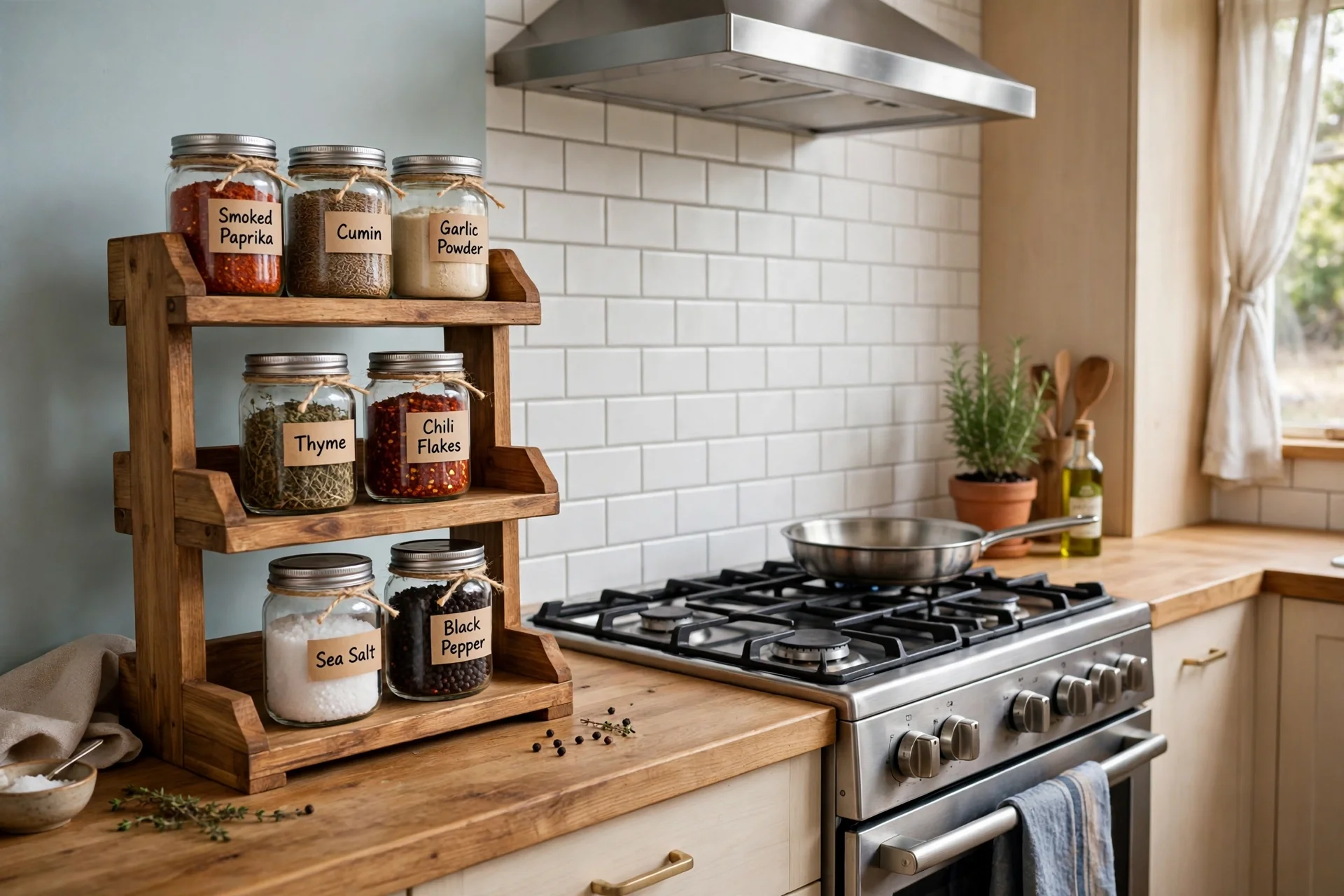
Tiered spice racks suit cooks who reach for seasonings daily. These compact units hold two or three tiers of small jars beside the stove or on a cabinet shelf. They fit standard 4 to 6 ounce spice jars, and they keep the most used seasonings visible. However, they do not suit large bulk canisters, so check jar sizes before you buy.
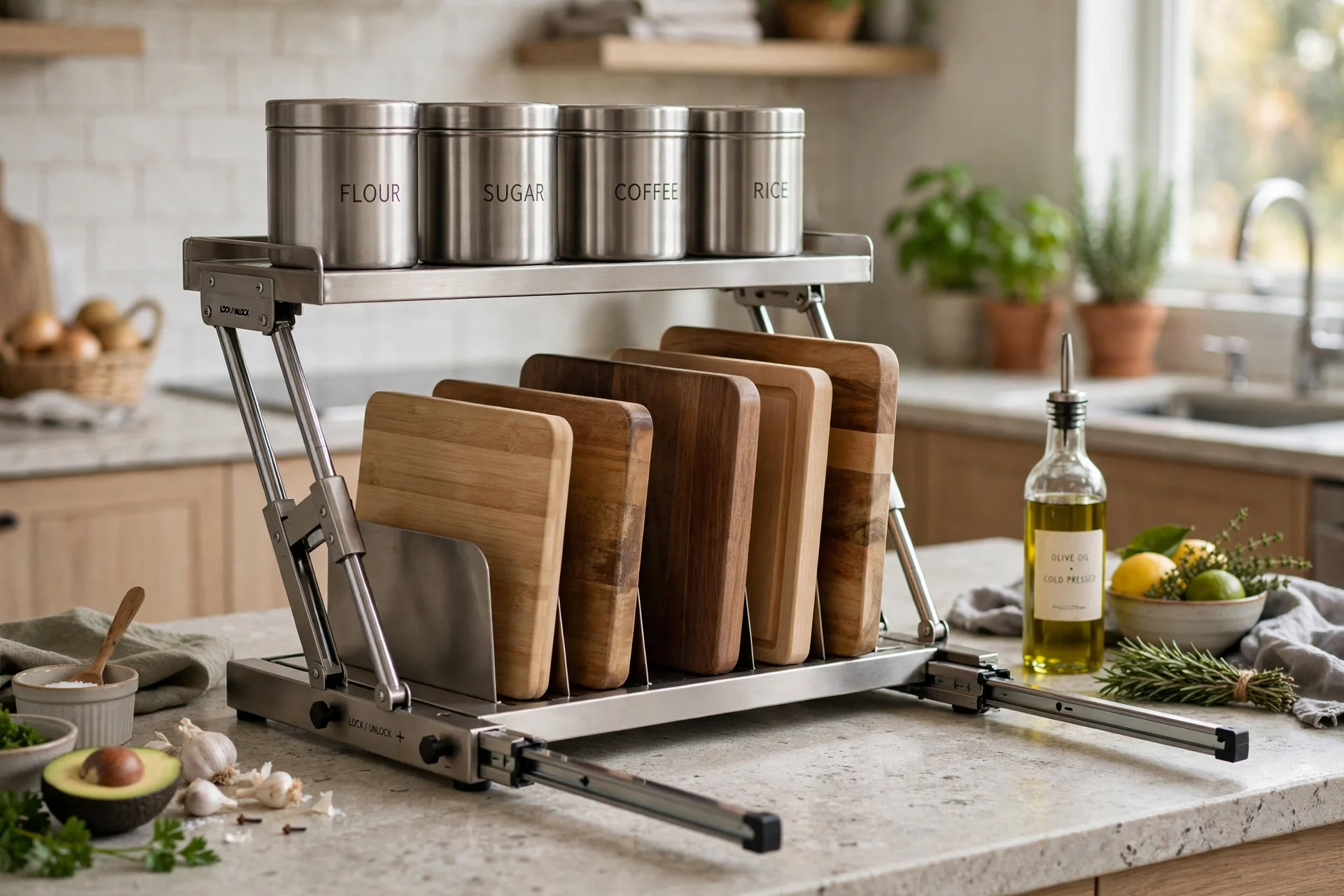
Expandable and stackable risers are the most versatile option. They adjust in width to fit narrow gaps between appliances or wider counter sections. Stackable tiers let you set the height for different items, such as short spice jars on one tier and taller canisters on another. Most small countertop shelves hold 10 to 20 pounds per tier, which covers spices, dishes, and gadgets, but not heavy cast iron. For a full breakdown of shelf types by use case, see the PlugChef guide to countertop shelf ideas.
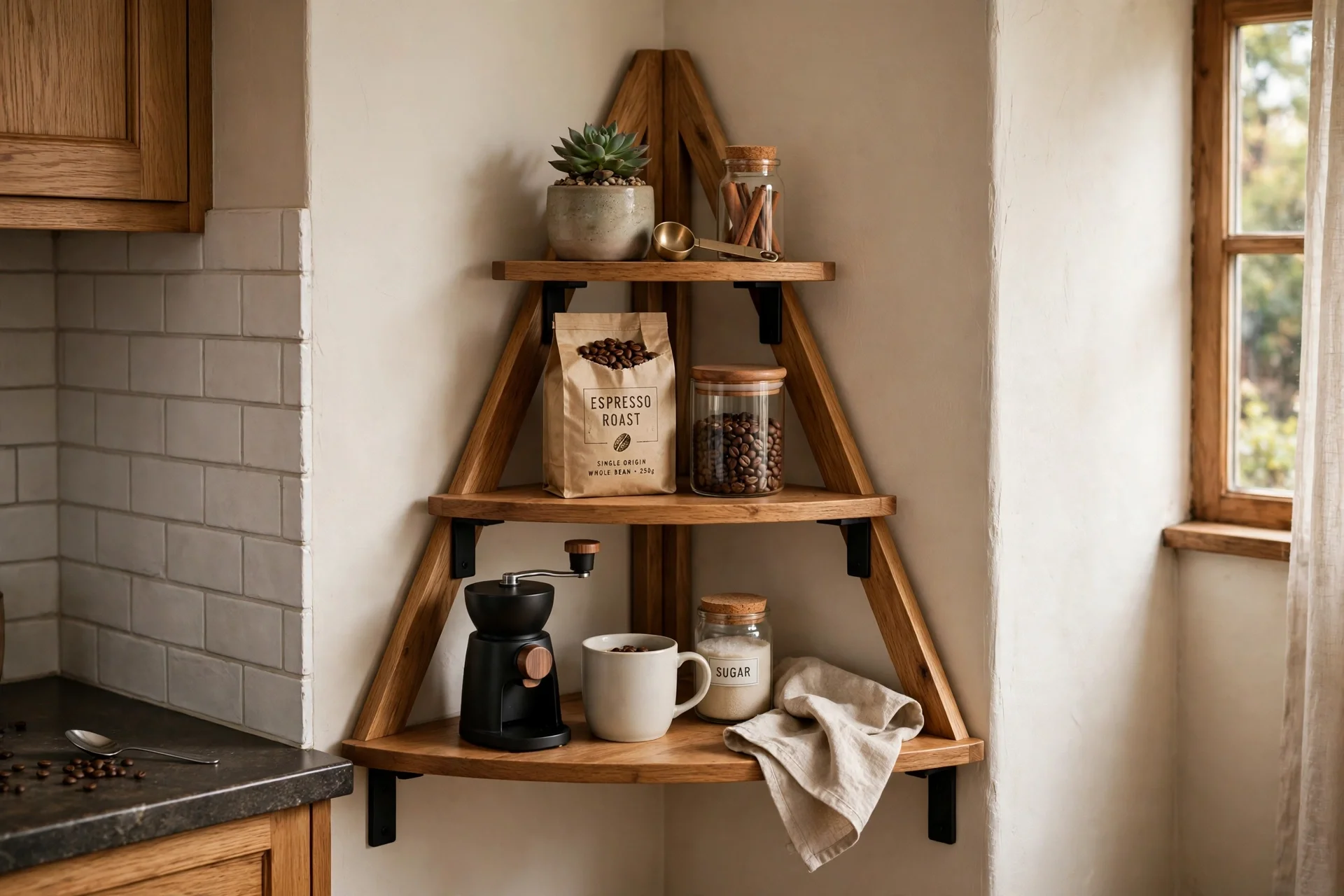
Corner shelves rescue wasted nooks. Slim triangular units fit into 90 degree corners that often collect mail and clutter. They suit coffee supplies, small plants, or baking items. A three tier corner unit can hold a surprising amount, but check its total weight limit first, since corner units often hold less than straight risers.
Foldable and portable shelves suit renters and tiny homes. They fold flat for moving or storage, need no assembly, and work in the kitchen, bathroom, or bedroom. Their weight limit is lower, often around 10 pounds, so keep them for light items like tea, spices, and small jars.
Two pack stackable sets suit a full counter reset. Use one shelf for spices, one for coffee, and one for cutting boards or baking sheets. Matching sets look planned rather than random, and they let you build zones across the counter. For renter friendly systems that need no drilling at all, see our guide to no drill kitchen organisation.
Type Comparison
| Type | Best for | Weight guide | Watch out for |
|---|---|---|---|
| Tiered spice rack | Daily seasonings | Light jars only | Large canisters may not fit |
| Expandable riser | General storage | 10 to 20 pounds per tier | Overloading causes sagging |
| Corner shelf | Wasted nooks | Lower total limit | Heavy items tip the unit |
| Foldable shelf | Renters, moving often | About 10 pounds | Narrow width, light items only |
| Two pack set | Full counter zones | Per tier as listed | Assembly time per shelf |
Measure Before You Buy
Measure four numbers before you shop. First, measure clear counter depth from the backsplash to the front edge. Standard counters run about 25 inches deep, but small kitchens often have only 18 to 24 inches of clear depth once appliances are counted. A shelf deeper than your clear depth will overhang the edge and feel unsafe.
Second, measure clear height under wall cabinets. A riser taller than this gap will not fit, no matter how good the reviews are. Third, measure the width of the gap where the shelf will sit, including space for appliance cords. Fourth, note the weight of the items you plan to store, and compare it with the shelf weight limit.
Also, leave about 2 inches of clearance between tiers. This gap fits most spice jars and small canisters, so you can grab one item without removing a whole shelf. If you store tall bottles, remove one tier or choose a single tall riser instead. Measuring first prevents the most common organizer regret: a shelf that looks right online but fits nowhere at home.
What Fits on Each Tier
The top tier suits light, daily items you grab often. Place spices, tea bags, and small jars here, since they are easy to lift down. Keep the top tier light, since heavy items on top make the whole unit feel tippy. In addition, a light top tier keeps the shelf stable if kids or pets bump the counter.
The middle tier suits medium weight daily tools. Coffee mugs, small canisters, and cooking oils work well here. Group items by use, so coffee supplies share one shelf and baking items share another. This grouping cuts search time while you cook, since each zone holds one job.
The bottom tier suits the heaviest items. Place small appliances, large canisters, and cutting boards low, where weight keeps the unit steady. Never place cast iron skillets or large pots on a high tier. Heavy cookware belongs in lower cabinets or on a sturdy pull out, not on a raised shelf where lifting it is awkward.
For a complete zone by zone method, read the SinkElle guide to small kitchen organization. It explains how to plan prep, cooking, coffee, and landing zones in order, so each shelf earns its place.
Styling a Shelf So It Looks Neat
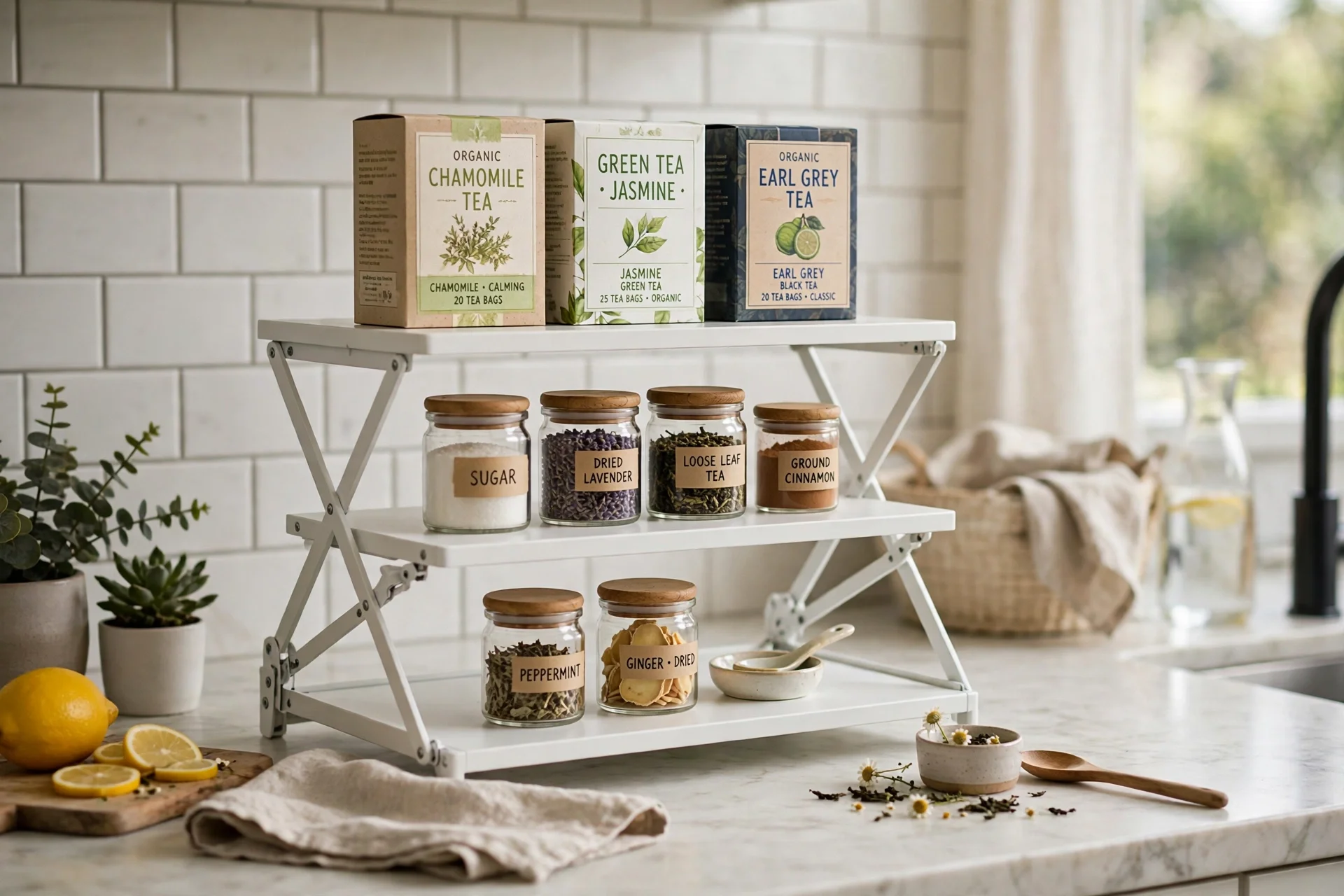
Start by grouping items by use case, not by size. Keep daily coffee supplies on one shelf, baking goods on another, and everyday spices on a third. This grouping looks planned and saves time. Next, use matching containers for dry goods. Uniform glass or ceramic canisters make even a busy shelf look calm, and they keep food fresh.
Leave breathing room on each tier. A shelf packed edge to edge looks cluttered, even when it is organized. Leave one small gap per tier, and remove anything you touch fewer than three times a week. That item belongs in a cabinet, not on the counter. This one rule keeps counters clear for good.
Add one visual anchor per shelf, such as a small plant, a wooden board, or a matching tray. The anchor stops the shelf from looking like a warehouse row. However, keep anchors small, since a large plant or board eats the storage you just gained. A tiny herb pot or a slim tray works best.
For renters, choose freestanding risers over wall mounted rails when leases ban drilling. A countertop tiered shelf does the same vertical work as a wall rail without holes. If you want more no drill ideas, our guide to small kitchen organisation for rented homes covers magnetic, hanging, and over sink options that leave no marks.
Materials, Cleaning, and Safety
Wood shelves look warm and suit farmhouse or rustic kitchens. However, wood needs occasional oiling to resist water damage near the sink or coffee maker. Wipe spills fast, and keep wooden shelves away from constant steam. Sealed wood lasts longer in humid spots than raw wood.
Metal shelves suit high moisture areas best. Metal wipes clean fast, resists warping, and handles steam near the stove. Look for rust resistant finishes and non slip rubber feet, so the shelf stays put on smooth stone or laminate. For stone counters, choose feet with felt pads to avoid scratches.
Engineered wood costs less and comes in many finishes, but avoid thin particleboard that sags after a few months. Check the weight rating and the tier thickness before you buy. Plastic shelves cost least and wipe clean, but they may bend under medium loads. Match the material to the spot: metal near the sink, wood in dry zones, and sturdy engineered wood for budget sets.
Safety matters with raised shelves. If you have kids or pets, secure shelves that hold more than 15 pounds with adhesive mounts to stop tipping. Keep cleaning supplies away from food shelves, and keep knives off open risers. A weekly wipe with a damp cloth removes crumbs and grease, and it keeps the shelf looking new.
A Worked Example: The Coffee Zone
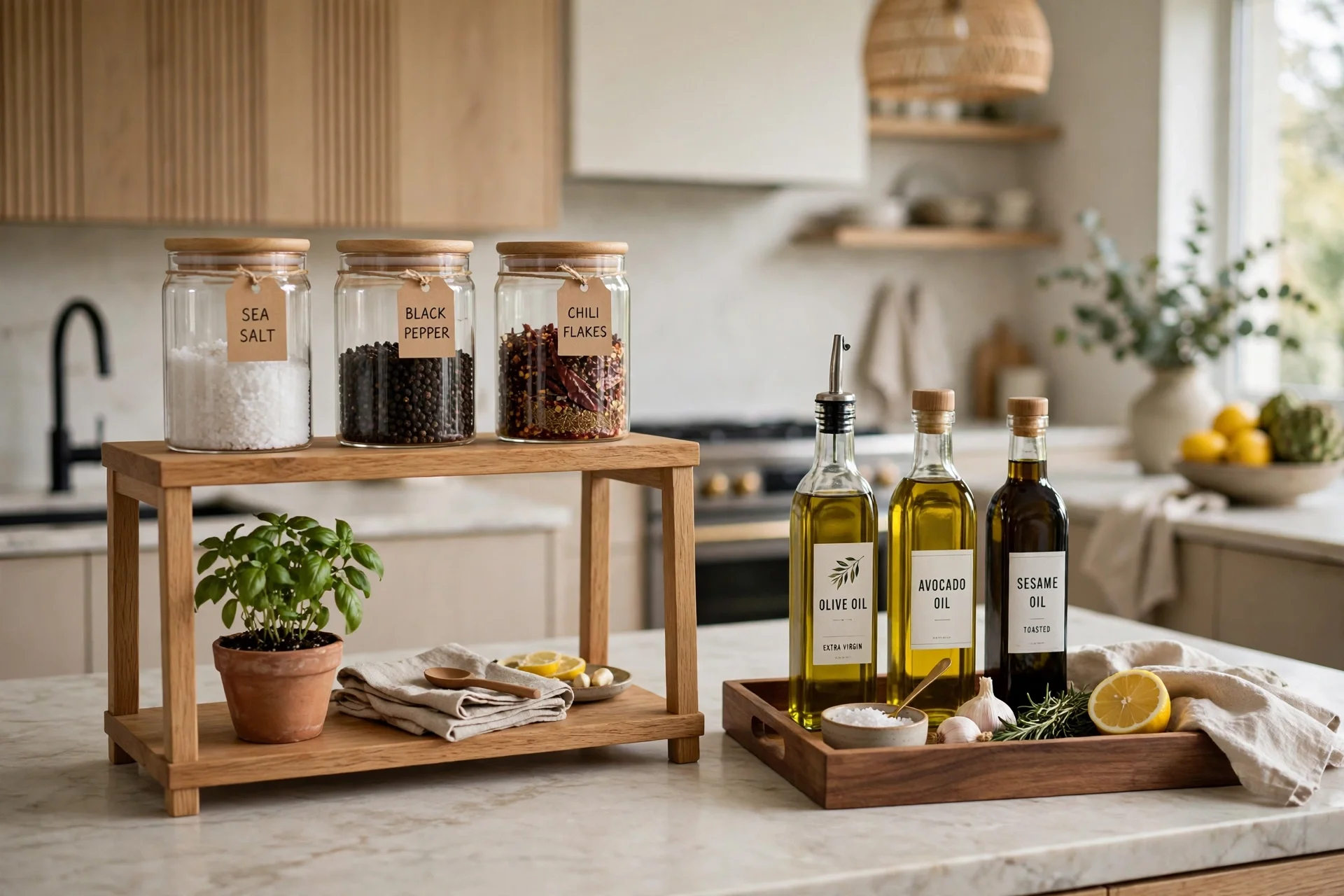
Take a common problem: a coffee maker, mugs, sugar, and filters spread across two feet of counter. Start by clearing the whole zone and wiping the counter. Place a two tier riser beside the coffee maker, not behind it, so you can reach both easily.
Put mugs on the top tier, since they are light and used daily. Place sugar, filters, and spoons on the bottom tier in a small tray, so tiny items stay together. Keep the coffee maker itself on the counter, not on the shelf, since it needs space for steam and refills. This setup frees the rest of the counter for prep, and it keeps the morning routine in one spot.
Now enforce the one in, one out rule. When a new mug arrives, one old mug leaves. This habit stops the coffee zone from growing back into clutter. Photograph the cleared zone once, then compare it each week. The photo shows which items drift back, and that tells you which zone still needs a better home.
Frequently Asked Questions
How much weight can a countertop shelf hold?
Most small countertop shelves hold 10 to 20 pounds per tier, which covers spices, mugs, and small canisters. Check the listed limit for your model, since corner and foldable units often hold less. Keep heavy items like cast iron in lower cabinets, not on raised tiers.
What size shelf fits a small kitchen counter?
Measure clear depth, width, and height before you buy. Standard counters run about 25 inches deep, but small kitchens often have 18 to 24 inches of clear depth. Leave about 2 inches of clearance between tiers so you can grab jars without removing a shelf.
Are stackable risers good for small kitchens?
Yes, stackable risers are one of the most space efficient options for small kitchens. They add vertical storage without taking extra counter footprint. Adjustable widths fit narrow gaps, and removable tiers let you set heights for spices, canisters, or small appliances.
Which material works best near the sink?
Metal works best near the sink, since it resists warping and wipes clean fast. Choose a rust resistant finish with non slip feet. Wood can work if sealed and wiped dry often, but raw wood swells and stains in constant moisture.
Can renters use shelf risers without damage?
Yes, freestanding risers need no drilling, glue, or permanent fixings, so they suit rentals well. Foldable units pack flat when you move. For heavier shelves with kids or pets nearby, use adhesive mounts rated for kitchen use to stop tipping.
How do I stop a shelf from looking cluttered?
Group items by use, use matching containers, and leave one small gap per tier. Remove anything you touch fewer than three times a week, since it belongs in a cabinet. Add one small anchor, like a tiny herb pot, so the shelf looks styled rather than stacked.
Conclusion
In short, a counter shelf is the fastest no drill fix for a crowded kitchen counter. Measure your depth, width, and height first, pick a type that matches your items, and style it by zone with matching containers. Start with one zone this week, such as coffee or spices, and enjoy a clearer counter from the first morning.