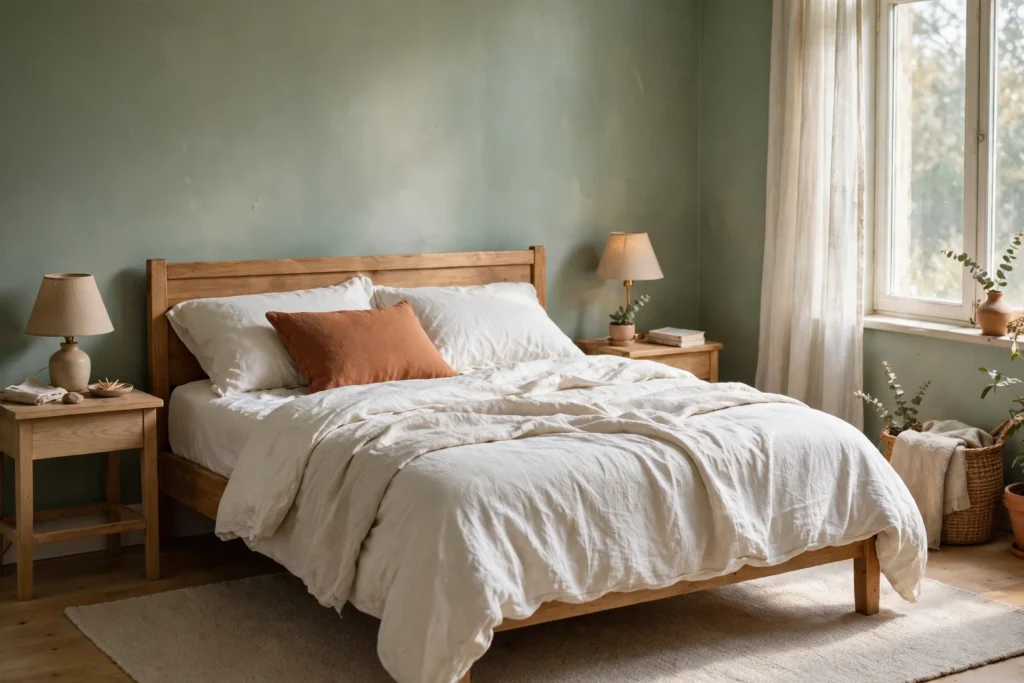
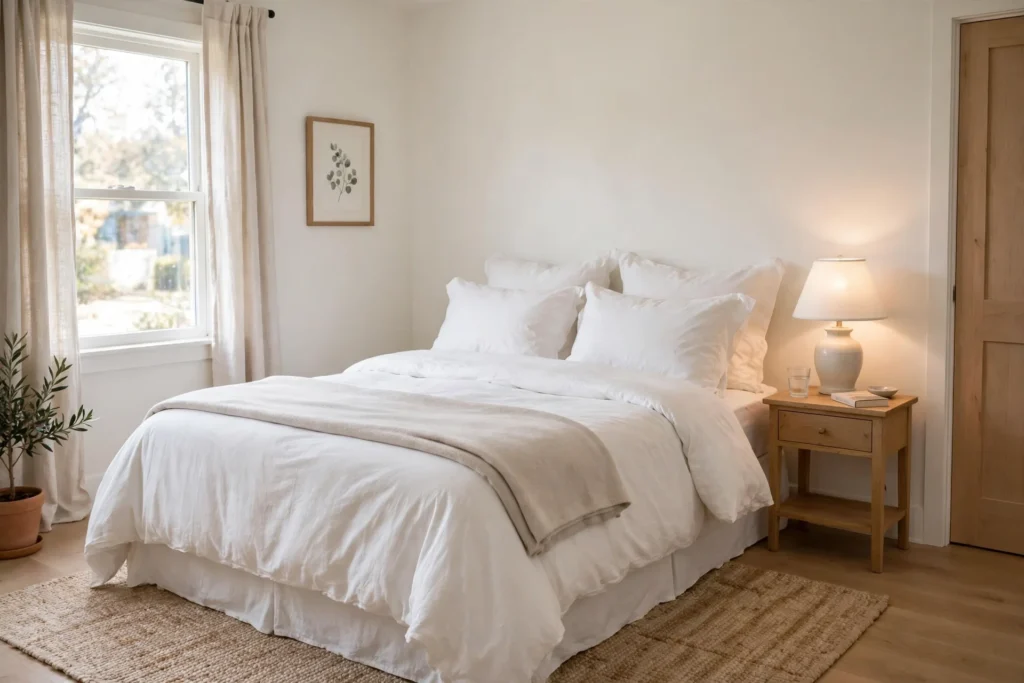
A guest room bed decides whether visitors sleep well or toss all night. It must fit the room, suit the people who stay, and feel welcoming from the first night. In this guide, you will learn how to pick the right size, type, mattress, and bedding for a spare room of any size.
Guest Room Bed Sizes: The Full Chart
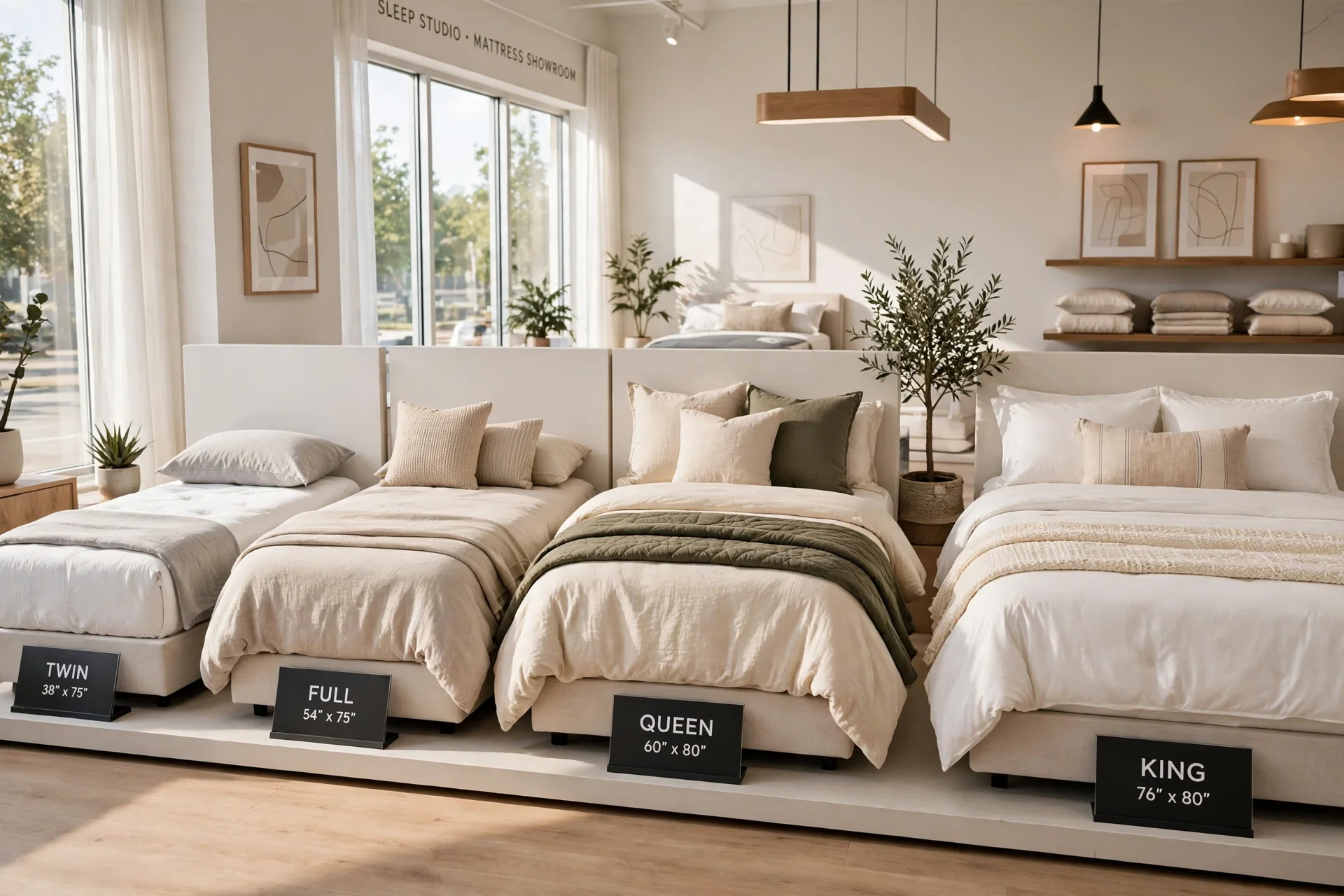
Start with the standard US mattress sizes, since every other choice flows from them. A twin measures 38 by 75 inches and suits one child, teen, or solo adult in a small room. The twin XL version keeps the same width but stretches to 80 inches, so it suits a taller solo guest. A full, also called a double, measures 54 by 75 inches and gives one adult more width than a twin.
Queen size measures 60 by 80 inches and works well for many spare rooms, since it sleeps one or two adults without the footprint of a king. A king measures 76 by 80 inches and suits spacious rooms that host couples often. Note that a bed frame adds a few inches beyond the mattress on each side, depending on the style. Always measure the full frame, not just the mattress, before you buy.
Height matters as much as width. Twin and full mattresses run about 75 inches long, while twin XL, queen, and king run about 80 inches. If your guests tend to be tall, an 80 inch length is the safer pick. For a full size guide with each option explained, read the Cordaroys guide to guest bed sizes.
Size Chart at a Glance
| Size | Mattress dimensions | Best for |
|---|---|---|
| Twin | 38 by 75 inches | One child, teen, or solo adult; smallest rooms |
| Twin XL | 38 by 80 inches | One taller solo guest |
| Full / Double | 54 by 75 inches | One adult who wants more width; small to mid rooms |
| Queen | 60 by 80 inches | Couples or versatile spare rooms |
| King | 76 by 80 inches | Couples in spacious rooms |
Measure First: Clearances That Decide the Size
Measure the room before you choose a mattress. Note the length, width, door swings, window positions, and closet openings. Then, check your plan against a few working numbers. A main walkway needs at least 30 inches of width so guests can move with luggage. The bedside needs about 24 inches on at least one side for getting in and out. The foot of the bed needs 30 inches to the wall or dresser, and 36 inches feels more comfortable.
These numbers explain why a smaller bed often wins in a small room. In a 10 by 10 foot room, a queen bed centered on the wall leaves about 30 inches per side, with no room for a dresser. A full bed in the same room leaves more side space plus extra room at the foot. In a 10 by 12 foot room, a queen fits with two slim nightstands and still leaves a walkway. When in doubt, size down the bed and size up the comfort: a great full mattress beats a cheap queen every time.
Also, leave 36 inches in front of dresser drawers so they open fully. Check that the bed does not block closet doors or heating vents. Sketch the layout on paper before you buy, and mark the frame size, not just the mattress size. This one sketch prevents the most common spare room mistake: a bed that fits on paper but blocks daily life in practice.
Bed Types Beyond the Standard Frame
A standard frame with a proper mattress is the most comfortable option for a dedicated spare bedroom. Choose a frame with visible legs and clearance underneath for storage bins. Seeing floor beneath the bed makes a small room feel bigger. Skip tall headboards in rooms under 10 by 12 feet, since they shrink the wall visually.
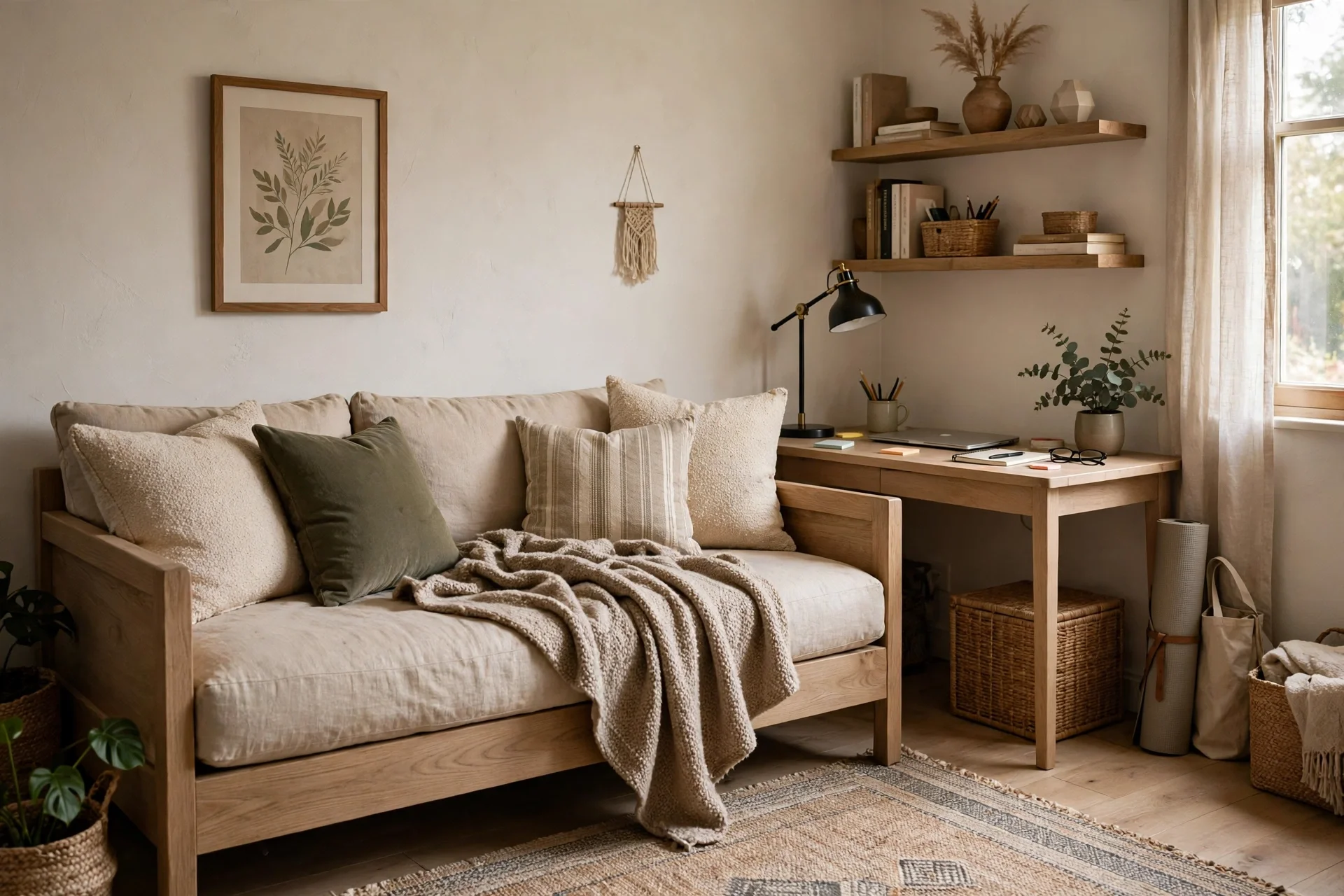
Meanwhile, a daybed suits rooms under 100 square feet. Against a wall, it reads as a sofa by day and becomes a proper twin or twin XL bed at night. Add a trundle or a second mattress for a second sleeper. Dress it with sleeping pillows stored in the closet, not a mountain of throw pillows guests must move.
A sleeper sofa suits a room that doubles as a living space or office most of the year. Modern sleeper mechanisms are far better than old pullouts, but test the open footprint before you buy. A compact sleeper can need 7 feet of clearance when unfolded. For a full room by room approach, read the NestSorted guide to guest room furniture.
A wall bed, also called a Murphy bed, folds away completely and returns the room to daytime use. This suits an office that hosts guests a few weekends a year. The tradeoffs are cost, wall anchoring, and the daily ritual of folding bedding away. If you choose this route, pick a unit with shelving or a fold down desk so it works hard in both modes.
Finally, a futon works for occasional young guests and tight budgets. A quality futon on a solid frame is fine for short stays, but it is the least comfortable long term option. If a futon is what the budget allows, spend the savings on a thick cotton futon mattress, and replace it sooner than you think.
Mattress Choices for Mixed Guests
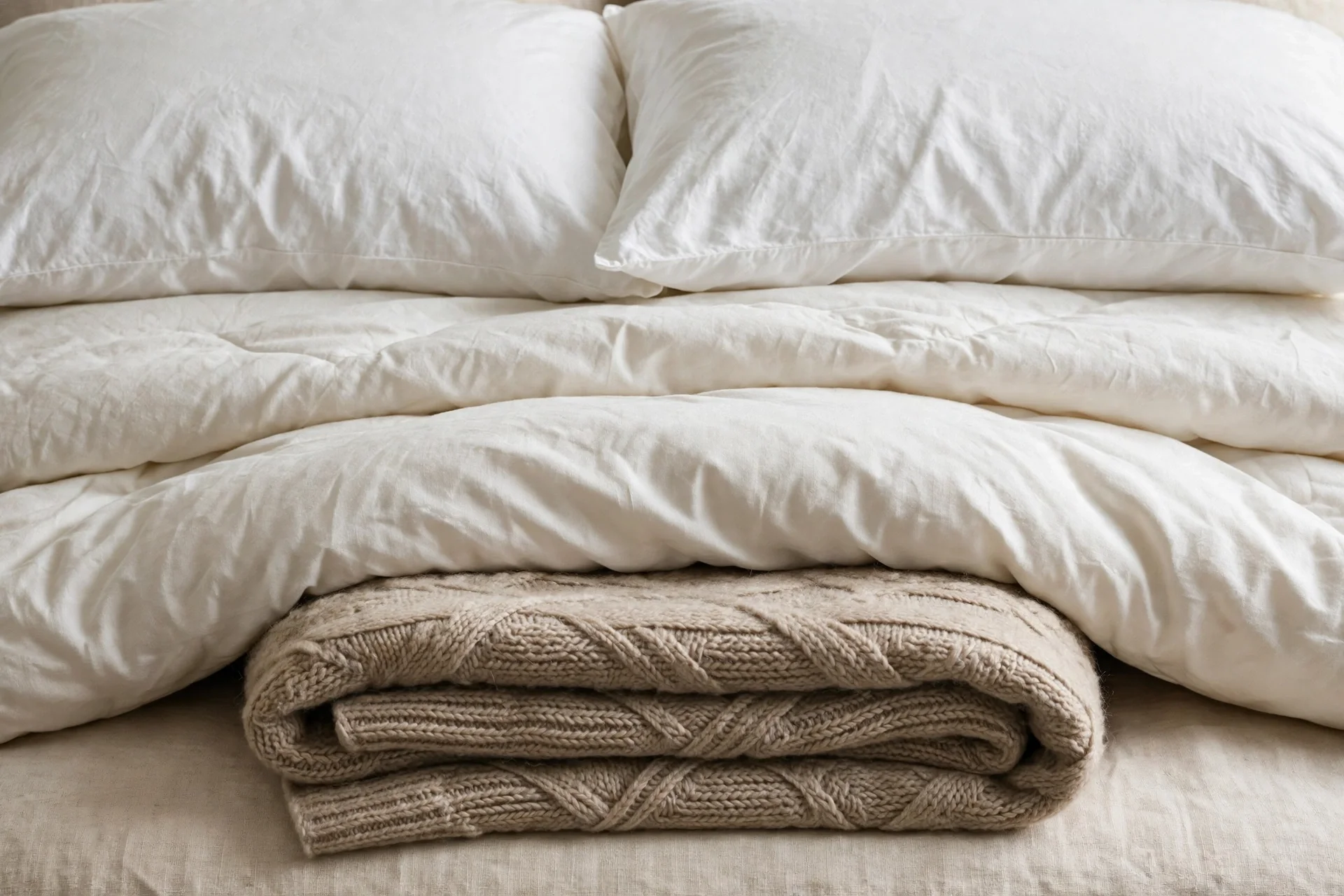
You cannot customize a mattress for each guest, so aim for broad comfort. Medium firm suits the widest range of sleepers, since it supports most back and side sleepers without feeling hard. Add a mattress topper in the closet: it rescues a too firm mattress and costs little. Guests who like a softer bed can add the topper, while others can skip it.
Foam mattresses isolate motion well, so one sleeper moving does not wake the other. Innerspring mattresses use coils for support and airflow, so they sleep cooler. Hybrid mattresses pair foam layers with a coil core, giving a mix of comfort and support. For a spare room, a hybrid or a medium firm foam mattress covers the most guest types.
Age matters too. If your spare mattress sags, dips, or feels lumpy, replace it before guests arrive. Guests forgive a small room, but they do not forgive a bad bed. A fresh mid range mattress beats an old premium one every time. In addition, use a washable mattress protector, since it keeps the mattress clean between guests and adds a light comfort layer.
Pillow choice also shapes sleep quality. Offer two pillows per sleeper: one medium firm and one soft. This pair covers most sleep styles without a long discussion. Keep spare pillows in the closet in sealed bags, so guests can swap if needed. A small note on the nightstand, such as “extra pillows in the closet,” helps guests settle in fast.
Bedding That Feels Like a Hotel
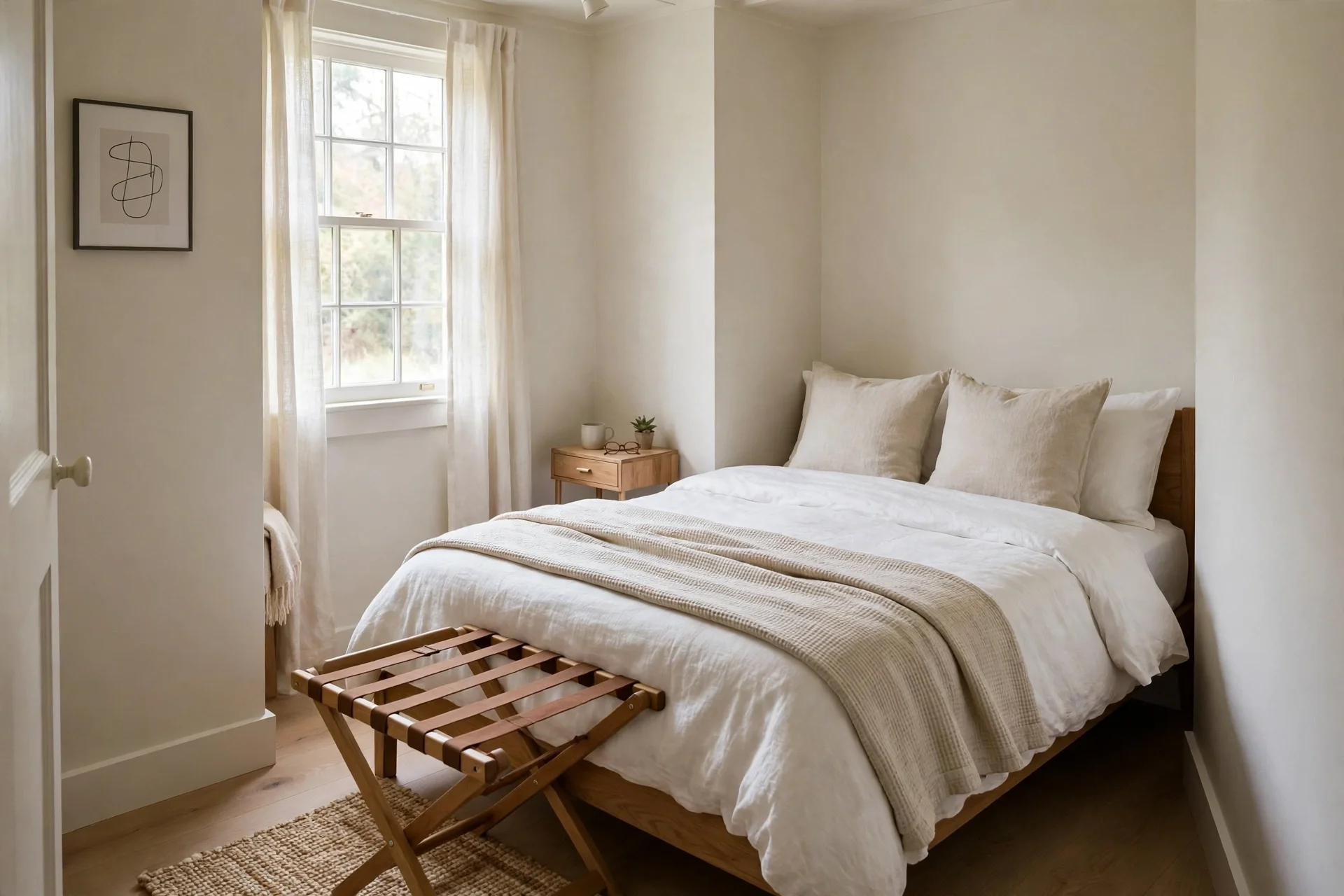
Start with fresh, clean sheets for every stay. White or light cotton sheets look clean and suit any room style. Choose a percale weave for a crisp, cool feel, or sateen for a softer, warmer touch. Avoid heavy flannel unless your climate is very cold, since guests may overheat at night.
Layer the bed so guests can adjust to their own warmth. Use a light duvet or comforter plus a folded blanket at the foot. This layering lets warm sleepers push the blanket aside, while cold sleepers pull it up. In addition, place an extra blanket in the closet for guests who run cold. This simple step earns more praise than any decor item.
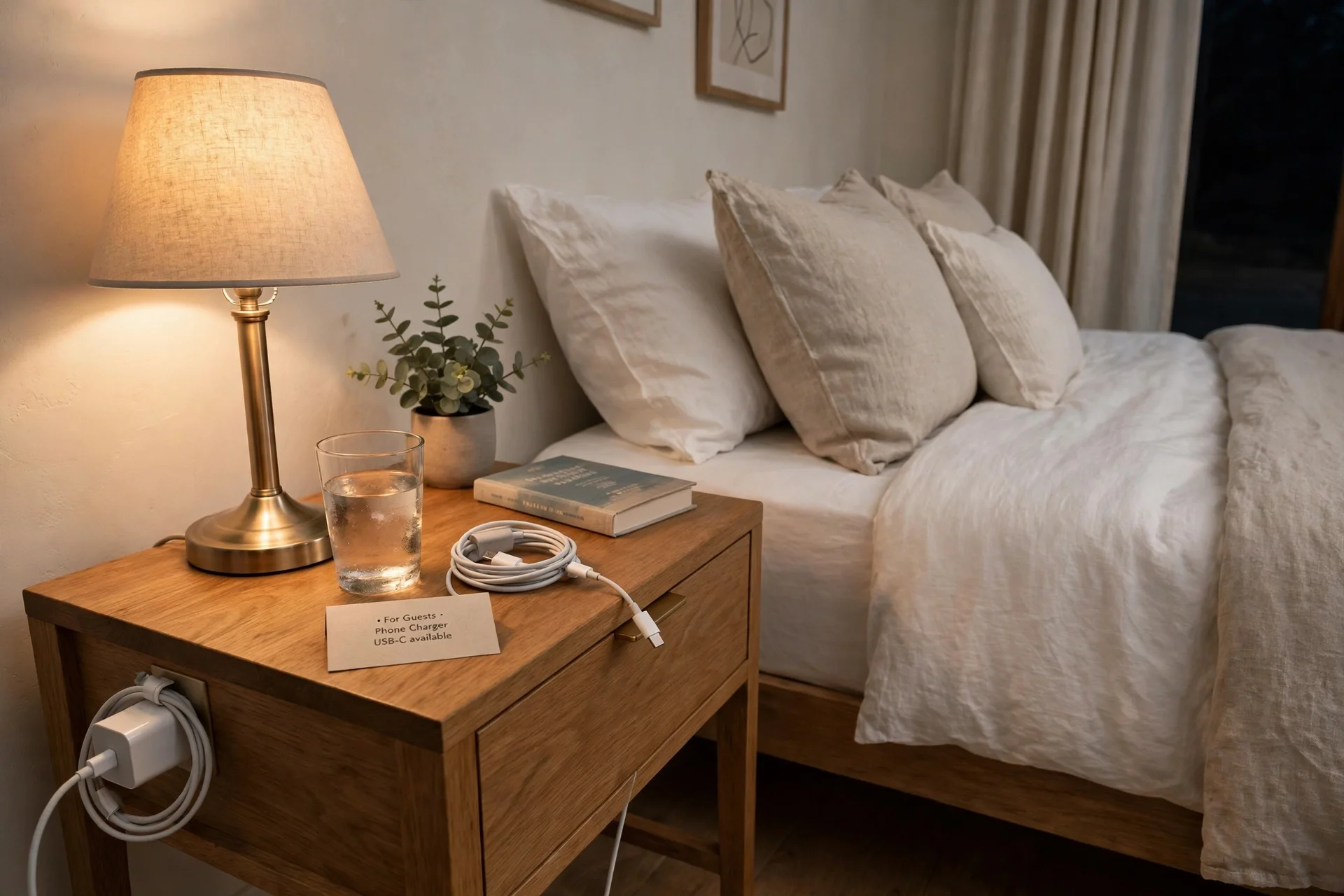
Finish with small touches that signal care. A bedside light, a glass of water, a charging outlet, and clear space for a phone make the first night easy. A luggage rack or a clear bench gives suitcases a home off the bed. These details cost little, but they make guests feel truly welcome.
Color also plays a role in rest. Soft, calm wall colors help guests relax, while bold colors can feel busy at night. If you plan to repaint the spare room, our guide to calming bedroom colour ideas shows shades that support better sleep. Keep bedding in soft neutrals so the room feels restful, not loud.
Small Room Layouts That Work
Layout one suits a 10 by 12 foot room. Center the bed on the longest wall, with one nightstand on the side guests will use, or two slim ones if space allows. Place a dresser or luggage bench on the opposite wall, and an accent chair in the corner by the window. The walkway runs along the foot of the bed. This layout feels calm and balanced.
Layout two suits a 10 by 10 foot squeeze. Push a full bed into the corner against two walls. Yes, one sleeper climbs over, but this frees the entire rest of the room. Add a single nightstand on the open side, a wall shelf above it for the second sleeper, and a luggage rack at the foot. Under bed drawers handle all storage. It sounds cramped on paper and feels fine in practice, since every path stays clear.
Layout three suits a dual use room, such as an office that hosts. Put the desk zone and the sleep zone on opposite walls so the room reads as two spaces. A daybed along one long wall serves as office seating by day. When guests come, clear the desk, dress the daybed with real bedding, and add a folding screen or tall plant as a boundary. The sleep zone must look planned, not like an office with a mattress in it.
If the spare room also serves kids, teens, or remote workers, the bed choice shifts. A twin XL suits a teen, while a queen suits a couple visiting for a wedding. For wider ideas on setting up a second bedroom for many uses, see our guide to second bedroom ideas. The bed stays the focus, but the room around it changes with the guest list.
Buying Checklist Before You Order
First, confirm the room size and the frame size on paper. Second, pick the size from the chart that leaves real walkways, not just a bed that fits. Third, choose medium firm comfort with a topper in the closet for flexibility. Fourth, buy two pillows per sleeper, one medium firm and one soft. Fifth, add a washable protector and fresh layered bedding.
Also, check delivery and setup details before you order. Measure doorways, stair turns, and elevator size if you live in a flat. A king frame in boxes may not turn a tight stair corner. Ask whether the seller removes old mattresses, since disposal can cost extra. Finally, test the bed yourself for one night before guests arrive. Lie on it, check the pillows, and fix anything that feels off.
Quick Picker by Room and Guest
| Room size | Usual guests | Best pick | Why it works |
|---|---|---|---|
| Under 100 sq ft | One solo guest | Twin XL or daybed | Leaves walkways and floor space |
| 10 by 10 ft | One adult or couple | Full bed | More width than a twin, room to move |
| 10 by 12 ft | Mixed guests | Queen bed | Sleeps two, fits slim nightstands |
| 12 by 12 ft or larger | Couples often | Queen or king | Space for full furniture and walkways |
| Dual use office | Occasional guests | Daybed or wall bed | Room works daily, sleeps guests at night |
Frequently Asked Questions
What size bed suits a small spare room?
A twin, twin XL, or full often works best in a small spare room, depending on who stays there. A twin XL adds length for a taller solo guest, while a full gives one adult more width. For an office that hosts, a daybed or wall bed may use the space better.
Is a queen bed big enough for two guests?
Yes, a standard queen measures 60 by 80 inches and commonly sleeps two adults with comfort. It suits most spare rooms that host couples. If the room is under 10 by 12 feet, check walkways first, since a queen needs clear space on at least one side.
How much clearance should I leave around the bed?
Leave at least 30 inches for the main walkway, about 24 inches on at least one bedside, and 30 to 36 inches at the foot. Dresser drawers need 36 inches in front to open fully. These clearances keep the room easy to use with luggage and bags.
What mattress firmness suits most guests?
Medium firm suits the widest range of guests, since it supports back and side sleepers without feeling hard. Add a topper in the closet for guests who prefer a softer feel. A washable protector keeps the mattress clean and adds a light comfort layer.
How many pillows should I provide per guest?
Provide two pillows per guest: one medium firm and one soft. This pair covers most sleep styles without a long discussion. Keep spare pillows in the closet in sealed bags, and leave a small note telling guests where to find them.
Should I buy a new mattress for a spare room?
Buy a new mattress if the old one sags, dips, or feels lumpy. Guests forgive a small room, but they rarely forgive a bad bed. A fresh mid range mattress beats an old premium one, and a topper adds flexibility for different sleep styles.
Conclusion
In short, the right guest room bed starts with honest measurements, not the biggest size that fits. Pick a size that leaves real walkways, choose medium firm comfort with a topper for flexibility, and finish with fresh layered bedding. This year, test the bed yourself for one night, then welcome guests to a room that truly helps them rest.