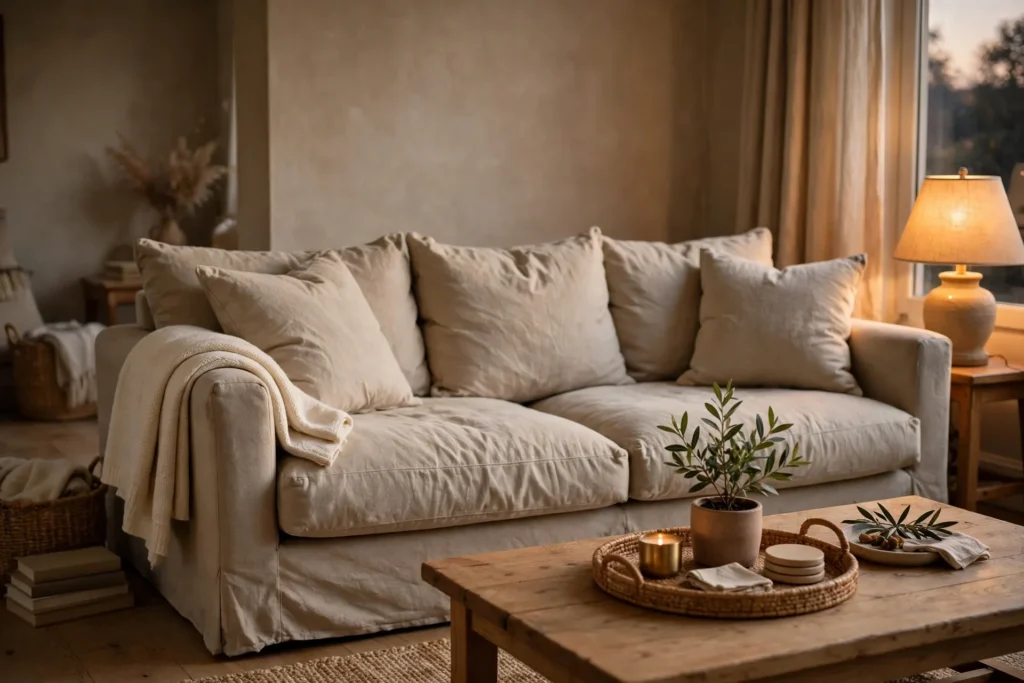

Decorating tips for fall work best when you start with warmth, not with a shopping list. Swap light summer fabrics for soft knits and warm light, and bring in natural textures like wood and dried leaves. Changes in the living room, entryway, and dining room can make a home feel inviting. This guide shows you how, without clutter.
Start With Warm Colour, Not More Stuff

Fall colour does not mean painting every wall orange. Start with your existing palette and add one or two warm tones. Rust, mustard, deep green, and warm brown all sit well against cream, beige, and soft grey. Pick one main warm tone and one quiet support tone, then repeat them in small doses around the room.
First, look at what you already own. A cream sofa can take rust cushions. A wooden table already carries a warm tone, so it needs only a simple runner. Often, a room only needs a warmer cushion cover and a throw to shift from summer to fall.
Next, limit bright orange to accents. One bowl of small pumpkins, one rust cushion, or one amber vase is enough. When every surface turns orange, the room starts to feel like a shop display. In contrast, a calm base with a few warm notes feels like a home. Finally, step back and look at the room as a whole. If one colour shouts louder than the rest, remove one item. Restraint is what makes fall decor feel grown up rather than themed.
Layer Textures the Way You Layer Clothes
Texture is the quiet secret of fall decorating. You notice it the moment you sit down, even if you cannot name it. A knit throw, a woven basket, a wooden tray, and a linen cushion each add a different feel. Together, they make a room feel warm without adding visual noise.
Start with the largest textile first. Swap a thin summer throw for a chunky knit or a soft wool blend. Then add a cushion in a rougher fabric, such as woven cotton or corduroy. In addition, place a woven basket near the sofa for spare throws and magazines. Baskets hide clutter and add natural texture at the same time.
Also, mix hard and soft surfaces. A wooden coffee table softens with a linen runner. A metal lamp base looks warmer beside a fabric shade. However, avoid piling on too many textures at once: three or four per room is plenty.
Finally, renters can layer a rug, a thick throw, and heavier curtains without changing anything fixed.
Decorating Tips for Fall in the Living Room

The living room is where fall decorating pays off most, since it is where you relax on cool evenings. Start with the sofa, because it fills the eye first. Add a throw in your warm accent colour and two cushions in mixed textures. Keep the rest of the sofa calm, so the warm notes stand out.
Next, style the coffee table with restraint. A wooden tray, a candle, and a small vase of dried stems is enough. Dried stems last for weeks and cost little. Also, keep one clear area on the table for cups and books. A table that cannot be used is decoration, not a home.
Then, look at the fireplace or the main wall. If you have a mantel, a simple garland of dried leaves or a row of small pumpkins in mixed sizes works well. For more mantel ideas, these fall decorating ideas from Better Homes & Gardens show how natural pieces beat fussy displays. If you have no fireplace, a basket of throws beside the sofa gives the same warm signal.
Finally, check the room at night. Warm lamps, soft throws, and low light make a living room feel like fall far more than any single ornament. For a full warm-room plan, this guide to a warm and cozy living room pairs well with the steps here.
The Entryway: A Small Space That Sets the Tone
The entryway is small, but it sets the tone for the whole home, so a few warm touches go a long way. Start with the door. A wreath of dried leaves, wheat stems, or faux eucalyptus suits fall without looking overdone. Hang it at eye level and keep the rest of the door clear.
Next, add a place for shoes and coats that still looks tidy. A woven basket holds scarves and gloves, while a small wooden bench gives guests a place to sit. Also, add a tray for keys and a hook for one bag. When the entryway has a home for each item, it stays calm even on busy mornings.
Then, warm the floor. A flat-weave runner in a warm neutral adds colour and protects the floor from wet shoes. Choose a rug you can shake out or wash, since fall brings rain and mud. In addition, one small plant or vase of branches on a console table is enough for a narrow space.
Finally, check the light. A small lamp or a warm bulb in the entryway makes the home feel welcoming from the door. Swap the bulb if the light feels stark.
Fall Table Settings That Feel Gathered, Not Staged

A fall table should invite people to sit down, not to admire it from a distance. Start with a simple base. A linen or cotton runner in cream, rust, or deep green grounds the table without hiding the wood. Then add plain plates and simple glasses. When the base is calm, small seasonal touches stand out.
Next, build a low centrepiece. A wooden board with a few small pumpkins, a candle, and a sprig of dried leaves works for everyday meals and for guests. Keep it low, so people can see each other across the table. Tall displays look grand in photos, but they block conversation in real life.
Also, use what you already own in new ways. Mismatched mugs in warm tones, a wooden board as a serving plate, and cloth napkins tied with twine all feel gathered rather than bought as a set. In addition, add one natural element per place setting, such as a single dried leaf on a napkin. One leaf per setting is charming; a pile on each plate is a chore to clear.
Finally, think about the meal itself. A table set for soup, bread, and a shared dish suits fall better than a formal multi-course layout. The table should serve the food and the people first, with decor as a quiet second.
Lighting: The Cheapest Warmth in the Room
Lighting changes a room faster than any ornament, and it often costs nothing. Start by swapping cool white bulbs for warm white bulbs in the rooms you use most in the evening. Warm light, around 2700K, flatters wood, fabric, and skin alike. Also, check your lampshades. A cream or linen shade softens light far better than a bare bulb.
Next, layer your light. Use three levels when you can: a ceiling light for general brightness, a table or floor lamp for reading, and a candle or small lamp for glow. Turn off the ceiling light in the evening and let the lamps do the work. The room will feel warmer at once, even with no new decor at all.
Then, use candles with care. Real candles suit a dining table or a mantel, but keep them away from curtains, dried leaves, and throws. Battery candles give a similar glow in risky spots, such as near a wreath or on a bookshelf. Never leave any candle burning in an empty room.
Finally, a lit fire is the oldest fall light of all, if you have a fireplace. If your fireplace is small, these fireplaces for small living rooms show how to style one without crowding the room.
Decorating Tips for Fall on a Small Budget

Fall decorating does not need a big budget. In fact, a small budget often leads to a better result, since it forces you to reuse and edit. Start with a walk through your own home. Move a throw from the bedroom to the sofa, swap cushion covers between rooms, and bring a basket from storage into the living room. Rearranging costs nothing and often solves the problem.
Next, spend only on items you will reuse next year. A good wreath, a set of cloth napkins, a wooden tray, and a quality throw can return each fall. In contrast, single-season plastic ornaments often look tired by next year and fill storage boxes. Also, gather free natural pieces where you can. Dried leaves, pinecones, and bare branches from your own garden or a walk cost nothing and look honest.
Then, set a simple spending limit before you shop. A typical range for a full seasonal refresh of one living room is $30 to $100, using mostly items you already own plus a few new textiles. These are typical ranges, not fixed prices, and your local store prices will vary. If your budget is tight, spend it on one throw and warm bulbs first.
Finally, check second-hand shops for baskets, wooden trays, and candle holders. Solid, simple pieces hide their price well, and they suit fall textures better than shiny new plastic. For a wider low-cost plan, this bedroom makeover on a budget shows the same phased, surface-first approach in another room.
A Worked Example: One Small Living Room, Step by Step
Here is a real, worked example you can copy. The room is a small rented living room, about 12 feet by 14 feet, with a cream two-seat sofa, a wooden coffee table, one window, and no fireplace. The owner had $60 to spend and one Saturday afternoon. Nothing was painted and nothing was fixed to the walls.
First, she moved a rust throw from the bedroom onto the sofa and swapped two summer cushion covers for one knit and one corduroy cover she already owned. That cost nothing and changed the sofa at once. Next, she spent $28 on warm white bulbs for two lamps and a chunky knit throw for the armchair. Then she spent $12 on a bunch of dried stems and a small woven basket from a second-hand shop.
After that, she styled the coffee table with a wooden tray she owned, one candle, and the dried stems in a plain glass jar. She placed the basket beside the sofa for spare throws. Finally, she hung a simple dried-leaf wreath on the inside of the front door with a removable hook, since the rental rules ban nails.
Under three hours, the work was done. That same evening, the room felt warmer, and every new item could move to her next home. Start with textiles and light, spend on reusable pieces, and stop when the room feels warm: adding more would only crowd a small room.
Mistakes to Avoid

The most common fall mistake is overloading the room. Pumpkins on every surface, garlands on every shelf, and orange on every cushion compete with each other. Pick three focal spots at most, such as the mantel, the coffee table, and the door. Leave the rest of the room calm, so those spots can shine.
Another mistake is decorating only for photos. A tall centrepiece that blocks faces, a rug that slides underfoot, or a candle placed beside dry leaves all cause trouble in daily life. Test each display by living with it for a day. If you move it aside to eat, read, or walk past, it does not belong there.
Also, avoid mixing too many themes at once. Harvest, Halloween, and woodland looks can each work alone, but together they clash. Choose one direction for the season and keep the other themes for another time.
Finally, do not leave summer items in place and pile fall items on top. Pack away bright beach prints, light throws, and summer candles first. A seasonal swap beats a seasonal pile every time. For a fast reset before you start, this 5-minute refresh clears the way for fall layers.
Frequently Asked Questions
How do I decorate for fall without spending a lot?
Start with what you already own. Move throws and cushions between rooms, swap bulbs for warm white ones, and gather natural pieces like pinecones and dried leaves. Spend only on reusable items, such as a good throw or a wreath. A typical living room refresh costs $30 to $100.
What colours work best for fall decorating?
Rust, mustard, deep green, and warm brown work best, set against cream, beige, or soft grey. Pick one main warm tone and one quiet support tone, then repeat them in small doses. Limit bright orange to accents like one cushion or a small bowl of pumpkins. A calm base with warm notes feels like a home, not a shop display.
How can I decorate a small apartment for fall?
Focus on textiles and light, since both move with you and need no wall changes. Add a thick throw, a rug over hard floors, and heavier curtains. Use a basket for spare throws and one wreath on the door with a removable hook. Avoid large displays, and pick three focal spots at most so the small space stays calm.
Is it better to use real or faux fall decor?
Both work, and a mix often works best. Real dried stems, leaves, and pumpkins look honest and cost little, but they fade and shed over time. Faux wreaths and stems last for years and suit rentals well. Use real pieces for table displays you refresh often, and faux pieces for wreaths and garlands you reuse each year.
When should I start decorating for fall?
Start when the evenings turn cool and you spend more time indoors, rather than on a fixed date. Swap light throws for heavier ones first, then add warm light and one or two seasonal touches. Decorate in layers over a week or two, so you can judge each change.
How do I make fall decor work in a rental?
Use items that need no nails, paint, or fixed changes. Throws, rugs, cushions, baskets, and removable hooks all work well. A wreath on a removable hook, a runner on the table, and warm bulbs transform a rental without touching the walls. Choose pieces you can pack and reuse in your next home, so nothing is wasted.
Conclusion
Fall decorating works when you lead with warmth, texture, and light, and stop before clutter takes over. Pick one warm colour, layer soft textiles, and check the room at night under warm lamps. Your next step is simple: tonight, swap one throw, change one bulb to warm white, and place one natural touch on the coffee table. That small start will show you what the rest of the room still needs.