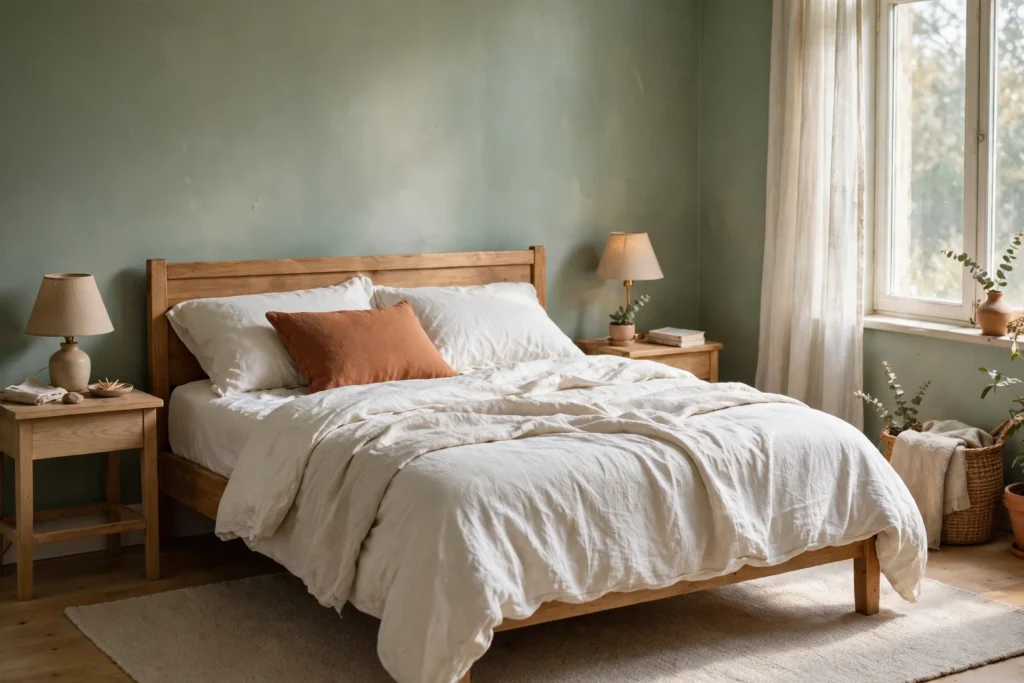
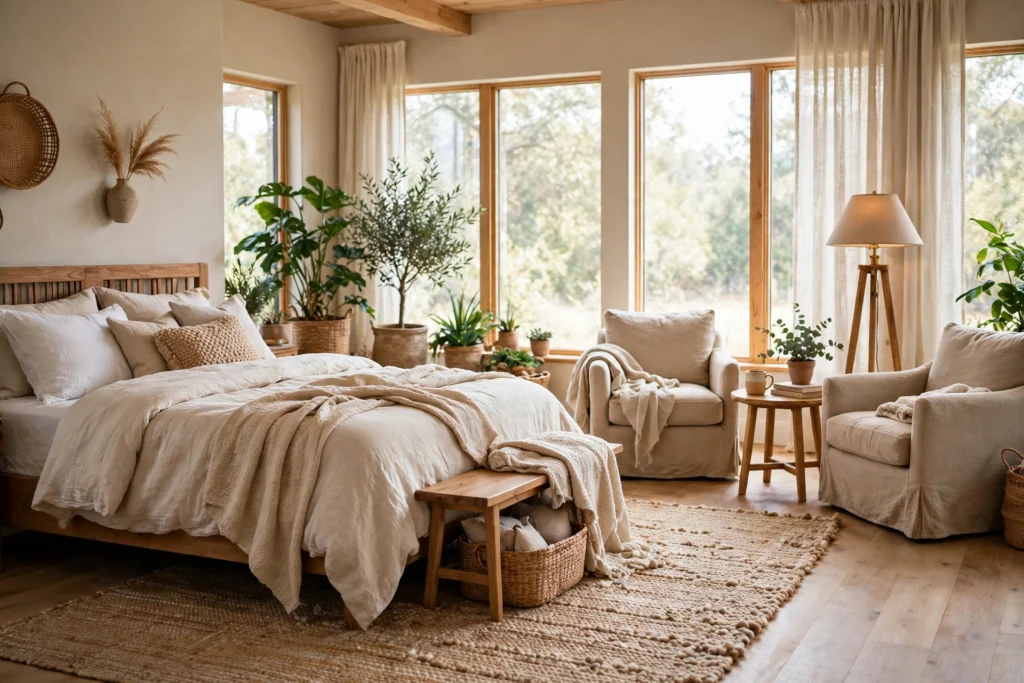
A bedroom large enough for more than a bed needs zones, not more stuff. Split the space into sleep, lounge, and work areas, use bigger furniture and rugs, and add warm light and texture. That plan fills the room, cuts the echo, and keeps it calm.
A big bedroom sounds like a gift. Then you move in, and it feels cold and half empty. This guide fixes that with layout first, not shopping.
Why Large Bedrooms Feel Empty (and How Zoning Fixes It)
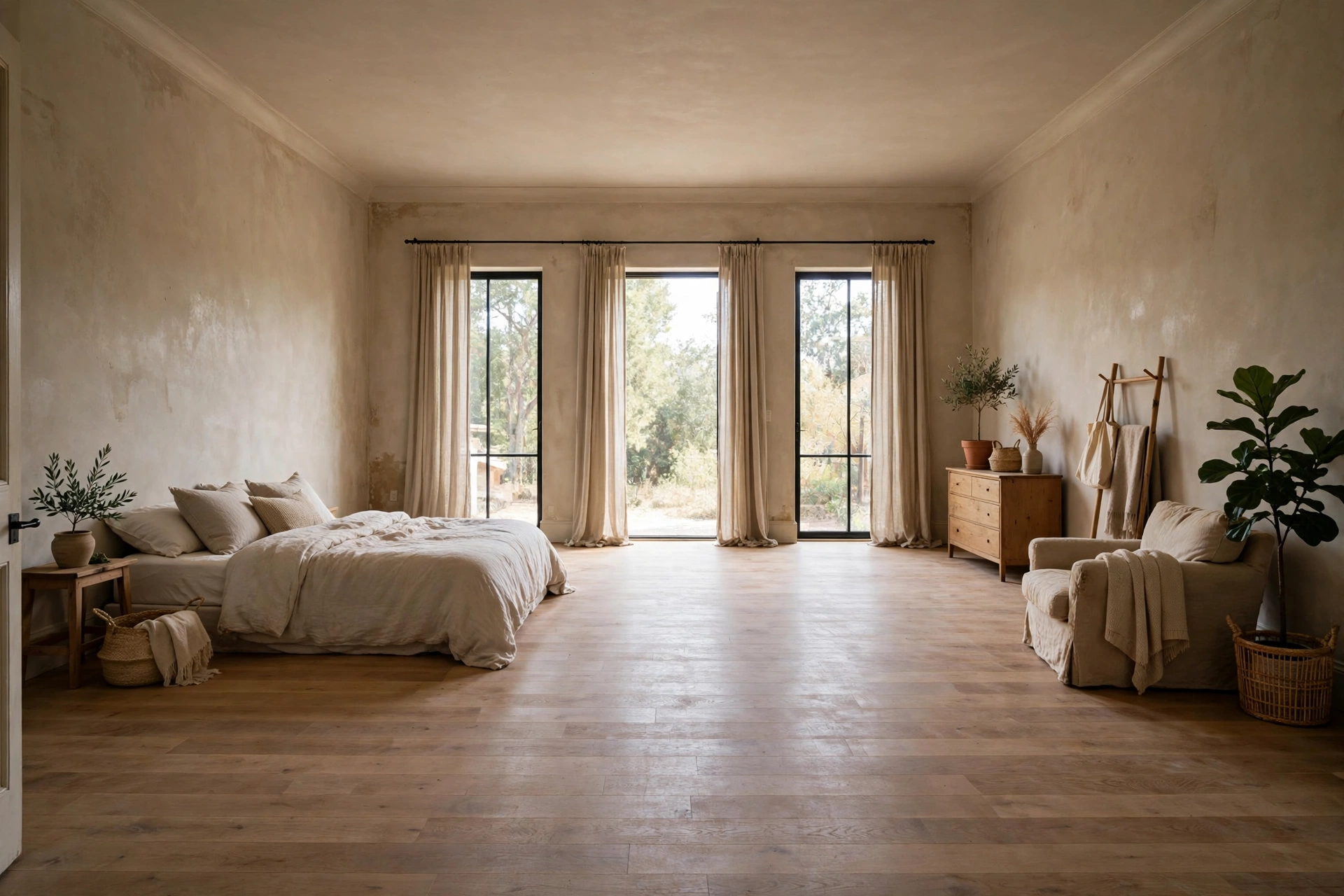
Indeed, most large bedrooms feel empty for one reason. All the furniture hugs the walls, so the middle stays bare. The room reads as one big box, not as a place with a purpose.
The wall-hugging habit
However, pushing every piece to the edge is a habit from small rooms. In a big room, it wastes the middle and makes the edges feel crowded.
Bare floors and walls also let sound bounce, which adds to the echo at night. Soft, grouped furniture also absorbs much of it.
Zoning gives each area a job
Zoning means you split one large room into smaller areas, each with its own job. One area is for sleep. Next, one is for reading. Finally, one can hold a desk or a dressing table.
However, you do not need walls or screens to do this. A rug, a lamp, and the way chairs face can mark an area clearly. The same thinking works in open living spaces. For example, these living room layout ideas group furniture instead of spreading it out.
Start with two or three zones at most. More than that, and the room feels chopped up.
Zone 1: The Sleep Zone
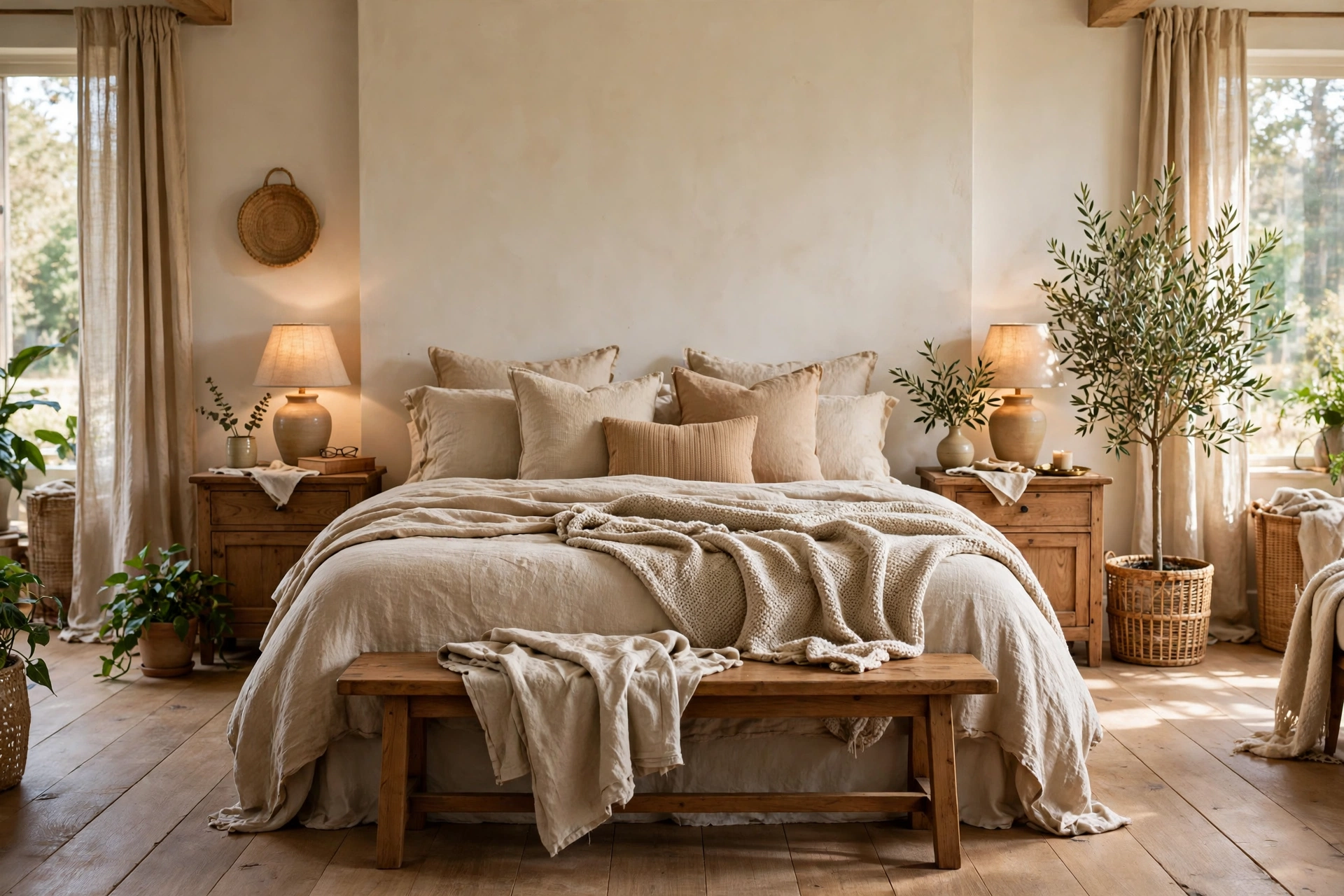
First, give sleep the best spot in the room, usually the wall farthest from the door. The bed stays the main focus, but now it shares the room on your terms.
Centre the bed on its wall, with a nightstand on each side. In a large room, do not push the bed into a corner for floor space. You already have floor space. A centred bed also looks calm and balanced.
Build the sleep zone outwards
Think of the sleep zone as a group, not just a bed. The group includes the bed, both nightstands, the lamps, and a bench or low chest at the foot. Together, they take up space in a good way.
A bench at the foot is a smart buy for a big room. It fills the gap past the mattress and gives you a seat for shoes. Choose one about two thirds the width of the bed.
Also, keep clear space around the group. Aim for at least 24 inches of walking space on each side of the bed and at the foot. If you can give 30 to 36 inches, walking and bed making feel much easier.
Keep sleep items inside the zone
Books, chargers, water, and spare blankets belong here. A lidded box or a drawer in each nightstand keeps them close but hidden. When sleep items drift across the room, the zone loses its calm.
Zone 2: A Reading or Lounge Corner
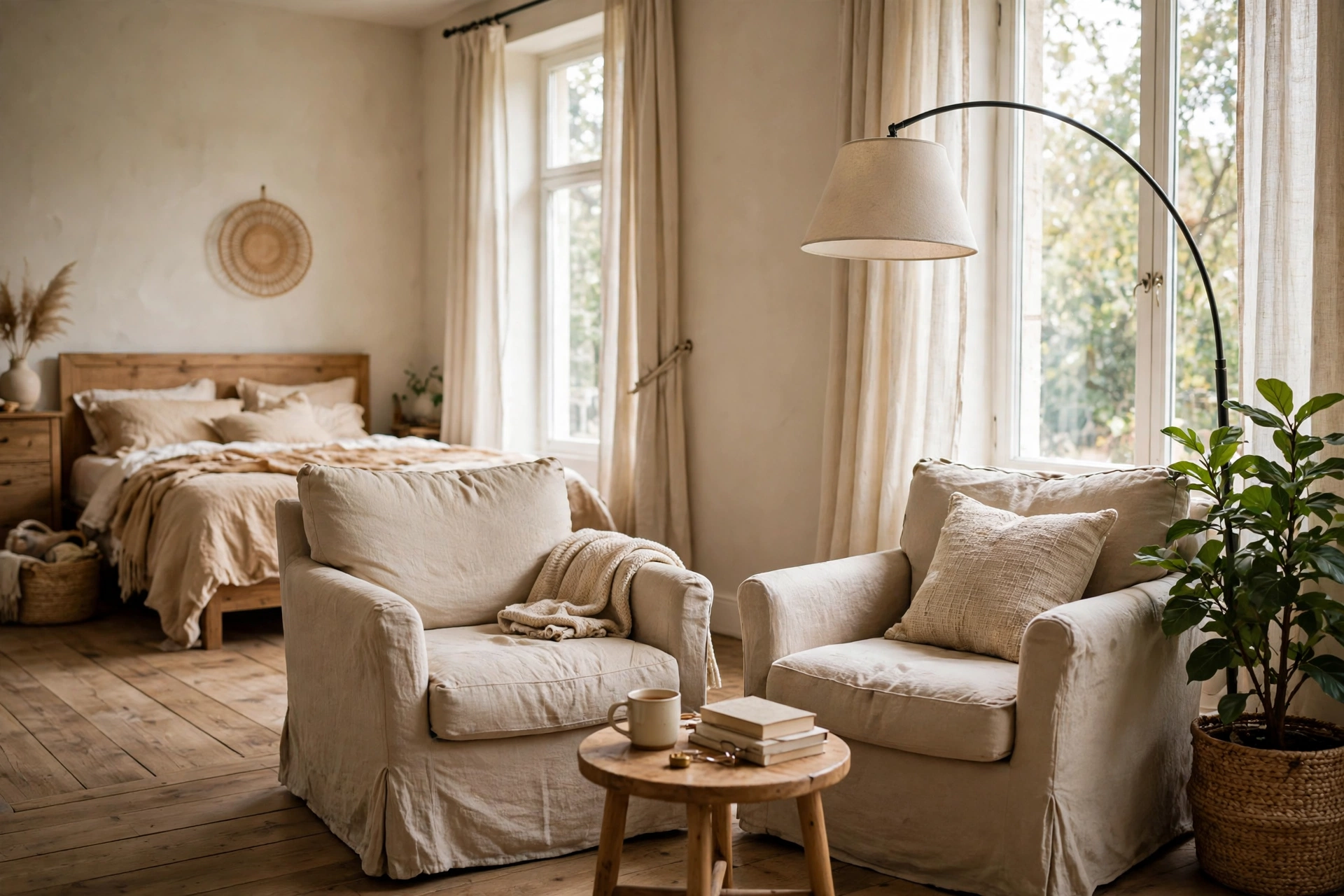
A reading corner is the easiest second zone to add. It also turns dead corner space into the spot you will use every evening. It also pulls furniture away from the walls, which fixes the empty middle.
Next, pick a corner near a window if you can. Daylight suits reading, and a view makes the seat feel special.
What a good corner needs
- One deep armchair, or two chairs angled toward each other.
- A small side table within easy reach of the seat.
- Next, a floor lamp that throws light over your shoulder.
- A soft rug under the chairs to mark the zone.
- One throw and one cushion for warmth and texture.
Scale also matters here. A slim, small chair will look like doll furniture in a big room. Also, choose full size chairs with wide seats and solid arms.
Angle the chairs slightly toward each other, not flat against the wall. That small turn says this is a place to sit and talk. Finally, add a low bookshelf or a basket for books to finish it.
Zone 3: A Small Work or Dressing Area
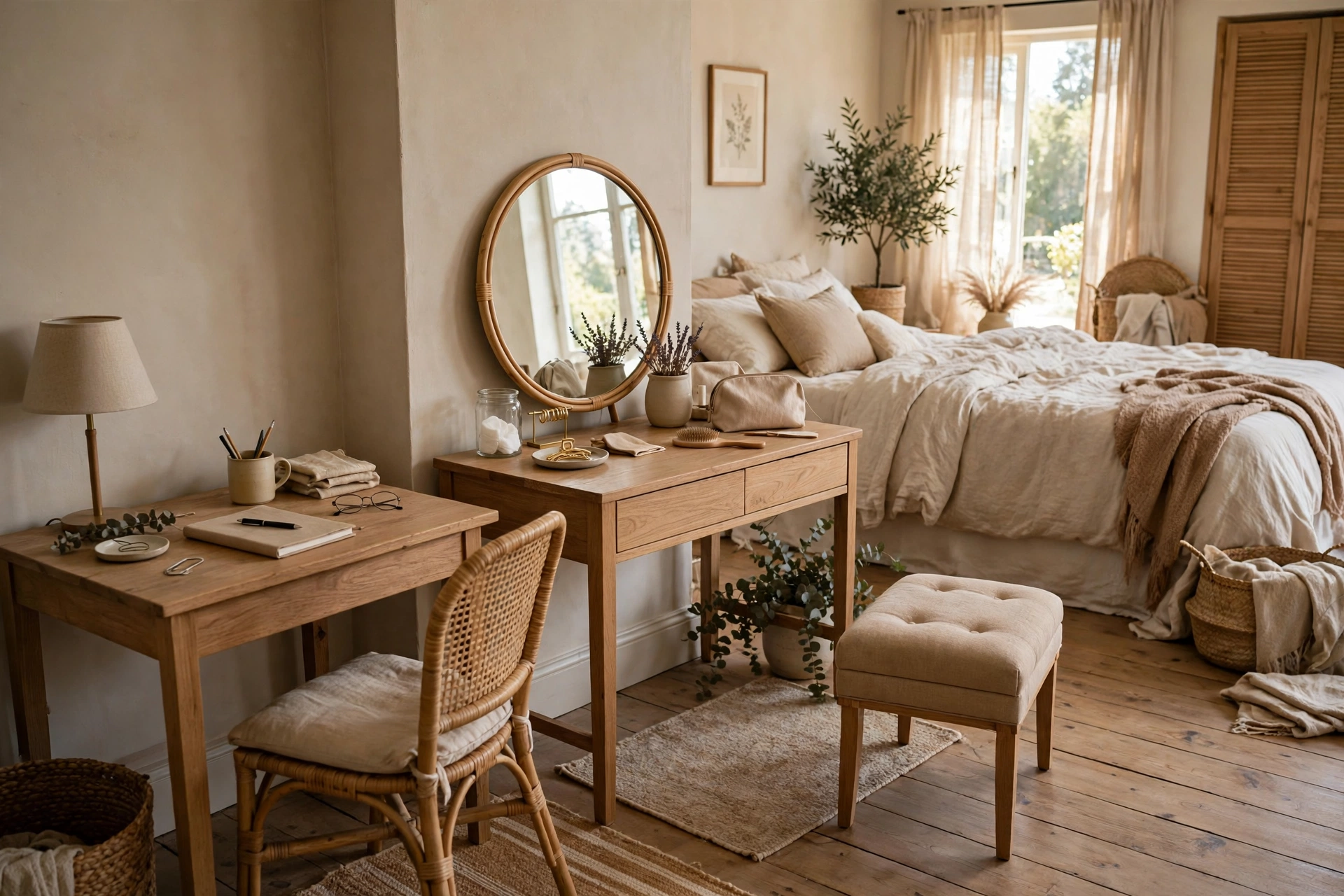
The third zone covers daily tasks: a small desk, a dressing table, or a dresser with a mirror. Pick the one you will use, not all three.
Place this zone near natural light, but away from the bed if you can. However, seeing work items from your pillow can make rest feel less restful. A corner on the opposite side of the room works well.
Desk corner basics
A desk around 48 inches wide is enough for a laptop and a lamp. Add one chair that tucks fully under the desk when not in use. Leave about 36 inches behind the desk so the chair can pull out and you can sit with ease.
Also, keep cords in one box or clip them along the desk edge. A small rug under the desk also helps mark this zone.
Dressing corner basics
For a dressing area, pair a dresser with a large mirror above it. The mirror fills wall space and also bounces light around the room. Leave at least 36 inches in front of the dresser. Then drawers open fully, and you can stand there to dress.
Add one upholstered stool or a small bench. It also softens the hard edges of drawers and mirrors.
Get the Scale Right: Furniture, Rugs and Art
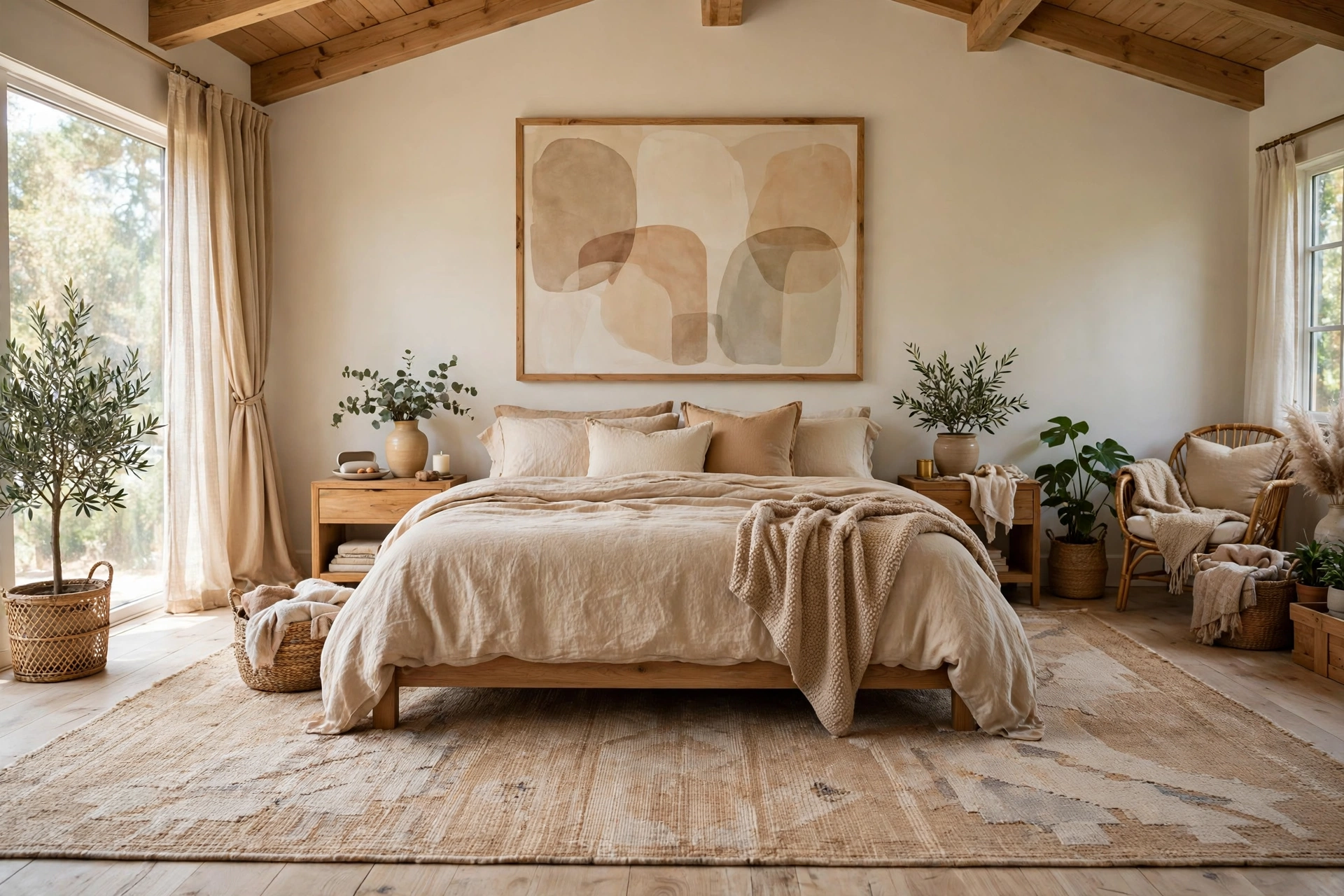
Scale is where large rooms go wrong most often. Pieces that suited your old, smaller room now look too small. The fix is not more pieces. The fix is bigger, fewer pieces that match the room.
Indeed, a good test is simple. Stand at the door and squint at each item. If a piece almost disappears, it is too small for the space.
Rugs: go one size up
Rugs also do the heavy lifting in a large bedroom. A rug under the bed should show 18 to 24 inches on each side. Then your feet land on it each morning. For a queen bed, that usually means an 8 by 10 foot rug. For a king bed, it usually means a 9 by 12 foot rug.
The Jaipur Rugs bedroom rug size guide gives the same sizes by bed type, with placement drawings for each. In a very large room, you can go up one more size. Or add a second, smaller rug under the reading chairs.
Leave bare floor between the rug edge and the wall. About 12 to 18 inches of border looks neat and planned.
Table 1: Room width, rug size and art size guide for a large bedroom
| Room width | Bed size | Rug size | Art above bed |
|---|---|---|---|
| 12 feet | Queen | 8 by 10 feet | 40 to 48 inches wide |
| 14 feet | King | 9 by 12 feet | 50 to 60 inches wide |
| 16 feet or more | King | 10 by 14 feet | 55 to 65 inches wide |
Art and furniture: fewer, bigger, grouped
For art above a bed or dresser, aim for about two thirds of the width of the piece below it. One large frame beats six small ones on a big wall.
Apply the same idea to furniture. One wide dresser beats two narrow ones. Large nightstands, around 24 to 28 inches wide, suit a king bed better than slim tables.
Colour, Lighting and Texture That Warm Up a Big Room
Layout alone, however, will not fix a cold feel. Colour, light, and texture do that work. Pale colours can look washed out over wide walls. So go a shade deeper than you would in a small room.
Warm whites, soft beige, sage, and dusty blue suit big bedrooms. If you want more shade ideas, these calming bedroom colour ideas show soft tones. They still feel warm on large walls. Pick one main colour and repeat it in each zone.
Light each zone on its own
One ceiling light cannot serve three zones. It leaves the corners dark and the middle harsh. Instead, give each zone its own light source, all with warm bulbs around 2700K.
- Sleep zone: one lamp on each nightstand.
- Reading zone: one floor lamp by the chairs.
- Work zone: one desk lamp or a lamp by the mirror.
- Whole room: one soft ceiling light for cleaning and dressing.
Add texture in layers
Texture stops the echo and adds warmth you can see. Layer it in each zone: a woven rug, linen bedding, a wool throw, and curtains that reach the floor.
Curtains deserve special care in a big room. Hang them wide and high, and let them touch the floor. Short, narrow curtains look mean on a large window.
Worked Example: Laying Out an 18 by 20 Foot Bedroom
Here is one full layout, with sizes, so you can copy the method. The room is 18 feet wide and 20 feet long, with the door on one short wall. Total floor area is 360 square feet.
The sleep zone: 18 by 11 feet
The sleep zone takes the far 11 feet of the room length, across the full 18 foot width. A king bed, 76 inches wide and 80 inches long, sits centred on the far wall. A 28 inch nightstand stands on each side, so the whole group spans about 11 feet.
That leaves about 3 feet of clear floor on each side of the group. A 9 by 12 foot rug sits under the bed, with the 12 foot side across the room width. A bench, 60 inches wide and 18 inches deep, sits at the foot of the bed. About 36 inches of clear walkway remains between the bench and the next zone.
The reading zone: 8 by 9 feet
Next, the reading zone fills one corner of the near half. Its area, 8 by 9 feet, sits under a window. Two armchairs, each about 30 inches wide, sit angled toward each other on a 5 by 7 foot rug.
A round side table, 20 inches across, stands between the chairs. Next, a floor lamp sits behind one chair. Also, a low bookshelf, 36 inches wide, runs along the wall. About 30 inches of open floor stays in front of the chairs, so legs and feet have room.
The work and dressing zone: 10 by 9 feet
The last zone fills the other corner, in an area 10 feet wide and 9 feet deep. A desk, 48 inches wide and 24 inches deep, sits against the wall. Its chair has 36 inches of pull out space behind it.
A dresser, 60 inches wide and 18 inches deep, stands on the side wall, with a large mirror above it. Clear floor in front of the dresser is 36 inches, so drawers open fully. A padded stool tucks under the dressing side of the dresser.
How the zones link up
A clear path, about 36 inches wide, runs from the door between the two near zones to the sleep zone. No furniture crosses this path. Each zone has its own lamp, a soft layer, and one job.
Notice what the plan does not do. It does not fill every foot of floor. The open paths are part of the design.
Mistakes That Make a Large Bedroom Feel Cold
Most cold, echoing bedrooms share the same few mistakes. Each one is cheap or free to fix, so work through this list before you buy anything new.
- Pushing all furniture against the walls, with a bare middle.
- Using a rug that is far too small for the bed.
- Hanging one small picture on a very large wall.
- Lighting the whole room from one ceiling fitting.
- Keeping many small decor items instead of a few large ones.
- Leaving windows bare, or using short, thin curtains.
- Choosing pale, cool colours on every wall and item.
Small items are the sneakiest problem. Ten tiny objects read as clutter, while three large ones read as style. Try simple decor touches that change a room at full size. For example, add one big plant or one oversized throw.
Also watch the floor. Long, empty runs of hard floor make a room feel cold. A larger rug, a bench, or a chair group breaks those runs up.
Frequently Asked Questions
How do I make a large bedroom feel cosy, not empty?
Split the room into two or three zones, each with a rug, a lamp, and a clear job. Use warm colours, full curtains, and soft layers like throws and cushions. Group furniture away from the walls. These steps cut echo, add warmth, and make the space feel close and calm.
How many zones should a large bedroom have?
Two or three zones suit most large bedrooms. Sleep is always the main zone. Add a reading corner next, then a small desk or dressing area if space remains. More than three zones can feel chopped up and busy. Leave clear walking paths between each zone at all times.
What rug size works best in a large bedroom?
Choose a rug that shows 18 to 24 inches on each side of the bed. For a queen bed, that is usually an 8 by 10 foot rug. For a king bed, it is usually a 9 by 12 foot rug. In a very large room, go one size up.
Should furniture go against the walls in a big bedroom?
Only some of it should. The bed, dresser, and desk can sit against walls, but chairs and benches work better pulled into the room. Group them on rugs to form zones. If every piece hugs a wall, the middle stays bare and the room feels empty, cold, and unfinished.
How do I fill a large bedroom without clutter?
Choose fewer, bigger pieces instead of many small ones. One large rug, one wide dresser, and one big piece of art fill space calmly. Keep surfaces clear, store small items in lidded boxes, and repeat your main colours across zones. The room looks full, but still tidy and restful.
What colours work best in a large bedroom?
Warm, mid tone colours work best on large walls. Try warm white, soft beige, sage, clay, or dusty blue. Pale, cool shades can look washed out over a wide area. Test your colour on one large sheet of paper first, and view it in daylight and lamplight.
Conclusion
A large bedroom feels right when it works as a set of calm zones, not one empty box. Give sleep the best wall, add a reading corner, and fit work or dressing into the last corner. Then scale up your rugs, art, and furniture to match the room.
Start with the free steps today. Pull the furniture off the walls, group it into zones, and mark rug sizes with tape. Live with the layout for a week. Then buy the biggest missing piece first.