
Japandi interior design ideas bring calm to modern homes by mixing Japanese minimalism with Scandinavian warmth. The style uses natural wood, soft light, and a muted palette to make rooms feel quiet yet warm. In this guide, you will learn what Japandi is, how to use its colours and materials, and how to bring the look into every room.
What Is Japandi Style?

Japandi is a mix of Japanese minimalism and Scandinavian design. The name joins “Japan” and “Scandi” into one word. The style first took shape about 150 years ago, when Scandinavian designers travelled to Japan and saw beauty in its simple, calm rooms. Both styles love clean lines and honest materials, so they fit together with ease. Today the look suits modern homes, because it brings calm without feeling cold or empty.
Two ideas sit at the heart of Japandi. The first is wabi-sabi, the Japanese love of beauty in flaws and age. A handmade bowl with a rough edge fits this idea. The second is hygge, the Danish love of warmth and comfort. A soft throw and a lit candle fit this idea. Together, the two ideas give Japandi its feel: simple rooms that still feel warm and lived in.
Japandi is not a trend to copy piece by piece. It is a way of choosing less and choosing well. Each item in the room should earn its place through use or beauty. If an item does neither, it does not belong. For a full guide to the style, its roots, and its key traits, see The Spruce guide to Japandi interior design. In addition, the guide shows how the style grew from two design cultures into one calm look.
Japandi Interior Design Ideas for the Living Room
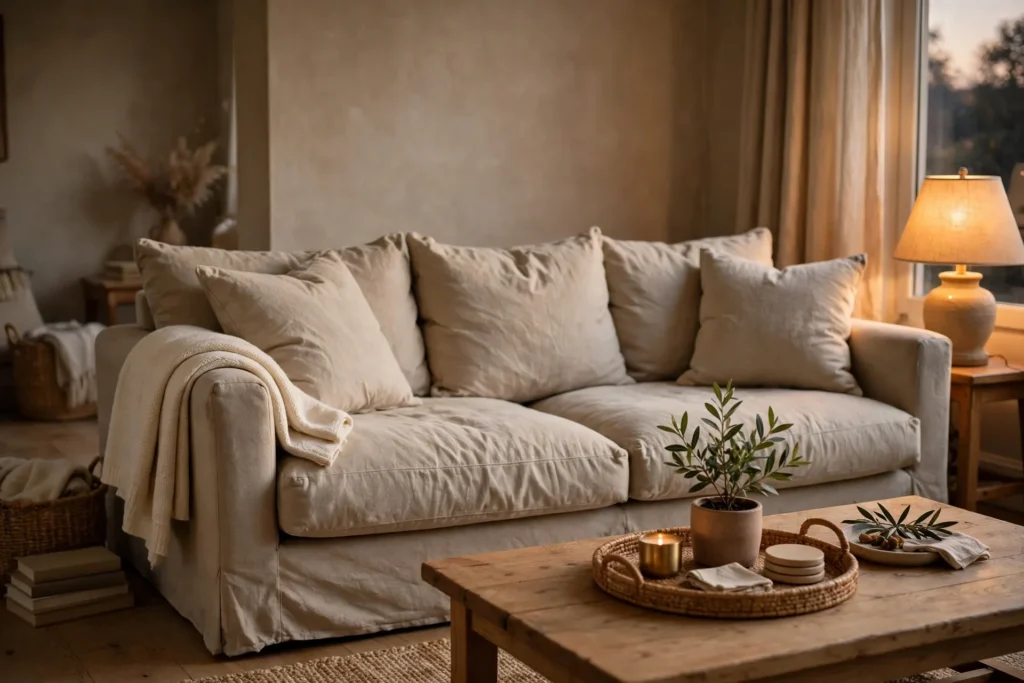
The living room is the best place to start with Japandi, because it is the room you use most. Begin with the sofa. Pick a low sofa in a light, natural fabric, then keep the rest of the room calm. A low coffee table in pale wood fits the look, and it keeps the room open. Add one soft rug in a muted tone, and let the floor show around it. The room should feel open, not empty.
Low furniture is the heart of the living room look. Low seats pull your eyes down and make the ceiling feel higher. The IKEA guide to Japandi shows this well, with low sofas, pale wood, and soft light in calm rooms. See the IKEA Japandi style guide for room ideas and furniture shapes that fit the style.
Keep the decor light. One vase with a single branch, a handmade bowl on the table, and a stack of two books are enough. A paper lamp gives soft light that suits the style well. Avoid bright colours and busy patterns, since they break the calm. Our guide to organic modern interior design shares the same love of natural wood and soft tones. When the room feels quiet but warm, the look is right. Finally, leave one wall or shelf empty, because empty space is part of the design, not a gap to fill.
The Japandi Colour Palette
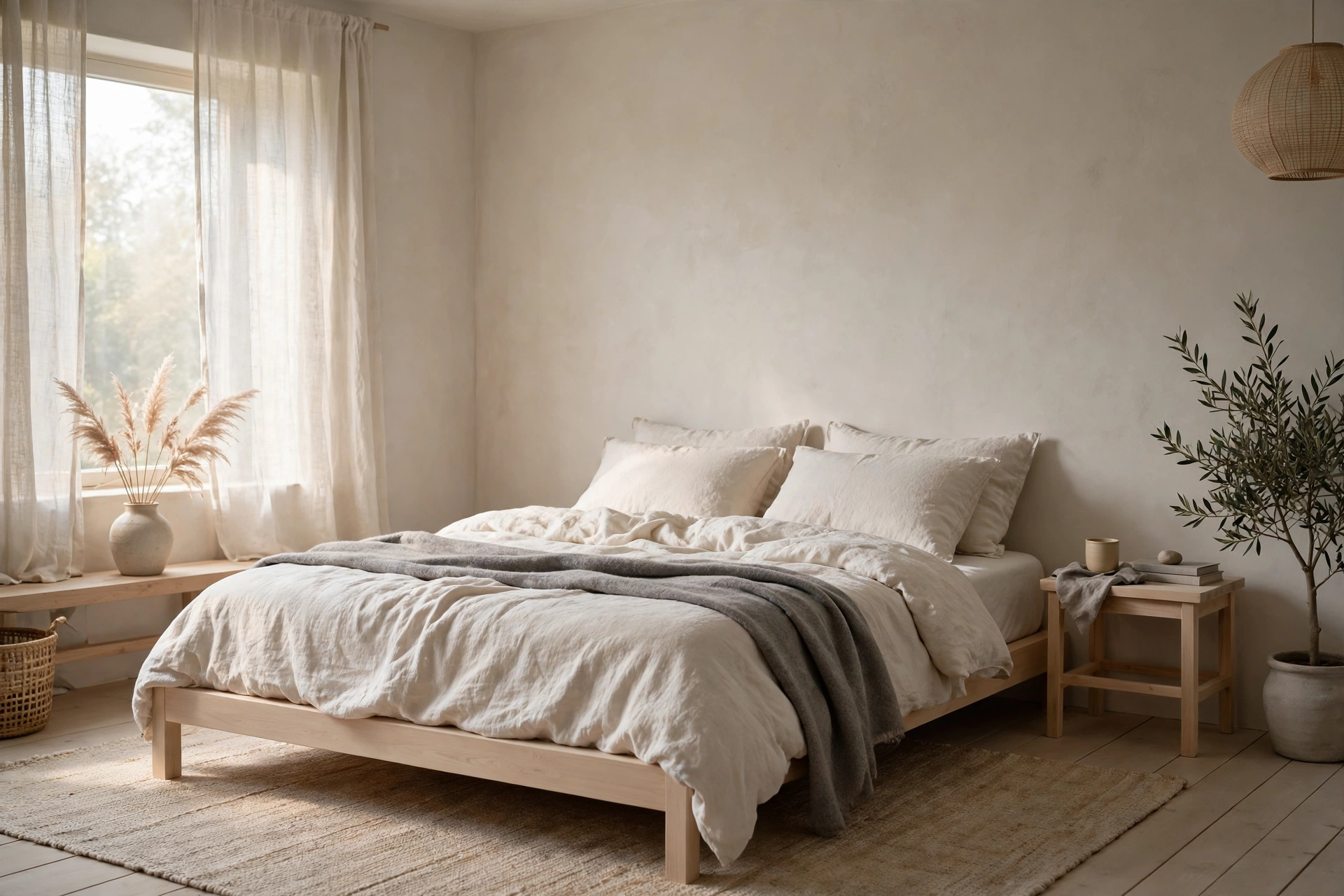
The Japandi palette is soft and warm. Start with warm white on the walls, then add oatmeal, beige, and light grey. These tones form the base of the room. Next, add depth with clay, soft sage, or warm brown. These earthy tones give the room warmth without noise. Keep the palette to four or five colours at most, so the room stays calm. A single dark accent, like charcoal or deep brown, can ground the room and stop it from feeling washed out.
Black has a small but key role in Japandi. A thin black frame, a dark vase, or black lamp arms can add contrast to a pale room. Use black in small doses only. Too much black makes the room feel hard, while too little leaves it flat. As a rule, keep black to about five percent of the room. In addition, pick soft, muted versions of each colour rather than bright ones.
Test colours in the room before you commit. Paint a small patch on the wall, then watch it in morning light and evening light. A warm white can turn yellow under a warm bulb, so test with the lamps you use. For that reason, pick paint last, after the furniture and fabric are in place. The room will tell you which tone it needs.
Materials That Make Japandi Work
Natural materials give Japandi its warmth. Light wood is the main material, and it works on floors, tables, and shelves. Oak, ash, and bamboo are all good choices, because they show soft grain and pale tones. Pair wood with linen, cotton, and wool for soft layers. These fabrics add comfort without pattern or shine. A linen cushion and a wool throw on a wood chair show the mix well, and they feel good to touch every day.
Stone and ceramic add a quiet weight to the room. A stone vase, a ceramic bowl, or a clay pot can ground a pale shelf. Rattan and cane bring a light, airy feel to chairs and baskets. Use these materials in small amounts, so no single texture takes over. For more ideas on calm, earthy palettes in minimal rooms, see our guide to brown minimalist interior ideas. In addition, mix rough and smooth textures, since the contrast makes the room feel rich without clutter.
Avoid plastic and shiny chrome where you can. These materials feel cold and flat next to wood and linen. If a piece is plastic, hide it inside a basket or a cupboard. Matte black metal is fine in small doses, since it suits the dark accents of the style. In short, choose materials that age well and feel good to touch.
Japandi Interior Design Ideas for Bedrooms
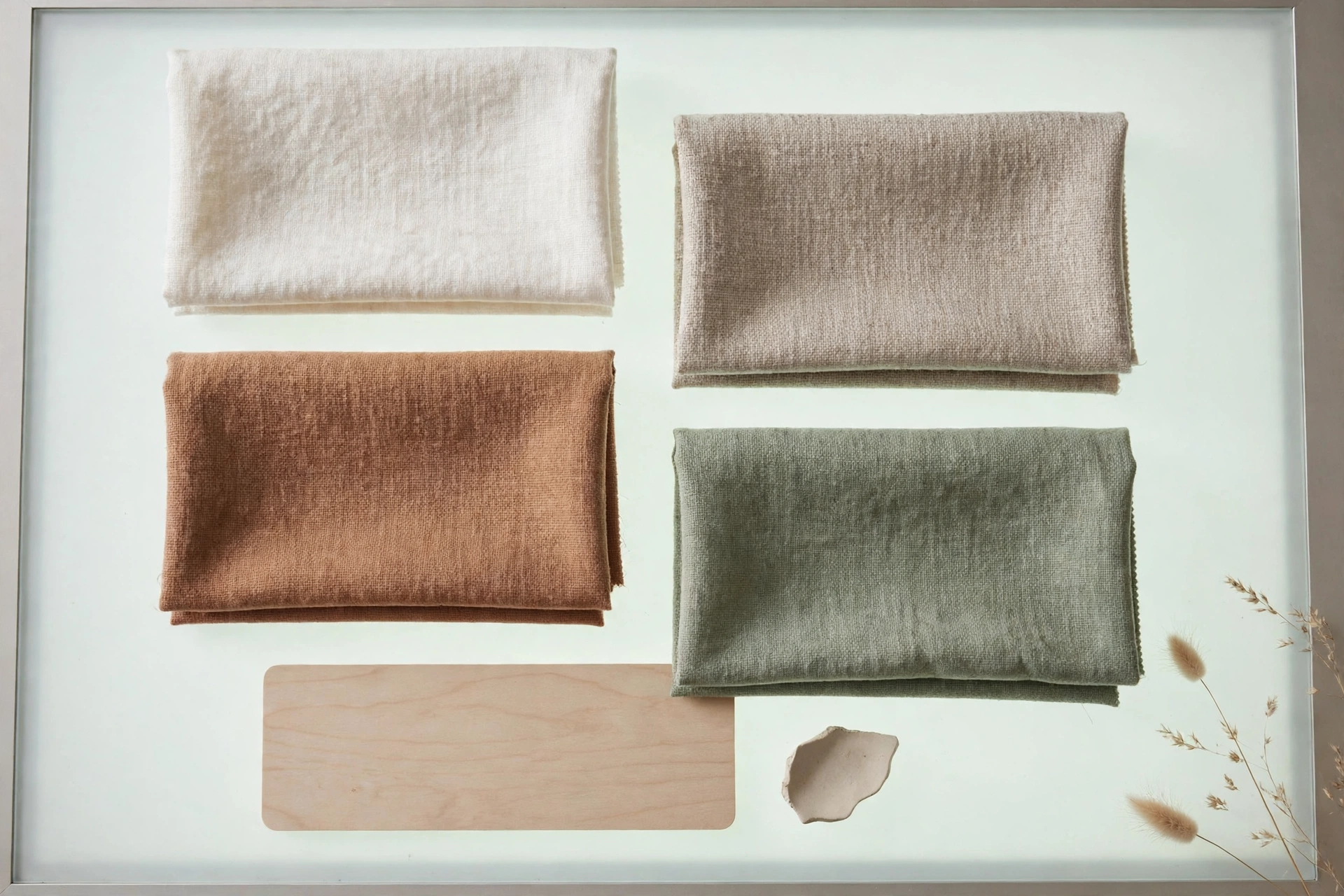
The bedroom is a natural home for Japandi, because the style loves calm and rest. Start with a low bed frame in pale wood, then keep the bedding simple. Choose linen or cotton sheets in warm white or soft grey. Add one throw at the foot of the bed, and keep the pillows to two. A room like this feels quiet the moment you walk in. In addition, keep the bed away from bright screens, so the room stays a place for sleep.
Colour matters most in a bedroom, since it sets the mood for sleep. Warm white walls with a clay or sage accent work well. Soft grey bedding keeps the bed calm, while a wood tone on the floor adds warmth. For more calm colour ideas that help you sleep, see our guide to 7 calming bedroom colour ideas for a better night’s sleep. Keep the palette soft, and avoid bright red or sharp blue in the bedroom.
Storage should be quiet and hidden. A low dresser with flat fronts fits the style, and so does a simple wardrobe in pale wood. Keep the tops of dressers clear, with one small item only. If you need more storage, use baskets under the bed or inside the wardrobe. A tidy bedroom keeps the Japandi calm alive.
A Simple Japandi Starter Plan
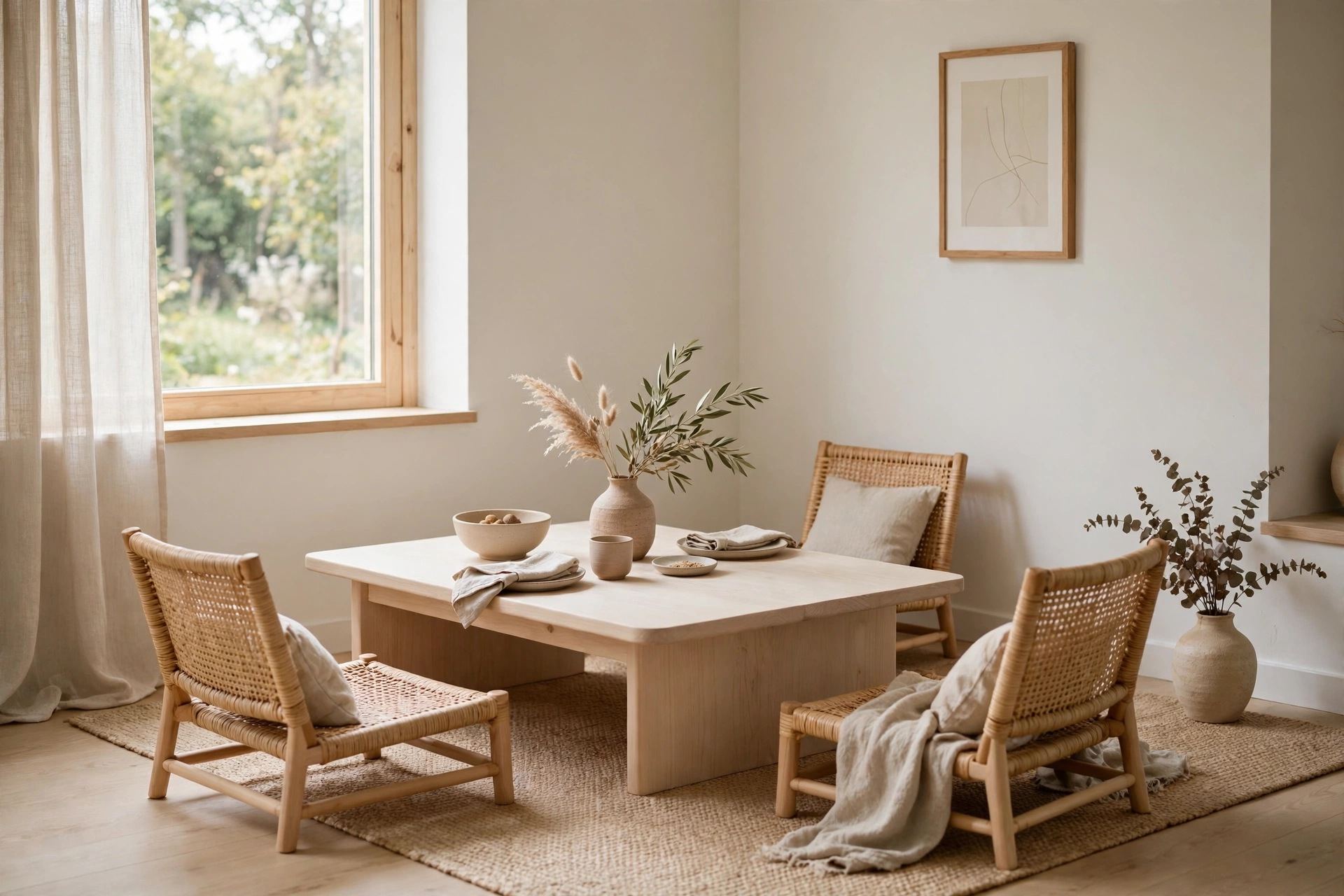
You do not need to redo a whole home to start with Japandi. Pick one room, then work through the steps in order. This starter plan is my own tested path from a one-room makeover, and it took a single weekend. Each step is small, so you can stop at any point and still see a change.
Japandi Starter Plan
| Step | What to do | Time it takes |
|---|---|---|
| 1. Clear | Remove items that do not serve or please you | One hour |
| 2. Paint | Warm white on walls, if the walls need it | Half a day |
| 3. Wood | Add one pale wood piece, like a bench or table | One trip |
| 4. Fabric | Linen cushions and a wool throw | One hour |
| 5. Light | Paper lamp or warm bulb in a simple lamp | Half an hour |
| 6. Finish | One vase with a branch, one handmade bowl | Half an hour |
After the steps, live in the room for a week. Notice what you reach for and what you ignore. If a shelf stays empty, leave it empty. The style works when the room feels calm and easy to live in. Finally, add one piece at a time from here, and stop when the room feels done.
Mistakes That Break the Japandi Look
The biggest mistake is making the room too empty. Japandi loves open space, but a room with almost nothing in it feels cold, not calm. Keep enough soft layers to make the room feel lived in. A rug, a throw, and a cushion are not clutter. They are the warmth that keeps minimalism from turning into a bare box. In addition, add one personal item, like a handmade bowl or a photo, so the room feels like yours.
A second mistake is mixing too many styles. Japandi pairs well with a few calm looks, but it fights with bright boho, loud glam, and heavy rustic pieces. If a piece shouts for attention, it does not fit. Keep the room to one clear style, then add small touches from other looks only when they are quiet and plain. As a rule, if you must ask whether a piece fits, it likely does not.
A third mistake is using cold white and grey alone. A room with only cool tones feels like a clinic, not a home. Add warm wood, beige, and clay to bring the heat back. The warmth is what sets Japandi apart from plain minimalism. So check the room at dusk, when the light is soft, and ask if it feels warm or cold.
Japandi on a Budget and in Rentals
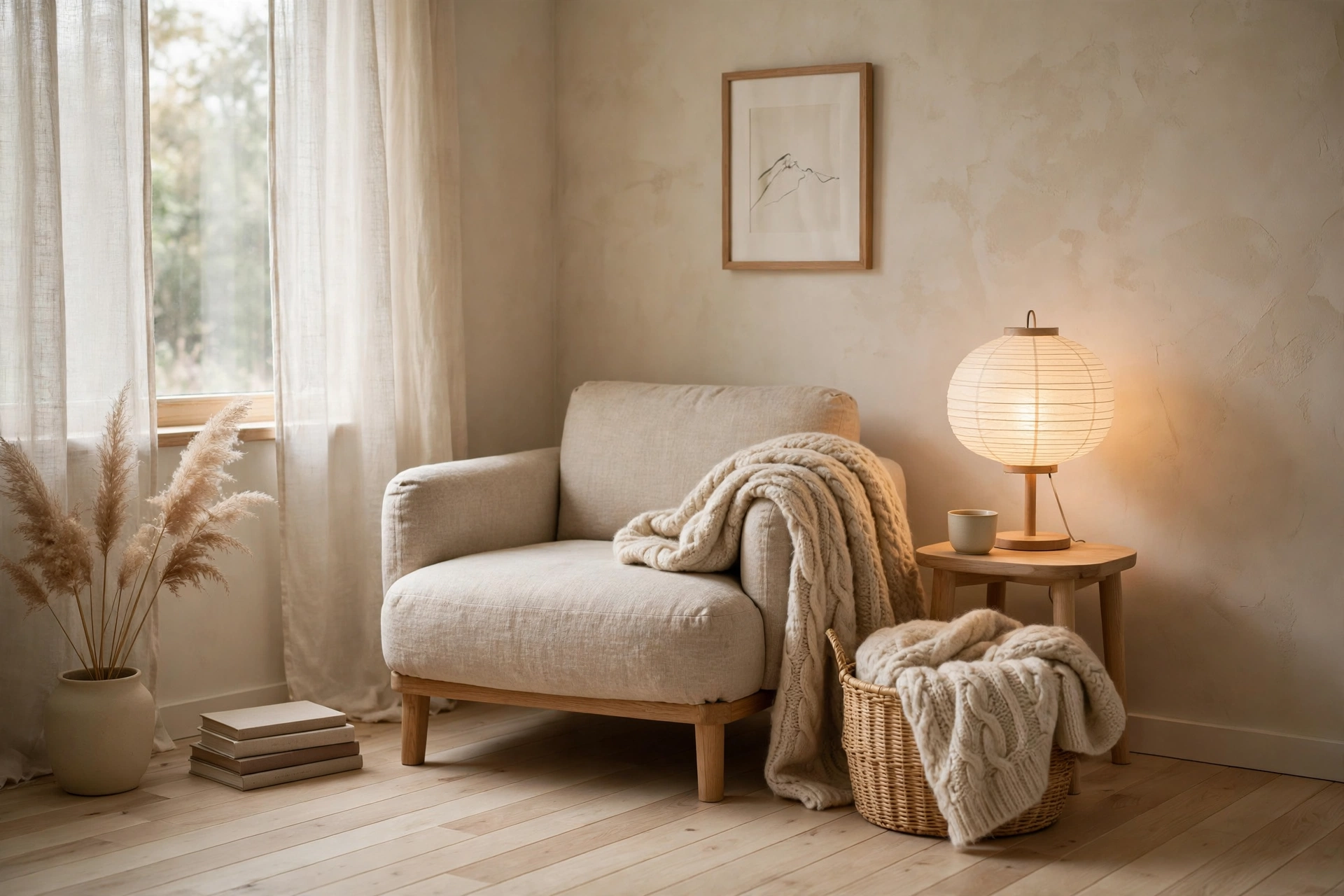
Japandi can cost little, because the style loves less. Start by removing items, not buying them. A clear room with pale walls and one wood piece already feels close to Japandi. Next, add a linen cushion and a paper lamp. Both cost little, and both change the feel of the room fast. Thrift stores often hold solid wood stools, baskets, and ceramic bowls that fit the style for very little money.
Renters can use Japandi without changing the walls. Use a large rug to set the tone, then add low furniture and soft fabrics. A leaning shelf holds books and bowls without screws. In addition, a paper lamp and a few plants bring warmth to any rental room. Leave the walls alone, and let the furniture carry the style. Finally, choose pieces you can carry to the next home, so the style moves with you.
Buy slowly. Japandi rewards one good piece over five cheap ones. Save for a solid wood table, and use a simple stool while you wait. A room built over months feels more honest than one bought in a day. For that reason, keep a short list of the pieces you want, and buy one when you find the right one.
Frequently Asked Questions
What is Japandi interior design?
Japandi is a mix of Japanese minimalism and Scandinavian design. It uses clean lines, natural wood, soft light, and a muted palette to make rooms feel calm yet warm. The style first took shape about 150 years ago, when Scandinavian designers travelled to Japan and saw beauty in simple rooms.
What colours are used in Japandi design?
The palette uses warm white, oatmeal, beige, and light grey as a base, with clay, soft sage, and warm brown for depth. A small touch of charcoal or black adds contrast. Keep the palette to four or five colours, and pick soft, muted versions rather than bright ones.
Is Japandi the same as minimalism?
No, Japandi shares the clean lines of minimalism, but it adds warmth from Scandinavian design and the wabi-sabi love of flaws and age. A plain minimal room can feel cold and bare. A Japandi room keeps the calm but adds wood, fabric, and soft light to feel warm.
Can Japandi work in a small home?
Yes, small homes suit Japandi well, because the style loves open space and low furniture. Low seats make the ceiling feel higher, and pale tones make rooms feel larger. Keep the furniture low and the palette light, and leave some space empty so the room can breathe.
What materials are best for Japandi style?
Light wood is the main material, with oak, ash, and bamboo as good choices. Linen, cotton, and wool add soft layers, while stone and ceramic bring quiet weight. Rattan and cane add a light feel. Avoid plastic and shiny chrome, since they feel cold next to wood and linen.
How do I start with Japandi on a budget?
Start by removing items you do not need, since the style loves less. Then add one pale wood piece, a linen cushion, and a paper lamp. Thrift stores often hold solid wood stools and ceramic bowls for little money. Buy slowly, and pick one good piece over five cheap ones.
Conclusion
In short, Japandi interior design brings calm and warmth to modern homes through simple shapes, natural materials, and a soft palette. Start with one room, clear the clutter, and add wood and light. This week, try one step from the plan and see how the room feels.