
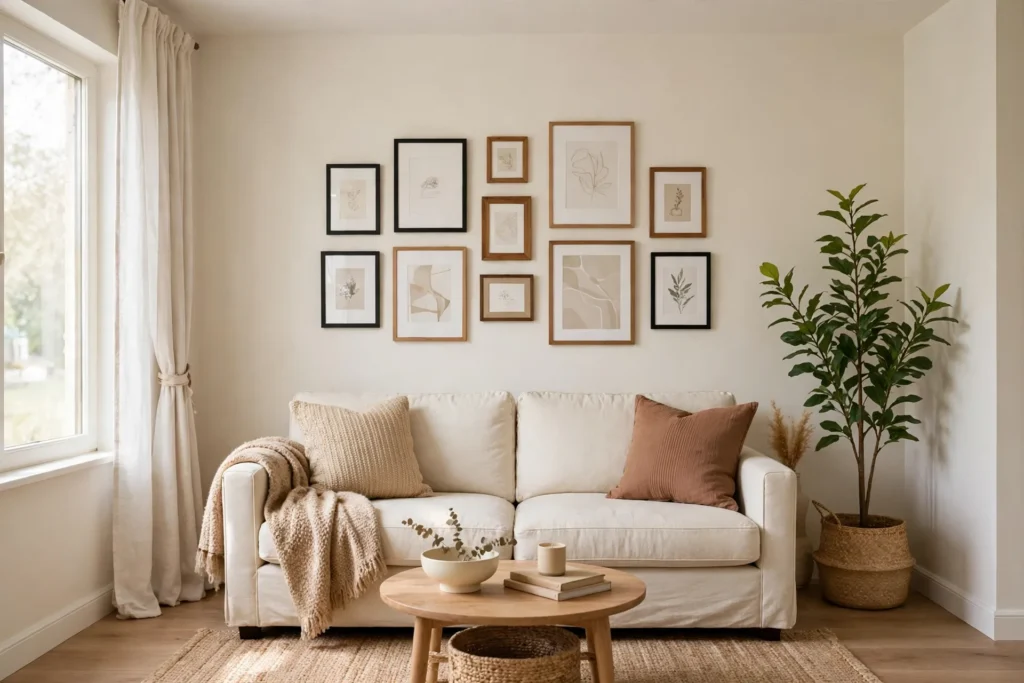
A gallery wall works in a small living room when you treat the whole group as one piece of art. Keep the frames close, the centre at eye level, and the total width smaller than the sofa below it. These small living room gallery wall ideas show you how to plan, pick frames, and hang it all without holes.
Start With the Wall, Not the Frames

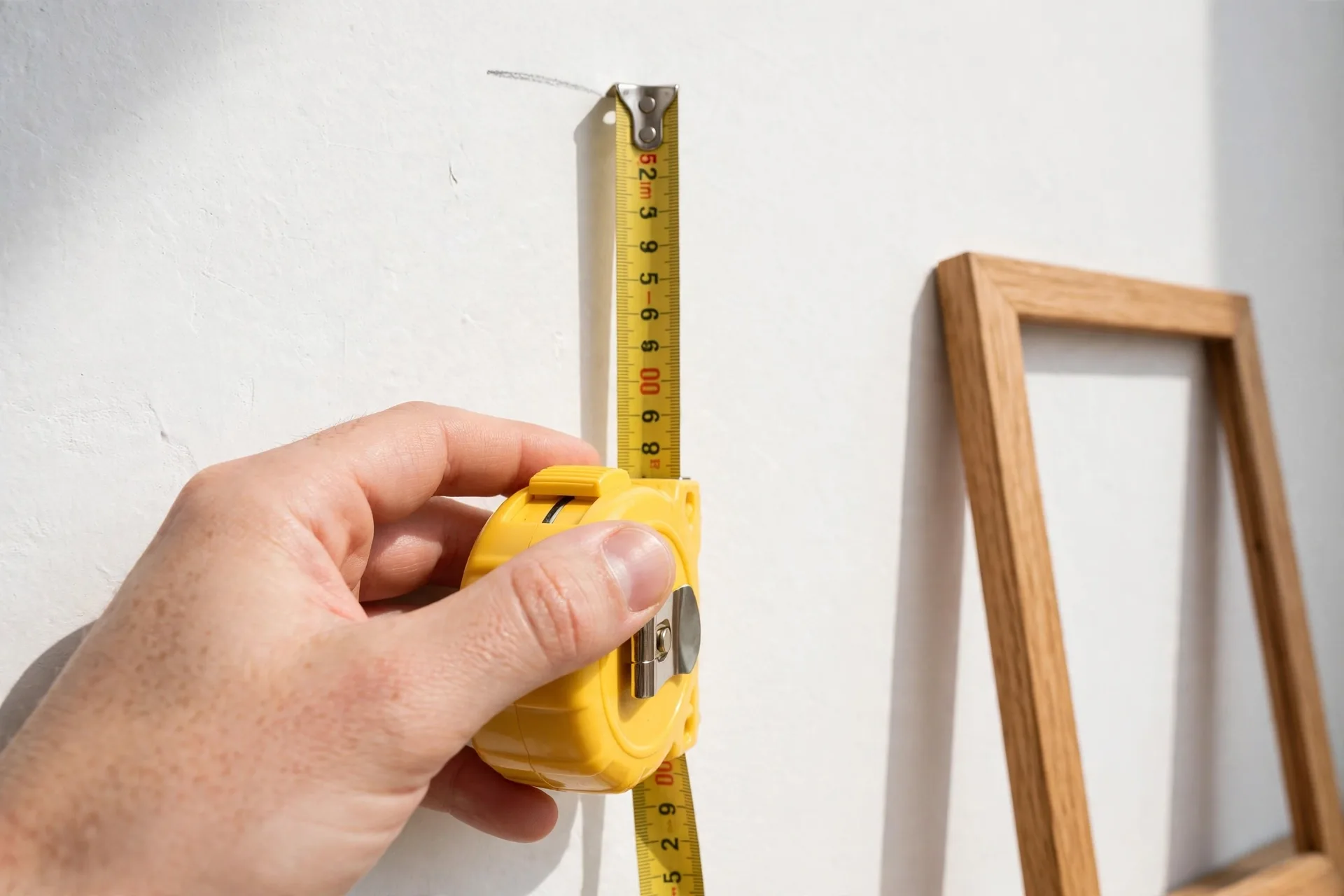
Most gallery walls go wrong before a single nail goes in. People buy frames first and then try to fit them on the wall. That order leads to gaps that feel random and a group that looks too big or too small. So start with the wall itself. Measure its width and height, and note where the sofa sits. Also mark the spots you must avoid, like light switches, outlets, and vents. A tape measure and five minutes now save you an afternoon of patching holes later.
Next, look at the wall as one shape. A good gallery fills about two-thirds of the wall width above a sofa, and it leaves breathing room on each side. If the wall is bare with no furniture below it, aim to fill the middle band of the wall and keep the edges clear. Then sketch the shape on paper. A rough rectangle, a loose cluster, or a single neat row are all fine. What matters is that you pick the shape before you pick the frames.
Small Living Room Gallery Wall Ideas That Fit Tight Spaces
A grid layout is the calmest choice for a small room. Frames of the same size sit in straight rows with even gaps, and the result feels tidy even when the art inside is busy. A three-by-three grid of small frames suits a wall above a two-seat sofa. A two-by-four grid works well on a longer wall. Grids also forgive mixed art, because the even frames hold everything together. If your room already feels busy, a grid is the safest place to start.
A salon layout is the loose, mixed look you see in older homes. Frames of different sizes cluster together with small gaps, and the group grows over time. This style suits a collected home, and it hides the fact that your frames do not match. But it needs one rule to stay calm. Keep the gaps between frames close, about two to three inches, and keep the outer edge of the group roughly even. Without that edge, a salon wall can slide into clutter fast.
A single row or a picture ledge suits a very narrow wall. One straight line of three or four small frames reads clean and takes up little visual space. A ledge is even better for renters, because you can lean frames on it and swap them without new holes. Put the row or ledge at eye level, and keep the frames small. In a tight room, a small neat line beats a big crowded wall every time.
The Numbers That Make It Look Right
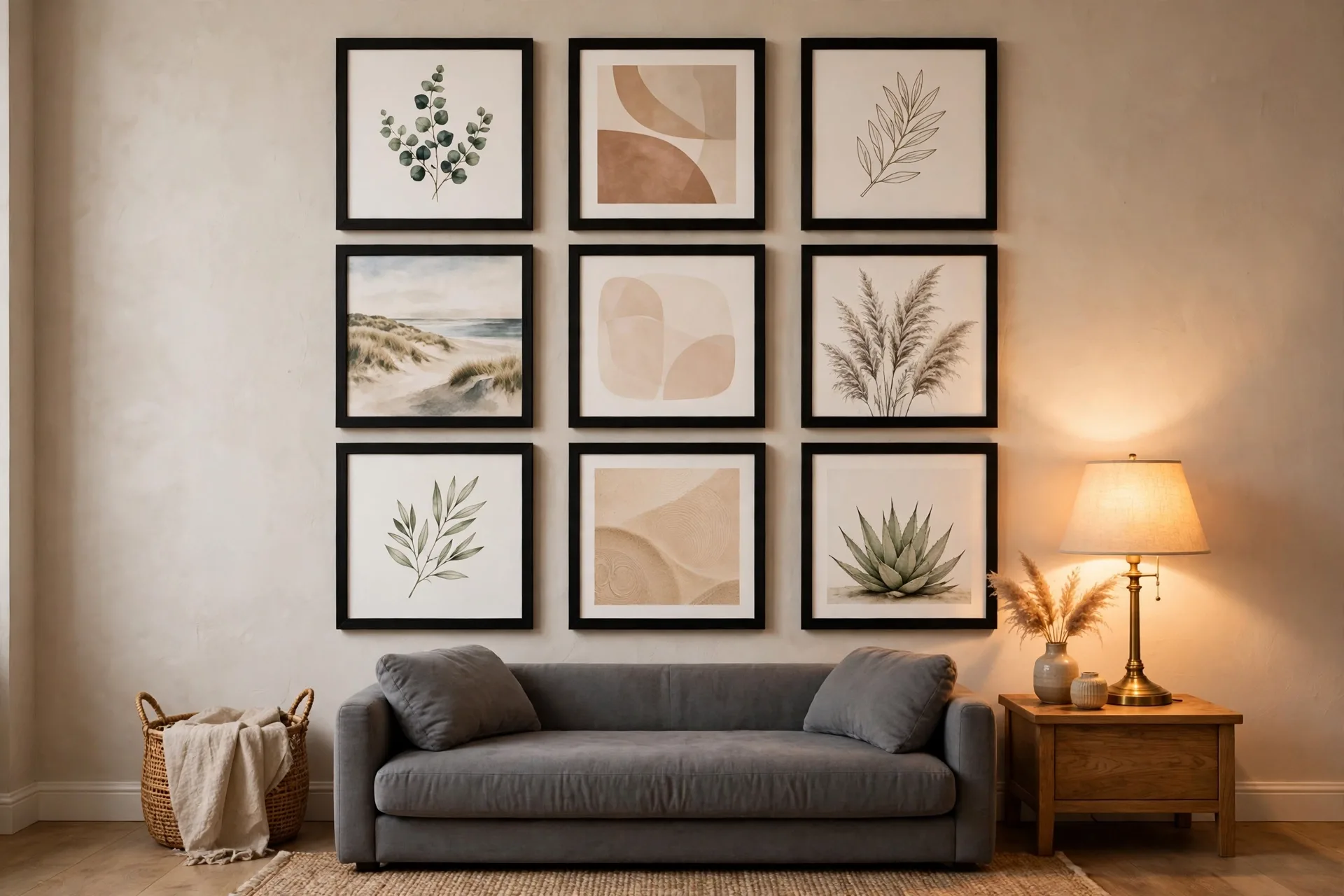
Galleries and museums hang art with the centre at 57 inches from the floor. That height matches the average eye level of a standing adult, so it feels natural to look at. For a gallery wall, use the centre of the whole group, not the centre of one frame. Measure the full height of your planned group, find its middle, and put that middle at 57 inches. When the wall sits above a sofa, though, a second rule takes over. Leave six to eight inches between the bottom of the lowest frame and the top of the sofa back. That gap ties the art to the furniture, and it stops the wall from floating.
Gallery wall measurements at a glance
| Measurement | What to do | Why it matters |
|---|---|---|
| Centre height | 57 inches from the floor | Matches average eye level |
| Gap between frames | 2 to 3 inches | Keeps the group tight and calm |
| Gap above a sofa | 6 to 8 inches | Ties the art to the furniture |
| Width above a sofa | Two-thirds to three-quarters of the sofa | Stops the wall from looking top-heavy |
| Bottom edge on a bare wall | About 24 inches above the floor | Keeps art clear of feet and pets |
A Worked Example for a 9-Foot Wall
Here is a worked example for a common small living room. Say the wall is 9 feet wide, which is 108 inches, and the sofa is 6 feet wide, or 72 inches. Two-thirds of 72 is 48 inches, and three-quarters is 54 inches. So the gallery should span about 48 to 54 inches wide. A three-by-three grid of 16-by-12-inch frames with 2-inch gaps comes out at 52 inches wide and 40 inches tall, which fits the range.
Now place it. The sofa back is 36 inches high, so the bottom of the lowest frame should sit 7 inches above it, at 43 inches from the floor. The top edge then lands at 83 inches, and the centre sits at 63 inches. That is above the 57-inch line, and that is fine here, because the sofa gap matters more than the museum line when furniture sits below the art. On a bare wall with no sofa, you would centre the same group at 57 inches instead.
Choose Frames That Look Collected, Not Cluttered
Frames do more work than the art inside them. A mix of three finishes at most keeps the wall calm. Black, natural wood, and white is a safe set. Add a fourth finish only if it repeats somewhere else in the room, like a brass lamp or a walnut shelf. Also keep the frame widths close. Very thin frames next to very chunky ones fight each other. When in doubt, pick simple flat frames and let the art carry the colour.
Size matters more than style. Use two or three sizes only, and repeat them. A wall with one large anchor piece, a few medium frames, and a few small ones feels planned. A wall with nine different sizes feels like a yard sale. Also leave white space inside the frames. A wide mat around a small print gives the eye a rest, and it makes cheap prints look dear. You can cut mats from plain card if the frame shop price puts you off.
Hang It Without Holes
Renters can hang a full gallery wall without losing their deposit. Adhesive strips hold light frames well when you follow the weight rating on the pack. Clean the wall first with a damp cloth, press the strip flat for 30 seconds, and wait an hour before you hang the frame. Check the weight of each frame on a kitchen scale if you are unsure. Most small frames with glass weigh under two pounds, and a pair of medium strips holds that with room to spare. For heavier frames, use more strips or switch to a picture ledge. The Command brand site shows which strips fit which weights, and their damage-free hanging guide is a good place to start.
Picture ledges are the other renter-friendly fix. A slim ledge screws into two studs, and then every frame just leans on it. You can move frames in seconds, and you only patch two holes when you leave. Lean the largest frame at the back and overlap smaller ones in front.
A ledge also lets you test a layout before you commit. Lean the frames, step back, and swap two pieces if the balance feels off. Once the order feels right, you can leave the frames leaning or hang the keepers on the wall. Either way, you tried the wall without a single new hole. If you want more ideas that leave no marks, read our guide to renter-friendly wall decor for no-nail options that work in any room.
Mix Art, Photos and Objects Without the Mess
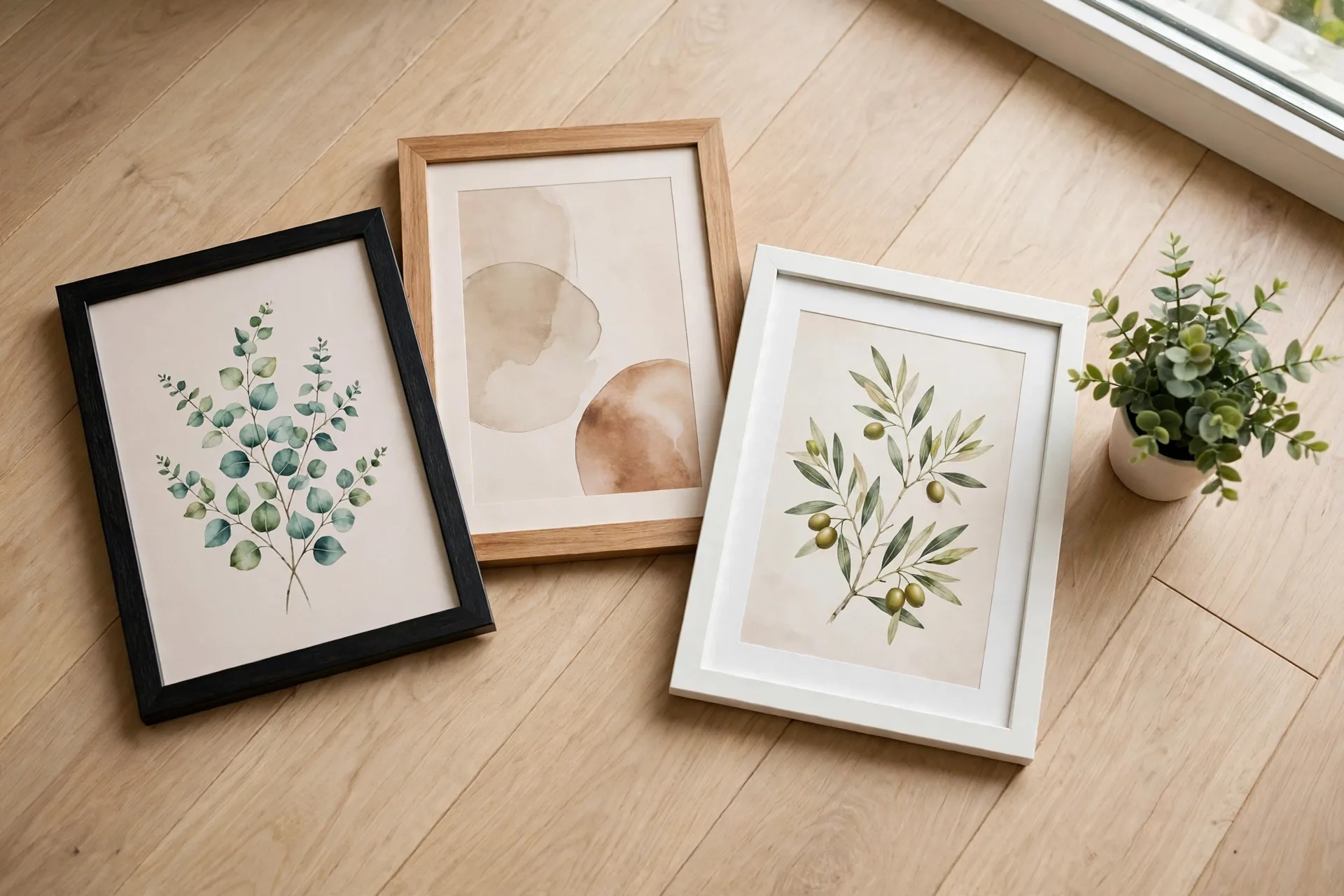
A gallery wall needs one thread that ties it together. That thread can be a colour, a theme, or a frame style. For example, black-and-white photos with one red print in the middle read as one story. Travel prints with matching wood frames read as one story too. But a wall with random colours, random frames, and no repeat will look noisy. Pick your thread first, then test each piece against it. If a piece breaks the thread, save it for another room. If your room layout still feels off, our living room layout ideas show how the sofa, rug, and wall art should sit together.
Small objects add depth when you use them sparingly. One woven wall hanging, one small mirror, or one tiny shelf can break up a flat wall of frames. Keep objects to about one in five pieces, and keep them light. A mirror also bounces light around a small room, which helps the space feel bigger. But do not hang anything heavy or sharp above a sofa where people sit. Safety comes first, and a fallen object can hurt someone.
Five Mistakes That Make a Gallery Wall Look Messy
1. Too high. Art hung near the ceiling floats away from the room. Bring the centre down to eye level, or to six inches above the sofa.
2. Too wide. A gallery wider than the sofa below it looks top-heavy. Keep it to two-thirds or three-quarters of the sofa width.
3. Too many sizes. Nine different frame sizes with no repeat look random. Use two or three sizes and repeat them.
4. Gaps too big. Frames spaced six inches apart read as separate pictures, not one wall. Keep gaps at two to three inches.
5. Matching sets. A boxed set of identical prints looks like a hotel wall. Mix real photos, prints, and art you actually like.
A Simple Weekend Plan
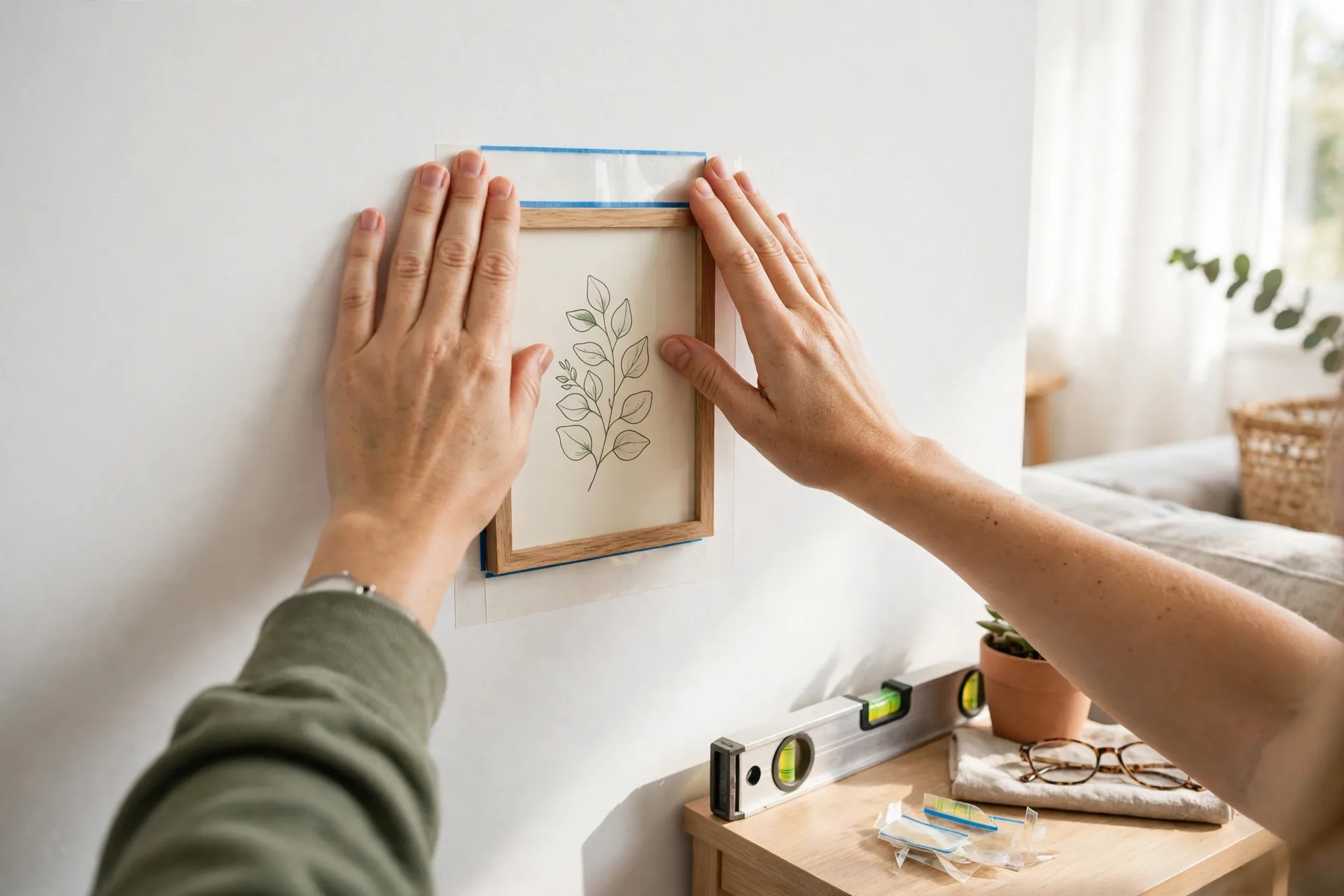
You can finish a small gallery wall in one weekend with no stress. On Saturday morning, measure the wall and cut paper templates for each frame. Tape the templates to the wall and live with them for a day. Move them around until the shape feels right, then mark the nail spots with a pencil. On Sunday, hang the frames one at a time, starting with the largest. Step back after each frame and check the gaps. If one frame sits crooked, fix it now, not later. Then add the small pieces last, and stand back to enjoy the wall. A rug sized right for a small living room under the sofa will finish the seating area and tie the whole corner together.
Frequently Asked Questions
How many frames should a small living room gallery wall have?
Five to nine frames suit most small living rooms. Fewer than five can look thin on a wide wall, while more than nine gets hard to keep tidy. Start with five or six, live with the wall for a week, and add one or two more only if a gap still bothers you.
How high should I hang a gallery wall above a sofa?
Leave six to eight inches between the bottom of the lowest frame and the top of the sofa back. That gap ties the art to the furniture. On a bare wall with no sofa, centre the whole group at 57 inches from the floor instead.
Can I hang a gallery wall without nails in a rental?
Yes. Adhesive strips hold light frames well when you respect the weight rating on the pack. Clean the wall first, press each strip flat, and wait an hour before hanging. For heavy frames, use a picture ledge that needs only two screws.
Should all my frames match?
No, they should not all match, but they should share a thread. Two or three finishes, such as black, wood, and white, keep the wall calm. Matching boxed sets look flat and a little dull, while a planned mix looks collected and personal.
What size should a gallery wall be over a sofa?
Aim for two-thirds to three-quarters of the sofa width. For a 72-inch sofa, that means a gallery about 48 to 54 inches wide. Measure your sofa first, then size the gallery to fit it. Wider than the sofa looks top-heavy, and much narrower looks lost on the wall.
How do I plan a layout without extra holes?
Cut paper templates the same size as each frame and tape them to the wall first. Move them until the shape feels right, then mark the nail spots through the paper. This trick lets you test the whole wall before you drill or hammer anything.
Final Thoughts
A small living room does not need a big wall to show art you love. Measure first, keep the group tight, and hang it at a height that feels natural. Start with five frames and one clear thread, and let the wall grow over time. Your blank wall is ready. Pick the first frame this weekend and hang it.

