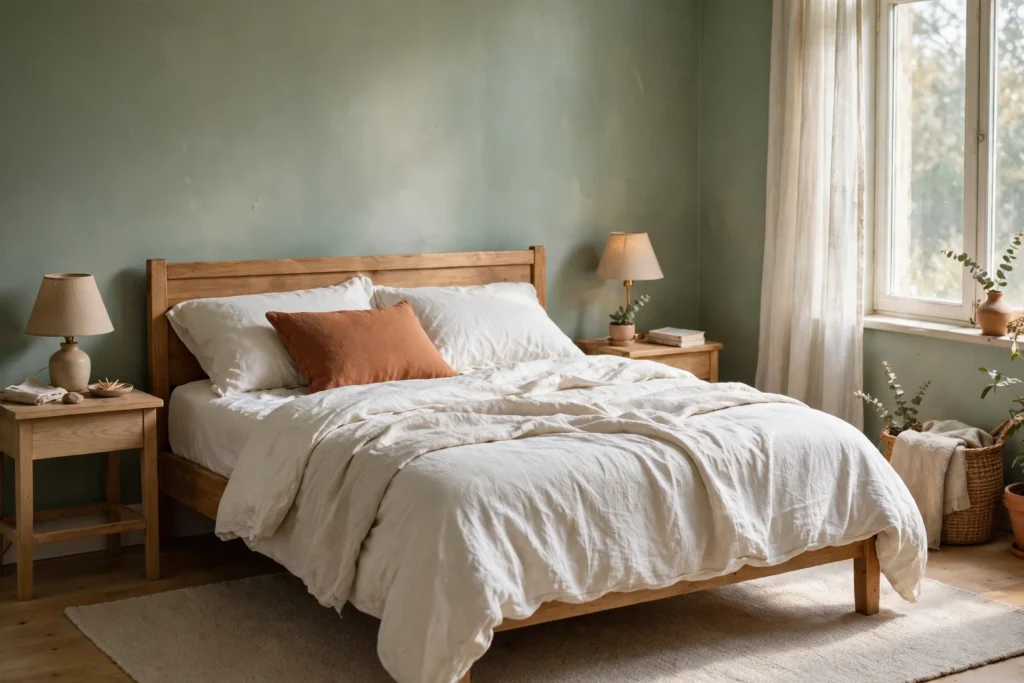
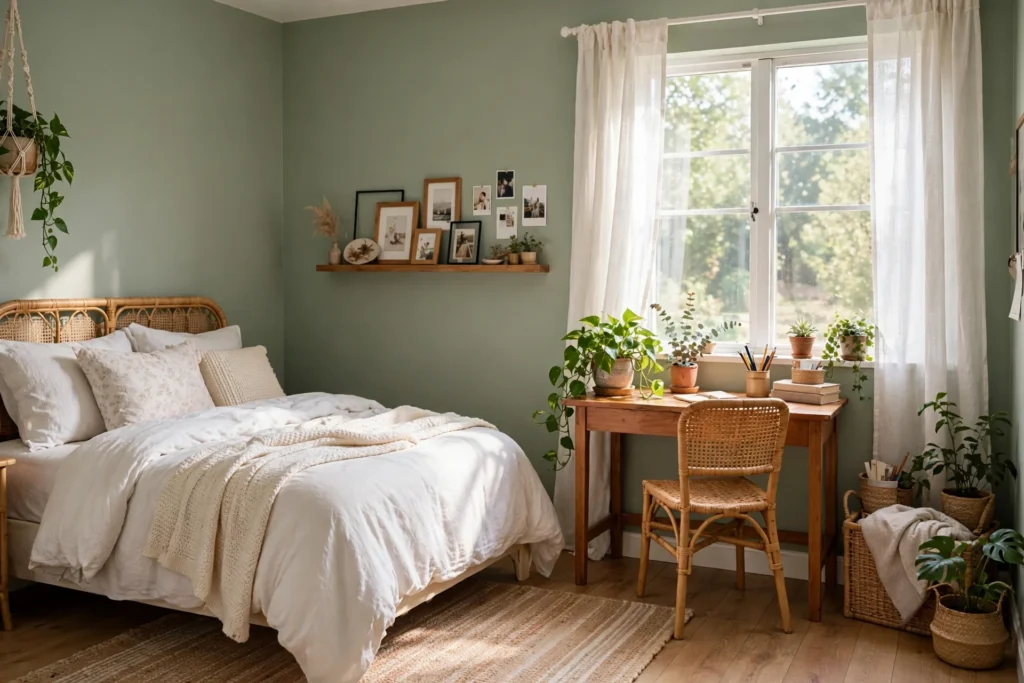
Small teen bedroom ideas for girls work best when the room has four zones: sleep, study, storage and a spot for friends. A twin bed, a 4-foot desk, one tall dresser and a wall she can change herself are enough. Start with the bed and the desk, then let her style the rest.
A teen bedroom is not a kids room with older paint. A 13-year-old needs a desk that fits a laptop, a bed she can stretch out on, and storage she can reach without a stool. She also needs a room that can change fast, because her taste at 13 will not be her taste at 16. The best small teen rooms plan for that change.
What Makes a Teen Bedroom Work
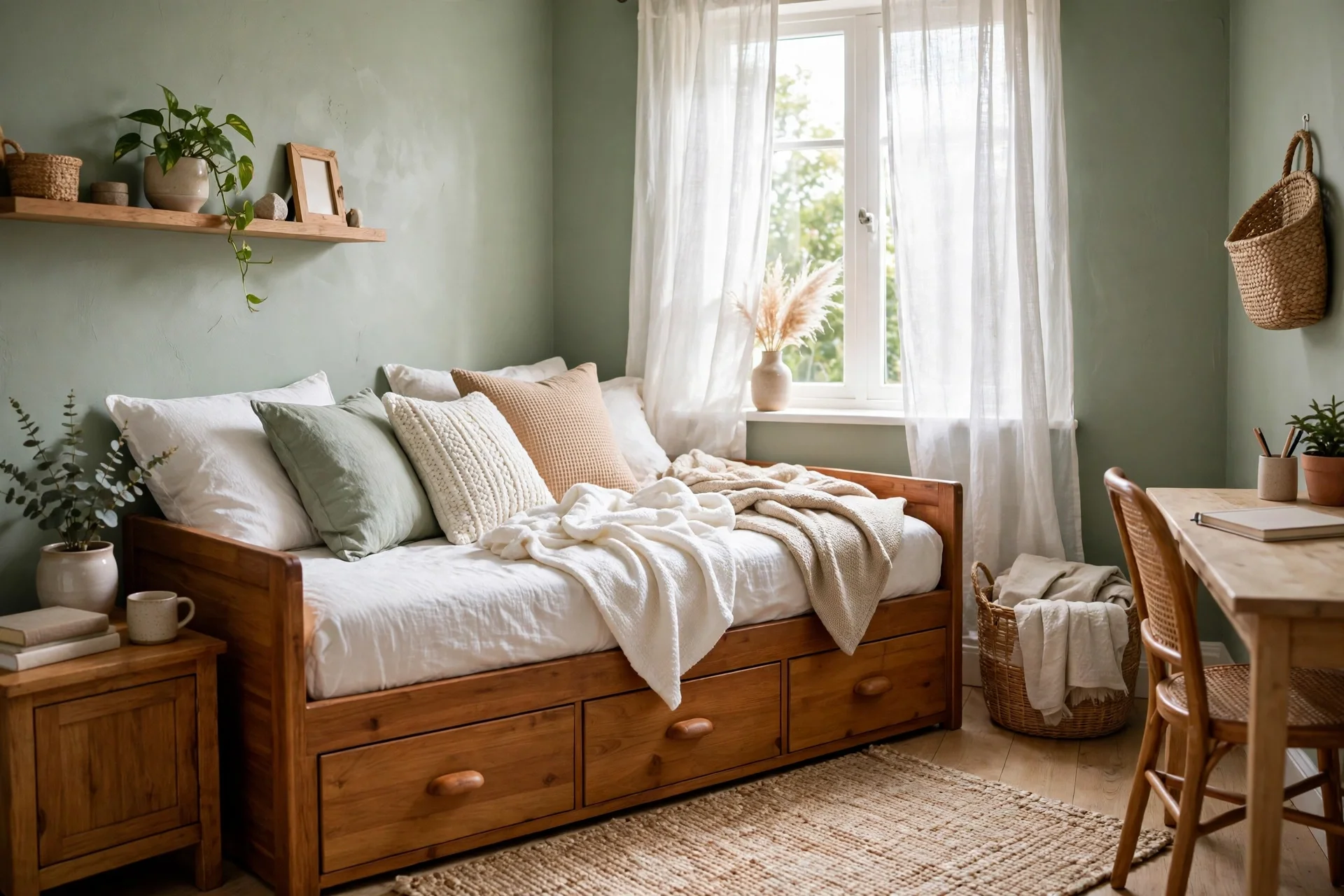
Think in zones, not in furniture pieces. Sleep takes one wall. Study takes a corner with light. Storage takes the tallest piece you own. Friends take a floor cushion or a small chair, not a second bed. When each zone has its own place, a 10 by 12 foot room stops feeling small.
Keep the big pieces neutral and let her change the small ones. A white or wood bed frame lasts for years, while bedding, cushions and posters can change every year for little money. That split saves you from repainting the whole room each time her favourite colour changes. And it gives her real choice.
Ask her to list her top five must-haves before you buy anything. Most teens name the same things: a good bed, a desk with space for a laptop and books, a mirror, a seat for a friend, and storage for clothes. If an item is not on her list, it can wait. Kids room decor ideas from her younger years can help with the hand-me-down pieces, but the plan should start fresh with her.
Small Teen Bedroom Ideas for Girls That Actually Work
These six ideas all fit rooms of 100 to 130 square feet. Pick four or five, not all six. A small room looks best with one clear idea per zone, not a list of clever tricks piled on top of each other.
A Bed That Does Two Jobs
A daybed works harder than a plain bed in a small teen room. By day it is a sofa for reading and friends. By night it is a full twin bed. Add a trundle drawer below it, and you gain a drawer the size of a suitcase for out-of-season clothes. That one drawer can hold every winter jumper.
If she hates daybeds, a loft bed is the other strong choice. It lifts the mattress about 5 feet off the floor and frees the space below for a desk or a nook. A loft only works with a ceiling of at least 8 feet, though. She needs about 30 inches of sitting space above the mattress, or she will bump her head every morning. Measure the ceiling first.
A Study Corner That Fits in 4 Feet
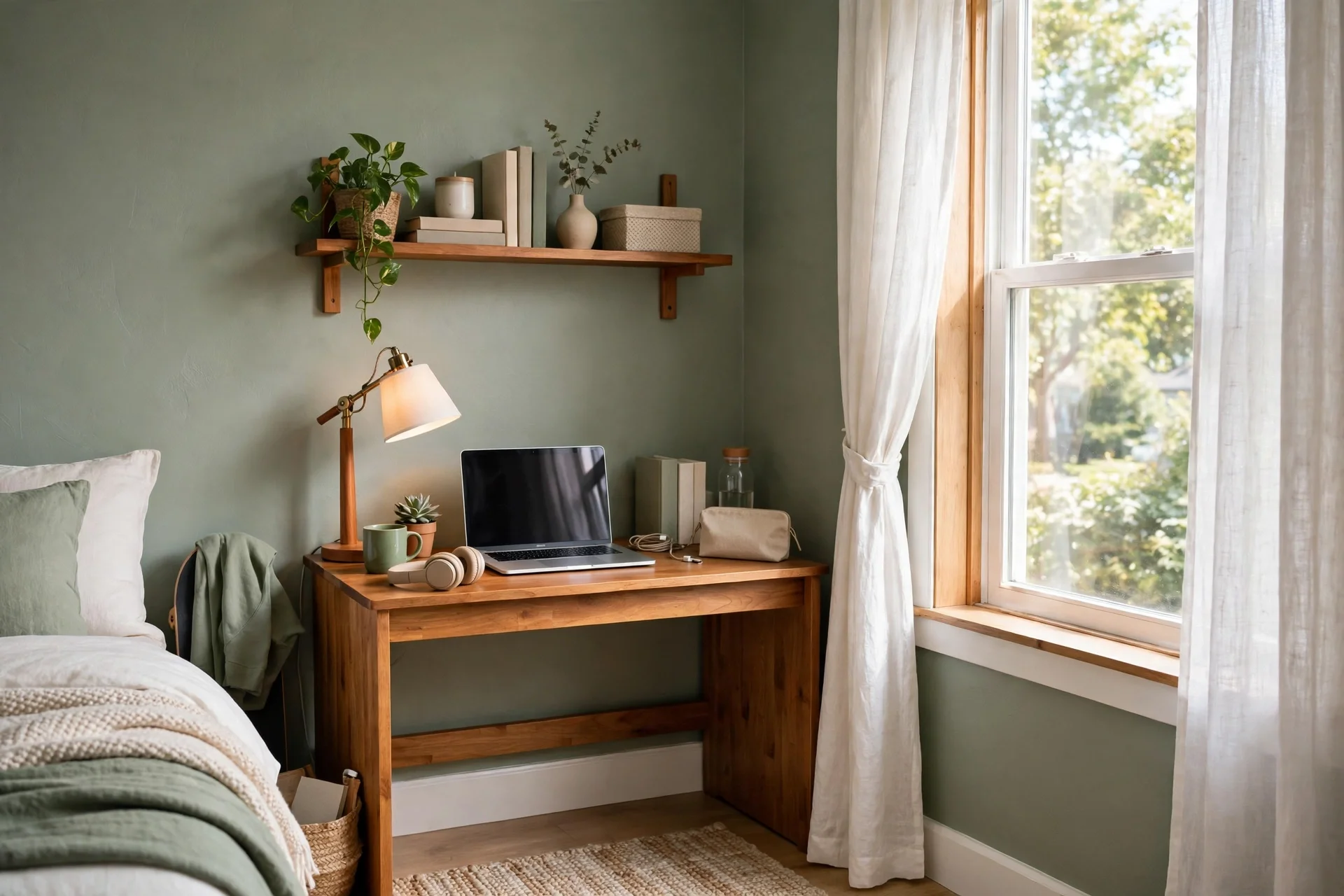
A teen desk does not need to be big. A 48-inch desk, 24 inches deep, holds a laptop, a notebook and a lamp with room to write. Put it near the window, because daylight beats a desk lamp for homework. If the window wall is taken, a wall shelf above the desk adds storage without stealing floor space.
Keep the desk clear of the bed. A desk that faces the bed invites naps, and a desk that faces the wall invites focus. Add one small drawer unit beside it for pens, chargers and school papers. Cables are the enemy of a tidy desk, so fix a small cable tray or a few adhesive clips under the desk top. Five minutes of cable control makes the corner look twice as neat.
Storage She Can Actually Keep Tidy
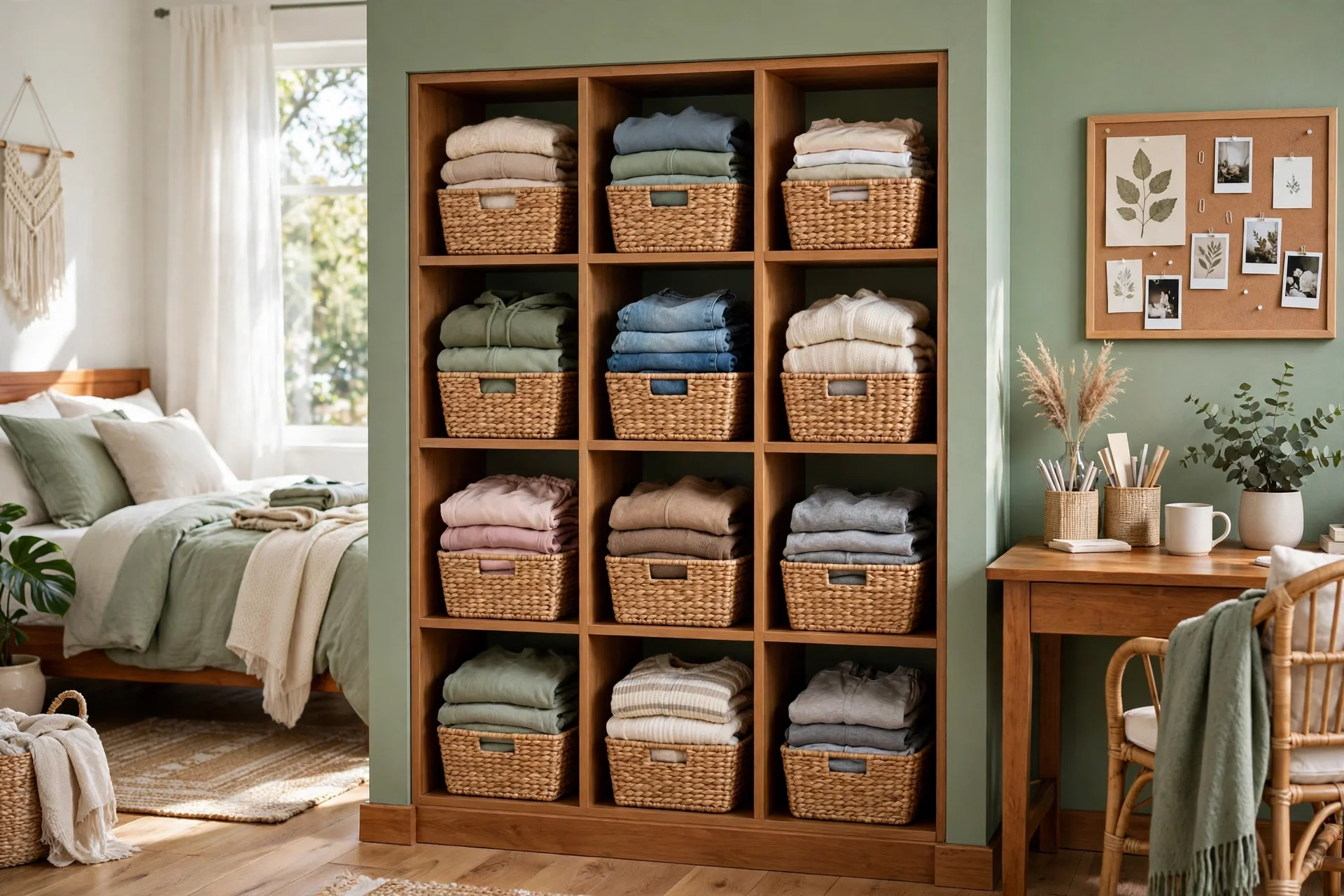
Teen storage fails when it needs too many steps. A deep chest with a heavy lid will stay messy, because opening it feels like a chore. Open cubbies, shallow drawers and labelled baskets work better, because she can see what is inside and toss things in with one hand. Put everyday clothes at eye level and out-of-season ones up high.
Give every category one home. School things live in the desk drawer. Everyday clothes live in the dresser. Going-out clothes live on a short rail or a few hooks. When a category has no home, it lands on the floor. A weekly five-minute reset helps, too. Set a timer, play one song, and tidy only what is visible. Short resets beat rare deep cleans.
A Wall She Can Change Herself
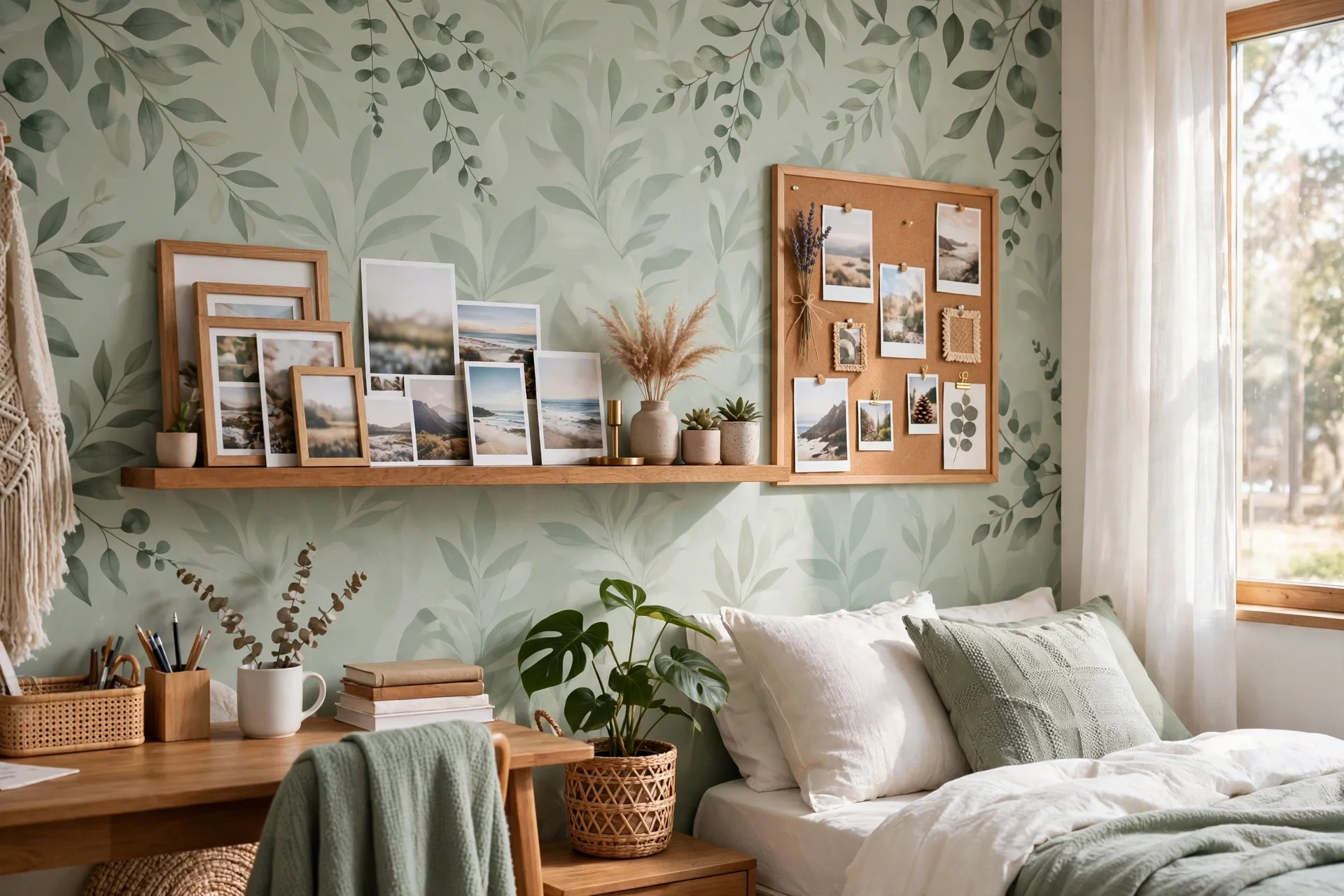
Teens change their minds fast, so give them one wall they can redo without paint or holes. Peel and stick wallpaper covers one accent wall in an afternoon and comes off clean when her taste changes. A photo ledge works the same way: a narrow shelf for framed prints, postcards and small art, all swappable in minutes.
A pinboard or a wire grid is the cheapest version of the same idea. She can pin tickets, photos and notes, then swap them whenever she likes. Keep the rest of the walls calm, so the changeable wall is the feature. If she wants a bold colour, put it on that one wall only. Peel and stick wallpaper for a girls’ room is the easiest way to try a pattern without a long-term promise, and it peels off cleanly when she outgrows it.
Colour That Grows With Her
Pick a wall colour she will still like at 17, not just at 13. Soft sage, warm white, pale blush and dusty blue all age well, because they sit quietly behind bedding and posters. A bright pink wall looks fun for a year, then starts to fight with everything else. If pink is her favourite, use it in bedding and cushions, not on all four walls.
Let her choose one accent colour and use it in three places: the bedding, one cushion and a small lamp or frame. Three repeats make the colour look planned. One repeat looks random, and five repeats look like a theme park. Sage green bedroom ideas show how one calm colour can carry a whole room, and the same trick works with dusty blue or terracotta.
Light Layers for Homework and Late Reads
One ceiling light is never enough in a teen room. She needs three layers: daylight, a desk lamp for homework, and a soft light for reading in bed. A clip-on reading light costs little and beats reading by phone light. Fairy lights look pretty, but they are decoration, not working light, so do not count them.
Keep the desk lamp on the opposite side from her writing hand. For a right-handed teen, the lamp goes on the left, so her hand does not cast a shadow on the page. A warm bulb, around 2700K, feels calm in the evening, while a cooler bulb suits morning study. If the room has only one socket near the desk, a small power strip with a switch solves it, and one click turns everything off.
A Real Room Plan: 10 by 12 Feet
Most teen bedrooms in small homes measure about 10 by 12 feet, or 120 square feet. Here is a layout that fits that room without blocking the door or the window. It uses a twin bed, a 48-inch desk and one tall dresser, and it leaves a clear walkway of about 30 inches.
Table: A 10 by 12 foot teen bedroom layout
| Zone | Piece | Size | Where it goes |
|---|---|---|---|
| Sleep | Twin bed | 38 by 80 inches | Against the long wall, headboard at the far end |
| Study | Desk and chair | 48 by 24 inches | Against the opposite wall, near the window |
| Storage | Tall dresser | 36 by 18 inches | On the short wall beside the door |
| Friends | Floor cushion | 24 by 24 inches | In the corner by the bed, stored under it |
| Display | Photo ledge | 48 inches long | Above the desk, at eye level when seated |
Check the maths before you buy. The room is 120 inches wide. The bed takes 38 inches and the desk 24 inches, which leaves 58 inches of open floor. That leaves room for a 30-inch walkway and a chair pulled out from the desk. The dresser is 18 inches deep, so it fits on the short wall without blocking the door swing. Measure the door swing first, because a dresser in the wrong spot is the most common layout mistake.
This plan also leaves one wall free for her changeable display wall. That wall sits opposite the bed, where she sees it first thing in the morning. Put the pinboard or the photo ledge there, not behind the bed where only the pillow sees it.
Safety First: Anchor Tall Furniture
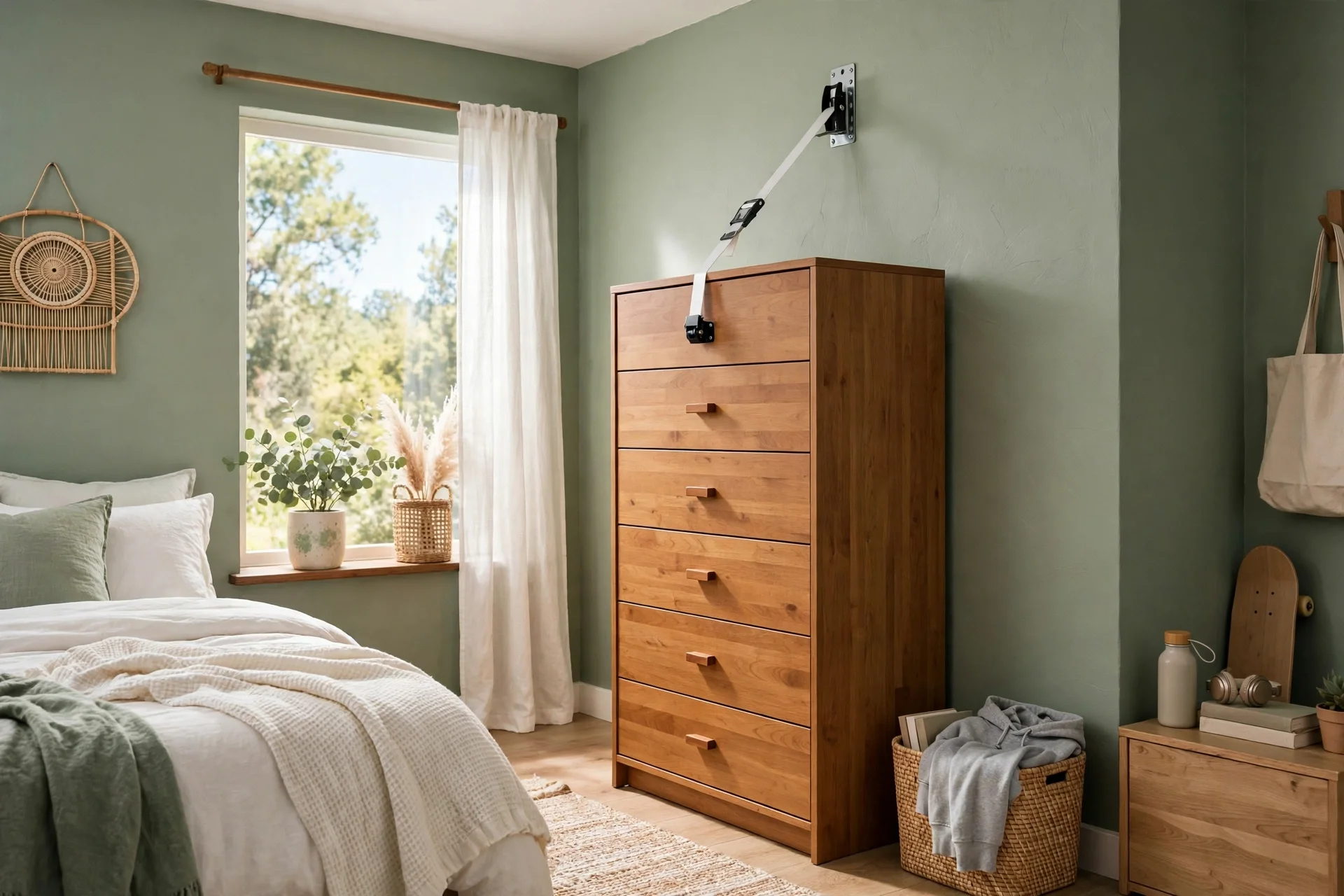
Teen rooms still need anchoring, because teens climb too. They stand on dressers to reach high shelves and lean on bookcases. A tall dresser can tip in seconds when a drawer is open and a teen pulls on it. Anchor every dresser, bookcase and tall shelf to a wall stud with an anti-tip kit, and check the straps after every move.
The risk is real. The U.S. Consumer Product Safety Commission runs the Anchor It! campaign, and it credits the campaign with helping cut tip-over injuries and deaths by nearly half since 2015. A mandatory stability standard has applied to new clothing storage units 27 inches or taller since September 1, 2023, but older furniture needs a strap. A basic anti-tip kit costs under 20 dollars and takes about 15 minutes to fit. Read the CPSC’s advice on anchoring furniture before you start, and anchor the bookcase and the TV stand too, not just the dresser.
Renters can anchor as well. The holes are small, and a little filler fixes them when you leave. If your landlord says no to drilling, push tall furniture into a corner where two walls support it, and keep heavy items in the lowest drawers. That helps, but it is not a replacement for a strap. Ask again, in writing, and explain that it is a safety fix, not decoration.
Where to Spend and Where to Save
Spend on the bed and mattress first. She sleeps there every night, and a good one lasts years. A solid bed frame is next, because it holds the mattress and takes daily wear. Spend on the desk chair, too. A cheap chair hurts her back during homework, and a good one costs less than a bedding set.
Save on bedding, cushions, posters and small decor. These change often, so buy them cheap and swap them freely. Paint is the cheapest big change in the room, and one accent wall costs less than a new dresser. Save on storage baskets as well. Plain baskets work as well as pretty ones, and a label makes them look planned.
Buy the big pieces in neutral colours and the small pieces in her current favourite colour. When her taste changes, you replace cushions and bedding, not furniture. That split keeps a teen room feeling new without starting over every year.
Mistakes to Avoid
The biggest mistake is buying a full matching bedroom set. It looks tidy in the shop, but it eats floor space and leaves no room for a desk or a friend. Buy pieces one at a time, and measure each one first. A dresser that blocks the door is worse than no dresser.
The second mistake is painting all four walls a loud colour. It photographs well and lives badly. Strong colour on every wall fights with bedding, posters and clothes, and it makes the room feel smaller. Use strong colour on one wall or in soft furnishings, and keep the others calm.
The third mistake is skipping the anchor straps. A room can look finished and still be unsafe. Fit the straps on the same day the furniture arrives, before the room fills up with clothes and books. Once the room is full, nobody wants to pull the dresser out to fit a bracket. Do it first. It takes fifteen minutes.
Frequently Asked Questions
What size bed is best for a small teen bedroom?
A twin bed, 38 by 80 inches, fits most small teen rooms best. It leaves floor space for a desk and a chair, and it fits a 10-foot wall with room to spare. A twin XL adds 5 inches for taller teens. Skip a full-size bed unless the room is over 130 square feet.
How do you fit a desk in a small teen bedroom?
Use a 48-inch desk, 24 inches deep, near the window or opposite the bed. That size holds a laptop, a notebook and a lamp. Add a wall shelf above it for books, and keep the chair tucked in when it is not in use. A desk facing the wall helps focus.
What colours work best in a teen girl’s bedroom?
Soft sage, warm white, pale blush and dusty blue age well, because they stay calm behind bedding and posters. Use her favourite bright colour in bedding and cushions, not on all four walls. One accent colour in three places looks planned. Five repeats look like a theme park.
How can a teen keep a small bedroom tidy?
Give every category one home: school things in the desk drawer, everyday clothes in the dresser, going-out clothes on hooks. Use open cubbies and labelled baskets, since she can see what is inside. Add a five-minute reset each week, with a timer and one song. Tidy only what is visible.
Should you anchor furniture in a teen’s room?
Yes. Teens climb and lean on furniture just like younger children, and a tall dresser can tip in seconds when a drawer is open. Anchor every dresser, bookcase and tall shelf to a wall stud with an anti-tip kit. A basic kit costs under 20 dollars and takes 15 minutes to fit.
How do you make a small teen bedroom feel bigger?
Keep the big pieces neutral, use one wall colour, and leave a third of every surface empty. A mirror opposite the window bounces light across the room, and a light rug ties the floor together. Skip a second bed and use a floor cushion for friends. Less furniture reads as more space.
Conclusion
These small teen bedroom ideas for girls work when the room has four clear zones and one wall she can change herself. Start with the bed and the desk, anchor every tall piece, and let her choose the colours and the small decor. The room will not stay perfect, and it does not need to. It needs to work for homework, sleep and friends, and grow with her from 13 to 18. Measure first, buy the big pieces once, and let the small things change.