
A renter friendly bathroom makeover on a budget is possible without drilling, painting, or changing anything fixed. You can swap soft goods, fittings, and hardware, then put every original back before you move out. This guide shows reversible upgrades only, with realistic price ranges and a simple weekend plan.
Plan Your Renter Friendly Bathroom Makeover on a Budget
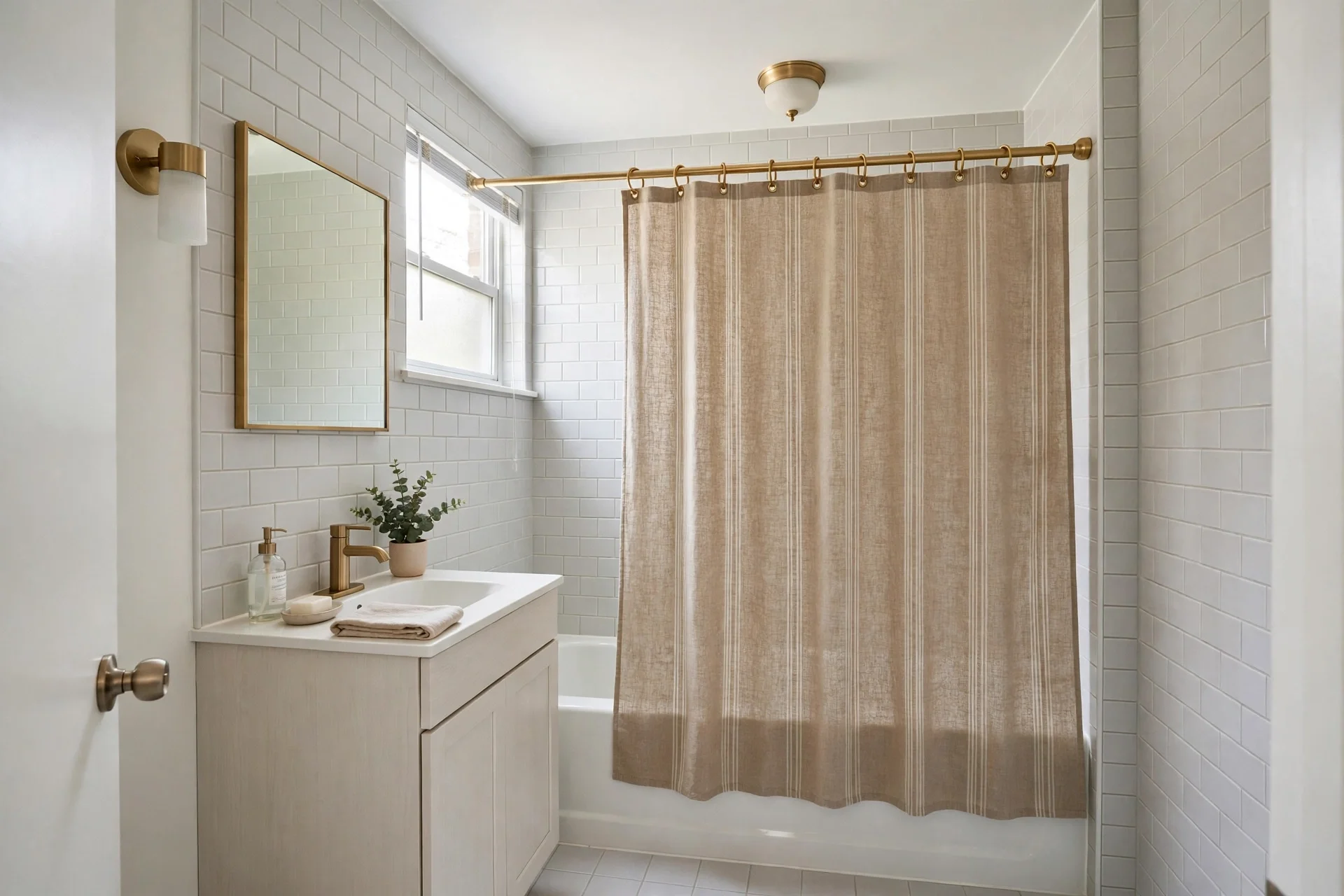
First, read your lease before you buy anything. Some leases ban adhesive tiles, wall hooks, or paint, while others allow small changes with written permission. Take clear photos of the bathroom before you start. Photograph the showerhead, taps, hinges, and walls. These photos prove the starting condition at move out.
Next, set a total budget and stick to it. A light refresh can cost under 100 dollars. A full reversible makeover usually lands between 150 and 350 dollars. Prices vary by store, brand, and size. Also, buy the big visual wins first, such as the shower curtain and towels. Add smaller details only if money is left.
Also, keep every original part in one labelled box. Put the old showerhead, aerator, screws, and cabinet knobs in the box. Add a note that lists where each part came from. Store the box somewhere safe, not in a damp corner. This one habit makes move out fast and stress free.
For ideas that suit an owned home, compare this plan with these budget bathroom upgrades. Some ideas there, such as paint or new grout, do not suit renters. Use only the reversible ideas from that list here. Your rule is simple: if you cannot undo it in minutes, skip it.
A Realistic Budget for a Reversible Bathroom
Table: Itemized budget ranges for a reversible bathroom makeover.
| Item | Low range | High range |
|---|---|---|
| Shower curtain and rings | 20 dollars | 50 dollars |
| Showerhead and aerator | 25 dollars | 70 dollars |
| Removable decals or tiles | 15 dollars | 60 dollars |
| Cabinet knobs or pulls | 15 dollars | 45 dollars |
| Towels and bath mat | 30 dollars | 80 dollars |
| Mirror, tray, and accessories | 25 dollars | 60 dollars |
| Total range | 130 dollars | 365 dollars |
In addition, you do not need to buy every row at once. Start with the curtain, towels, and showerhead for the biggest change. Add hardware and accessories in a second round if you want more polish. Keep receipts until the makeover is done. A receipt makes returns easy if a size or finish looks wrong at home.
For example, a 180 dollar plan could look like this: curtain set 35 dollars, showerhead 40 dollars, towels and mat 55 dollars, knobs 20 dollars, and accessories 30 dollars. A 300 dollar plan could add removable tiles and a nicer mirror. Both plans stay fully reversible. Pick the total that fits your rent, savings, and how long you plan to stay.
Start With the Shower Curtain and Rings
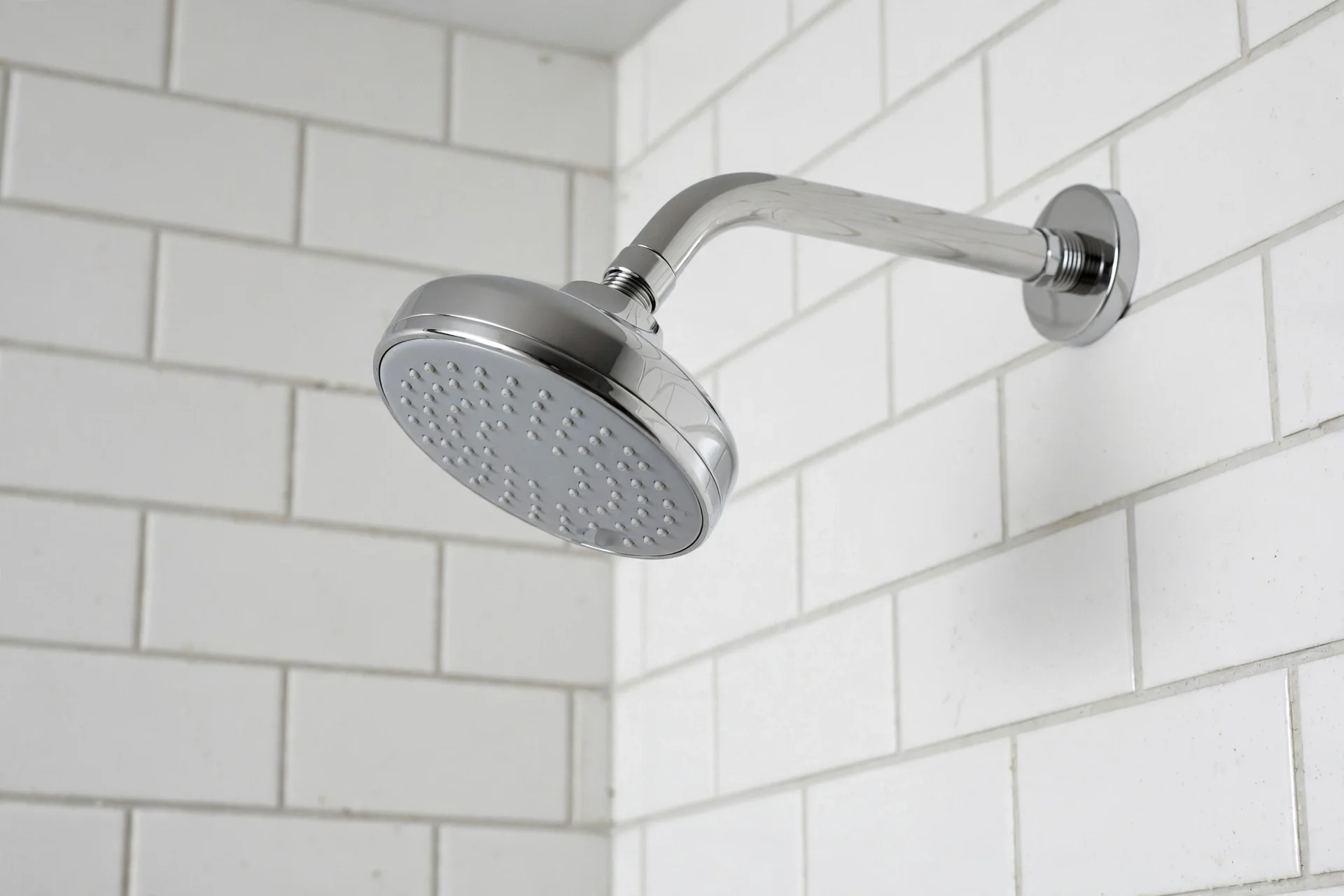
The shower curtain sets the tone for the whole room. It is large, so its colour and pattern dominate the space. For example, choose a plain colour for a calm look, or a simple stripe for a bit of energy. Avoid busy prints in a very small bathroom. A busy print can make a tight room feel crowded.
Also, match the curtain rings or hooks to your hardware finish. Chrome rings suit chrome taps. Black rings suit black or dark bronze details. This small match makes the room look planned, not patched together. In addition, use a fabric outer curtain with a plain inner liner. The liner protects the fabric, and you can wash or replace it cheaply.
Check the curtain length before you buy. A curtain that pools on the floor traps damp and looks untidy. A curtain that ends too high lets water splash out. Measure from the rod to just above the tub edge or floor. For a quick change, a new curtain alone can lift a dull bathroom in ten minutes.
Swap the Showerhead and Faucet Aerator
A new showerhead is one of the best renter upgrades. It changes how the shower feels every day, and it takes only minutes to fit. Choose a model that fits your existing shower arm. For example, most standard showerheads screw on by hand, with no tools needed. Wrap the thread with plumber tape if the joint drips.
Keep the original showerhead in your labelled box. You will refit it before you move out. This step protects your deposit and avoids any dispute about missing parts. The same rule applies to the faucet aerator. An aerator is the small mesh piece at the end of a tap. A new aerator can improve flow and cut splashing.
For guidance on water saving models, see the EPA WaterSense showerhead advice. WaterSense models are tested for flow and spray coverage. Prices vary by store, so compare two or three shops before you buy. Do not force a fitting that will not turn. Stop, check the thread size, and ask store staff for help if needed.
Use Removable Decals and Tiles With Care
Removable wall decals can add pattern without paint or glue damage. For example, use them on smooth, clean tiles or painted walls that your lease allows. Press each decal flat, and smooth out air bubbles from the centre outward. Start with one accent wall or one strip above the sink. A little pattern goes a long way in a small room.
Removable floor tiles need more care. They suit smooth, dry floors, and they must lie flat at the edges. Lifted edges trap water and trip feet. Test one tile first, in a hidden corner, for a week. Check that it peels off cleanly and leaves no mark. If it sticks too hard, do not use it on the full floor.
However, never use strong adhesive on a surface you do not own. Also, check the product label for the words removable and renter friendly. Avoid products that need heat, scraping, or solvents to remove. When in doubt, choose a rug or mat instead. A washable bath mat adds colour with zero risk to the floor.
Swap Hardware and Keep the Originals
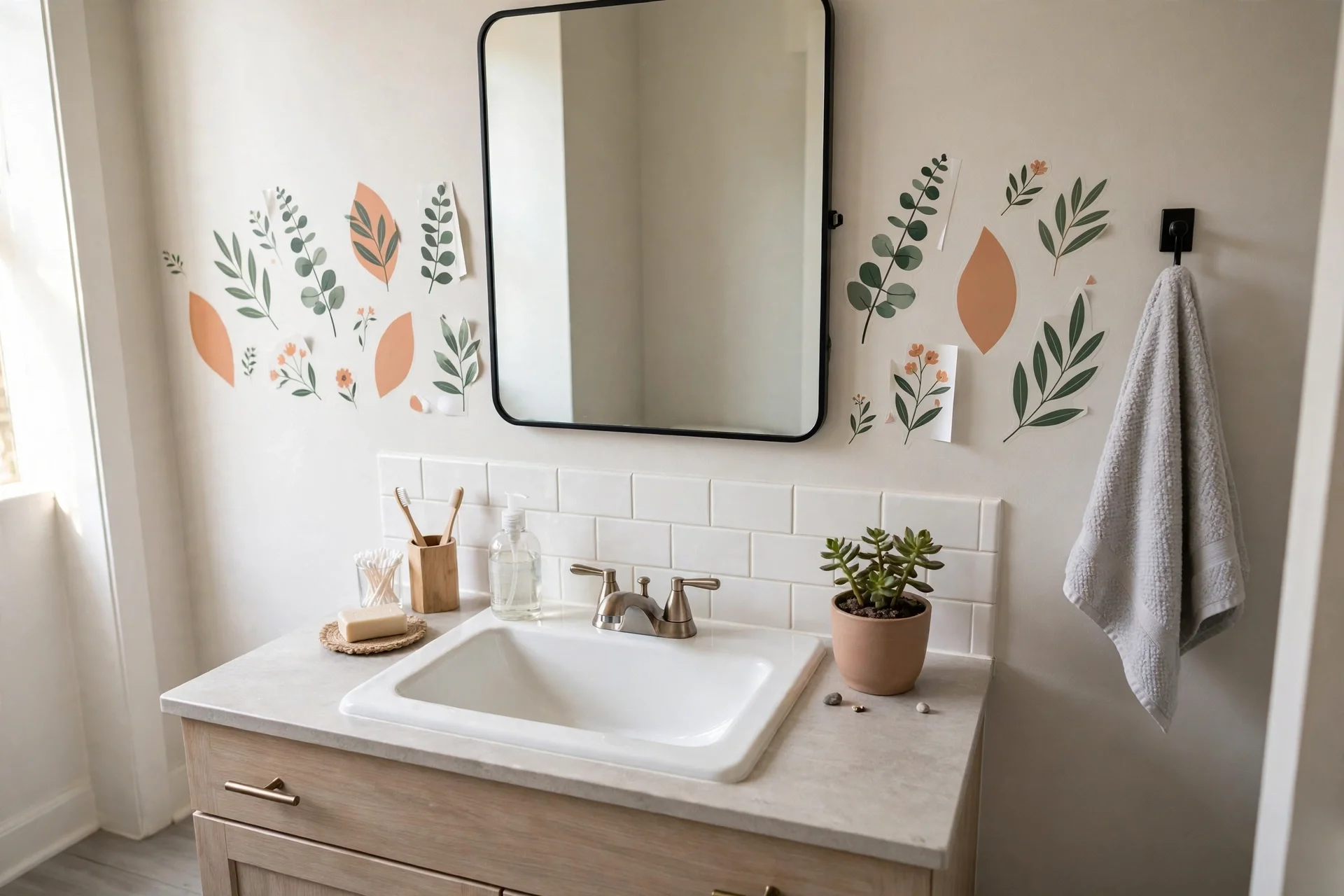
Cabinet knobs, drawer pulls, and towel ring screws are easy to swap. For example, a new knob can make an old vanity look fresh. Also, match the new finish to your taps for a calm, joined up look. Brushed nickel suits most bathrooms. Matte black suits a modern room, but it shows water spots more clearly.
First, remove one knob and take it to the store, or measure its screw spacing at home. Knobs with one screw fit most doors. Pulls need two holes at a set distance, so the spacing must match. Buy the right size, or you will drill new holes, which this guide forbids. Keep the old knobs, screws, and washers together in your box.
Also, tighten new hardware by hand, and do not over tighten. Over tightening can crack a cabinet door or strip a screw hole. Check each knob after a week of use. A loose knob is easy to fix early, but it can damage the door if left loose. Swap the originals back on moving day, and check that each one sits flush.
Refresh the Mirror, Towels, and Accessories
A mirror change can transform a bathroom without touching a wall. A leaning mirror on a vanity works well if space allows. A mirror with a simple frame adds warmth to a plain room. Avoid heavy mirrors that need wall anchors. A falling mirror is a safety risk, and anchors breach most leases.
In addition, towels do more visual work than most people expect. Choose two bath towels, two hand towels, and one bath mat in one calm palette. For example, white towels look clean in any bathroom. Sage, navy, or warm grey add colour without clashing with tiles. Fold towels neatly, or roll them on an open shelf. Neat towels make the room feel like a hotel, not a storage cupboard.
Next, add a tray, a soap dish, and a small jar for cotton pads. In addition, a tray groups small items, so the vanity looks tidy. Use suction or freestanding holders where you can. Freestanding holders move with you, and they need no holes. Keep daily items in reach, and store spares in a basket under the sink.
For style direction, look at these modern bathroom styles and pick one simple thread, such as warm wood or matte black. One thread is enough. Two or three competing styles in a tiny room look busy fast.
Small Bathrooms Need a Lighter Touch
Small bathrooms punish clutter. Every extra item shows, and every dark colour shrinks the room. For example, use light towels, a light curtain, and a clear soap dispenser. Clear items let tile colour show through. Also, keep the floor as clear as you can. One basket beats three small boxes scattered around the room.
Also, use vertical space that needs no drilling. An over door hook holds towels and a robe. A freestanding shelf unit fits beside the toilet or vanity. A suction shelf can hold a few light bottles in the shower. Test suction shelves for a day before you trust them with full bottles. A shelf that falls at night is noisy and messy.
If your room is very small, check these powder room size ideas for layout sense. A powder room plan shows how much space a sink, toilet, and door swing really need. Use that sense to place your shelf and basket. Leave clear paths to the toilet and shower. Comfort matters more than one more accessory.
Renter Friendly Bathroom Makeover on a Budget: A Simple Weekend Sequence

First, spend Friday evening on prep. Photograph the room, read the lease once more, and lay out your labelled box. Order or buy only what your budget allows. Measure the curtain, the mirror space, and the knob spacing before you shop.
Next, do Saturday morning in this order: shower curtain, showerhead, aerator, then towels and mat. These four swaps give the biggest visual change. Clean as you go, and wipe taps and tiles while fittings are off. A clean base makes new items look far better.
Finally, do Saturday afternoon on details: hardware, decals, mirror, tray, and accessories. Test decals in one spot first. Stand back after each change, and check the room from the doorway. Stop when the room looks calm and finished. More items do not always mean a better room.
On Sunday, do a move out rehearsal in your head. Ask if you could reverse every change in under an hour. If one change fails that test, undo it now. Put originals in the box, and keep the box list up to date. This rehearsal protects your deposit later.
What NOT to Do in a Rental Bathroom
Do not drill into tiles, walls, or cabinet frames. Tile cracks are costly, and landlords often charge for them. Do not paint walls, grout, or cabinets unless your lease clearly allows it in writing. Verbal permission is hard to prove later. Get any permission in writing, and keep a copy with your lease.
Leave fixed mirrors, light fittings, and vanities alone. Do not change plumbing beyond a screw on showerhead or aerator. Also, avoid strong glue, epoxy, or permanent adhesive on any surface. Never caulk over old caulk to hide mould. Report mould or leaks to your landlord in writing instead. Mould and leaks are building issues, not decor projects.
Also, do not throw away any original part, even a worn showerhead. A worn original still counts as the landlord’s property. Do not store originals in a damp bathroom corner. Damp can rust screws and stain finishes. Keep them dry, labelled, and easy to find on moving day.
Move Out Checklist for a Full Deposit Return

Keep this checklist with your box. Refit the original showerhead and aerator. Refit the original knobs and pulls. Remove decals, tiles, and suction holders, and clean any light marks. Hang the original curtain back, or leave the rod bare as you found it.
Finally, clean the room as you found it, or better. Wipe taps, tiles, and the mirror. Remove your tray, towels, and baskets. Compare the room with your starting photos, corner by corner. Fix any small issue before the final inspection. This careful finish is what turns a good makeover into a full deposit return.
Frequently Asked Questions
Can I do a bathroom makeover in a rental without losing my deposit?
Yes, if every change is fully reversible and you keep all original parts. Swap the curtain, showerhead, aerator, knobs, towels, and accessories, and store the originals in a labelled box. Avoid drilling, paint, and strong glue. Photograph the room before and after, and refit the originals before moving out.
How much does a renter friendly bathroom makeover cost?
A light refresh can cost under 100 dollars, while a full reversible makeover usually costs 130 to 365 dollars. Prices vary by store, brand, and bathroom size. Start with the curtain, towels, and showerhead for the biggest change. Add hardware and accessories only if your budget allows it.
Can I change the showerhead in a rental property?
Yes, in most rentals you can swap a screw on showerhead, since it fits by hand and reverses in minutes. Keep the original showerhead safe, and refit it before you move out. Check your lease first, and do not force a fitting. If the shower arm looks damaged, report it to your landlord instead.
Are peel and stick tiles safe for a rental bathroom?
They can be safe on smooth, dry floors, but only if the product is truly removable. Test one tile in a hidden corner for a week first. Check that it peels off cleanly with no mark or residue. If it sticks too hard, lifts at the edges, or traps water, skip it and use a washable mat instead.
What should I never do in a rental bathroom?
Never drill tiles or walls, paint without written permission, or use permanent glue. Never remove fixed mirrors, light fittings, or vanities, and never change plumbing beyond a showerhead or aerator. Report mould and leaks to your landlord in writing. Keep every original part, even if it looks worn.
How long does a reversible bathroom makeover take?
Most reversible makeovers take one weekend, with prep on Friday evening and swaps on Saturday. The curtain, showerhead, towels, and hardware take only a few hours in total. Decals need extra care, so test them first and work slowly. Leave Sunday for a final check and a move out rehearsal.
Conclusion
A rental bathroom can look fresh without risking your deposit. Swap the curtain, showerhead, towels, and hardware, keep every original safe, and skip drilling and paint. Your next step is simple: photograph your bathroom today, check your lease, and buy the curtain and towels first.