

Curtains in a rental without drilling are easy once you match the fix to your window. A tension rod, adhesive hooks, or magnetic rod can hold curtains well, and none of them need holes in the wall. This guide shows which option suits each window, what weight each one holds, and how to remove it cleanly.
Curtains in a Rental Without Drilling: Start With Your Window
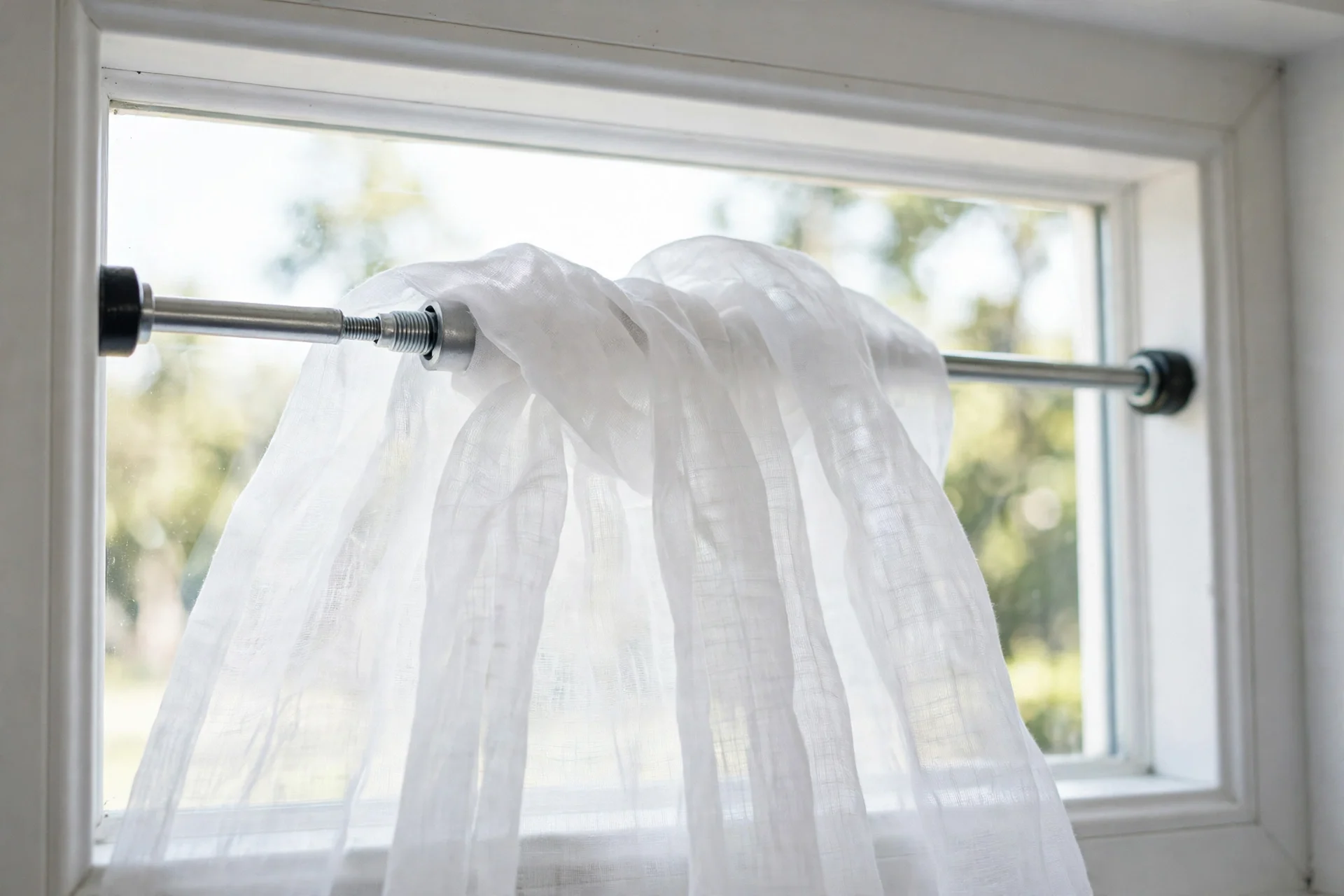
First, look at your window before you buy anything. Note whether the frame is wood, vinyl, metal, or tile. Also, check if the frame has a deep recess inside it. A recess gives a tension rod a place to grip. A flat wall with no recess needs a different fix.
Next, measure the window width in three places. Measure at the top, the middle, and the bottom. Use the smallest number as your base width. Windows are rarely perfectly square, so one measure can mislead you. Also, measure the height from your planned rod position to the floor or sill.
In addition, check what sits near the window. Look for handles, vents, radiators, and light switches. A rod that blocks a handle will annoy you every day. Also, check how far the window opens. Curtains should not trap a window shut. For small rooms, good window choices pair well with these small apartment ideas.
Finally, take a photo of the window and frame. Bring it to the store or keep it on your phone while you shop online. The photo helps you match the fix to the frame. It also helps you remember trim colour and depth. A little prep here saves a return trip later.
Tension Rods: The First Choice for Recessed Windows
A tension rod fits inside the window frame. It uses spring pressure to grip both sides. No screws, no plugs, and no wall damage. It suits most standard windows with a recess of at least 5 cm. Measure the recess depth before you buy. A shallow recess may not hold the rod well.
To fit a tension rod, twist it shorter than the window width first. Hold it level inside the frame at your chosen height. Then twist it longer until both ends press firm against the sides. Check the level with a small spirit level or a phone app. Next, tug it gently downward. It should stay put and feel solid.
Also, choose the right rod size for the job. A thin rod suits sheer curtains and light voiles. A thicker rod suits heavier cotton curtains. Check the pack for the stated weight limit, since limits vary by brand and length. As a rule, shorter rods hold more than longer rods. A rod under 90 cm will hold more than a rod stretched to 150 cm.
For example, a 60 cm kitchen window rod can often hold a light cotton cafe curtain with ease. A 120 cm living room rod can hold sheers, but it may sag under heavy lined drapes. If the rod sags, move it to a shorter window or switch to lighter fabric. Do not force a long rod to carry a heavy curtain. That is how rods slip and curtains fall. For a simple renter example of this method, see this tension rod curtain hack.
Adhesive Hooks and Holders for Flat Walls
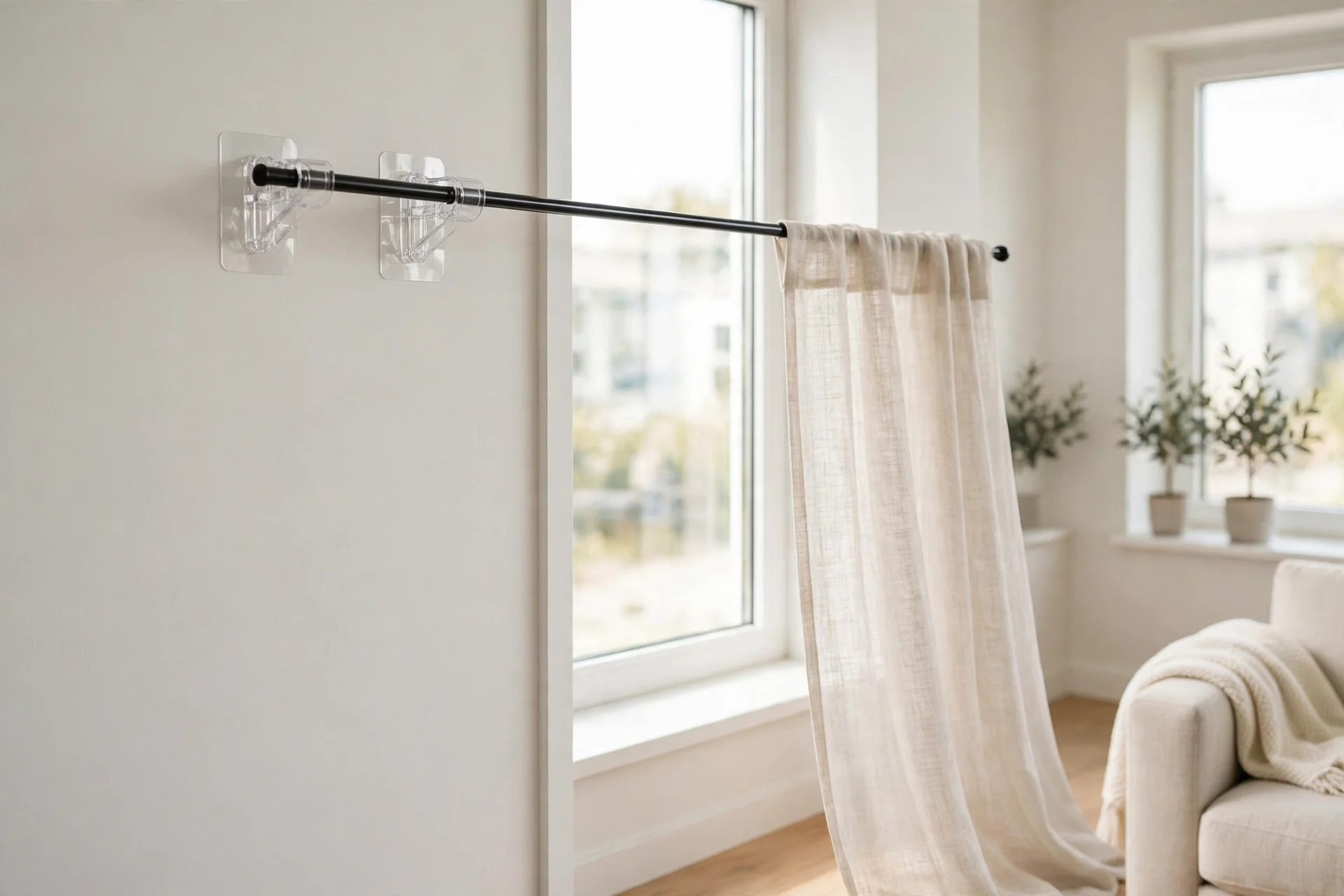
Adhesive hooks suit windows with no recess. They stick to smooth tile, glass, painted wood, or metal trim. They do not suit rough brick, textured plaster, or peeling paint. The surface must be clean, dry, and smooth. Wipe it with a damp cloth first, then let it dry fully.
First, mark the holder positions with a pencil dot. Use a level or a long book to keep both sides even. Stick each holder on, then press it firm for 30 seconds. Wait the full cure time on the pack before you hang anything. Most packs ask for 24 hours. This wait matters, since early weight can pull the strip loose.
Also, match the hook rating to your curtain weight. Small hooks often hold 1 to 2 kg each. Larger holders may hold 3 to 5 kg each, but ratings vary by brand. Use two holders for a short rod and three for a wide window. Spread the weight across holders, rather than loading one hook alone. Adhesive brackets are another renter option, as shown in these drill-free curtain brackets. If in doubt, use one more holder than you think you need.
Next, think about removal from day one. Choose removable adhesive strips made for walls, not permanent glue. Keep the pull tab free and clear of the rod. When you move out, pull the tab slowly downward, as the pack directs. Never yank a strip sideways. A slow pull leaves the paint intact in most cases.
Magnetic Rods and Clip Rings for Metal Frames
Magnetic rods suit metal window frames. A magnet grips the steel frame and holds a short rod in place. First, test your frame with a fridge magnet. If the magnet sticks firm, a magnetic rod may work. If it slides or will not stick, your frame may be aluminium or vinyl. In that case, pick a tension rod or adhesive holder instead.
Also, magnetic rods suit light curtains best. Sheers, voiles, and thin cotton panels work well. Heavy lined curtains may slide the magnets down over time. Check the rod each week at first. If it slips, switch to lighter fabric or add a second magnetic holder in the middle.
Clip rings offer another no-drill route. They clip onto a tension rod or a thin rail. They let you hang curtains without sewing a rod pocket. Also, they make curtains easy to open and close. You can slide the whole panel along the rod. Clip rings suit cafe curtains and light panels best.
For example, clip rings work well on a kitchen window. Hang a short cafe curtain that covers only the lower half. The top stays open for light. The clips let you take the curtain down for washing in seconds. This small detail makes rental living much easier.
Measure First: A Simple Window to Rod Table
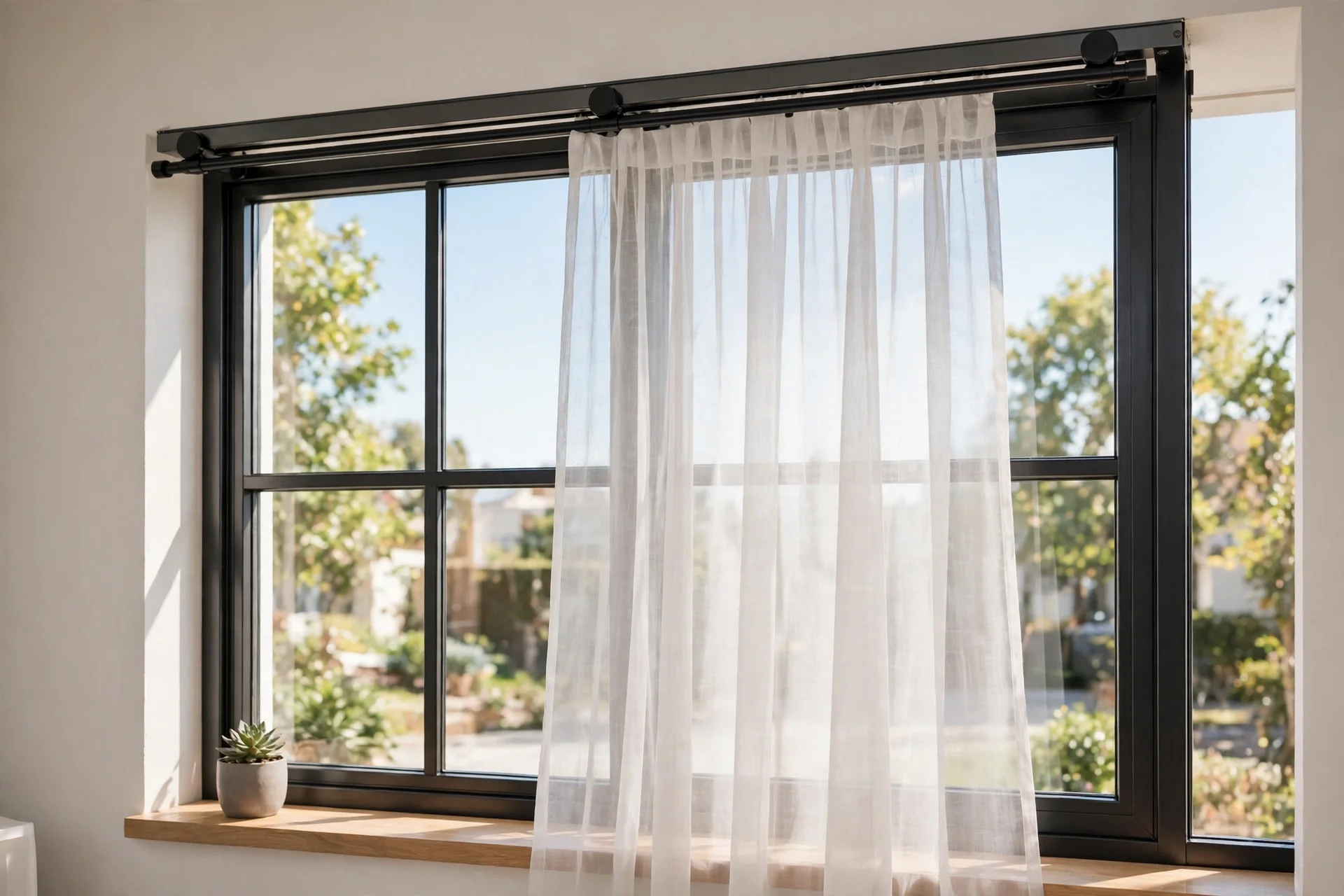
Good measuring takes five minutes and prevents most failures. For a tension rod, use the width inside the frame. For adhesive holders, use the width outside the frame. Add extra width if you want curtains to stack clear of the glass. Curtains that stack clear let in more light during the day.
Table: Window width to rod length and placement for renters.
| Window width inside frame | Tension rod size to buy | Where to place it |
|---|---|---|
| 45 to 70 cm | 45 to 75 cm rod | Inside frame, near top |
| 70 to 110 cm | 70 to 120 cm rod | Inside frame, near top |
| 110 to 150 cm | 110 to 160 cm rod | Inside frame, centre support if needed |
| No recess, any width | Adhesive holders plus rod | On wall or trim, level with frame top |
Also, allow extra fabric for fullness. A flat curtain panel looks thin and flat. Aim for fabric width about 1.5 times the window width for a soft gather. For a fuller look, aim for about 2 times the window width. Sheers can go fuller, since light fabric gathers well. Heavy fabric needs less fullness, or it will look bulky.
Next, check the rod length against the table before you pay. A rod stretched to its full limit holds less weight. A rod used near the middle of its range holds best. If your window sits between two sizes, buy the larger size. A rod with room to spare grips better than one at full stretch.
Choose Length, Fabric, and Fullness With Care

Length changes how a room feels. A sill-length curtain suits kitchens and bathrooms. It stays clear of sinks, cookers, and wet floors. A floor-length curtain suits living rooms and bedrooms. It makes a window look taller and the room feel softer. Measure from rod to floor for floor length, and subtract 1 to 2 cm so the hem does not drag.
Also, think about light and privacy together. Sheers give soft light and light privacy during the day. They do not give full privacy at night with lights on. A heavier panel gives more privacy, but it blocks more light. Many renters layer both on one rod. Hang a sheer behind a heavier panel, or use two rods if the frame allows it.
In addition, pick fabric you can wash at home. Rental curtains get dust, cooking steam, and sun. Cotton, linen blends, and polyester voiles wash well in most cases. Check the care label before you buy. Avoid dry-clean-only fabric for a kitchen window. You will wash kitchen curtains far more often than bedroom curtains.
Finally, test one panel before you buy a full set. Hang it, open and close it, and check the light at night. Look at it from outside after dark, with the room lights on. This quick test shows the true privacy level. It also shows whether the colour works in your room light. For a calm, warm living room look to pair with new curtains, see these warm and cozy living room ideas.
What Holds What Weight: A Renter Reality Check
No-drill fixes hold light to medium curtains well. They do not hold every curtain. A sheer panel often weighs under 1 kg. Light cotton panels often weigh 1 to 2 kg. A lined, floor-length pair can weigh 4 kg or more. Weigh your curtain on bathroom scales if you are unsure. That one check prevents a midnight fall.
Also, width matters as much as weight. A wide window puts more strain on the centre of a rod. The rod can bow in the middle under a heavy panel. A centre support helps, but a tension rod has no centre bracket. For wide windows, use lighter fabric, or split the curtain into two panels with a centre gap. Two lighter panels strain a rod less than one heavy pair.
Next, watch for warning signs in the first week. A rod that slips a little each day will soon fall. Likewise, a hook that peels at one edge needs a fresh strip. A magnet that slides needs lighter fabric. Fix small slips early, rather than waiting for a fall. A falling rod can chip a sill or break a curtain ring.
In addition, keep heavy extras off the rod. Do not hang plant pots, bags, or wet towels from a curtain rod. Those extras push a no-drill fix past its limit fast. Use the rod for curtains only. This simple rule keeps most no-drill setups safe for a full tenancy.
Removal Without Damage: Your Deposit Checklist

Removal matters as much as hanging. A clean removal protects your deposit. Start with the curtains, then the rod or holders. Take curtains down and wash them before packing. Then deal with the fix itself, one step at a time.
First, remove a tension rod by twisting it shorter. Hold one end while you twist, so it does not spring out. Lower it gently, and check the frame for marks. A rubber end cap should leave no mark on most frames. If you see a faint ring, wipe it with a damp cloth. Most faint marks clean off with ease.
Next, remove adhesive strips with a slow, steady pull. Pull the tab straight down, close to the wall, as the pack directs. Do not pull outward or sideways. If a tab snaps, use a fresh strip tab or a hair dryer on low heat to soften the glue. Then roll the strip off with a thumb. Wipe any residue with warm soapy water.
Also, check the whole window area after removal. Look at the frame, the trim, and the wall above it. Take a photo for your own records. Compare it with your move-in photos if you have them. If you spot a small mark, clean it now, not on moving day. A calm final check takes ten minutes and saves deposit stress later.
Frequently Asked Questions
Will a tension rod damage my window frame?
A tension rod should not damage a sound window frame when it fits well. Rubber end caps spread the pressure across the frame. Check the frame for cracks or soft wood before you fit a rod. Remove the rod by twisting it shorter, then wipe the frame. Most frames show no mark at all after removal.
What is the best no-drill option for a wide window?
Adhesive holders with a rod often suit wide windows best, since you can add a middle holder. Use three holders for a wide span, and keep the fabric light. A tension rod can bow in the middle on a wide window. If the window is very wide, split the curtain into two lighter panels for less strain.
Can adhesive hooks hold heavy blackout curtains?
Adhesive hooks can hold light blackout panels, but heavy lined blackout pairs often strain them. Check the weight rating on the pack, and weigh your curtain first. Use more holders than the minimum, and wait the full cure time. If the curtain weighs over 4 kg, choose a tension rod or lighter fabric instead.
Do magnetic curtain rods work on all metal frames?
No, magnetic rods work only on frames that attract a magnet, such as steel. Test the frame with a fridge magnet first. Aluminium and vinyl frames will not hold a magnet, even if they look like metal. For those frames, use a tension rod inside the recess or adhesive holders on smooth trim.
How do I measure for curtains in a rental without drilling?
Measure the window width inside the frame at the top, middle, and bottom. Use the smallest width for a tension rod. Measure from your planned rod height to the sill or floor for length. For adhesive holders, measure outside the frame instead. Keep a note of both widths, since each fix uses a different measure.
How can I hang curtains if my window has no recess at all?
Use adhesive holders on smooth wall or trim, or a magnetic rod on a steel frame. Place the holders level, press them firm, and wait 24 hours before hanging. For a flat wall, a rod that extends past the window lets curtains stack clear. For more layout ideas in a small room, see this small living room layout guide.
Conclusion
No-drill curtains work best when the fix matches the window. Measure first, pick light fabric for wide spans, and wait for adhesive to cure. Your next step is simple: test your frame with a magnet, measure the width in three places, and buy the fix that suits that window.