

Fresh christmas centerpieces bring living color and scent to your holiday table. They use cut flowers, not potted plants, so you can build them exactly to fit your table. In this guide, you will learn which fresh flowers to choose, how to arrange them, and how to keep them fresh through the holidays.
What Makes Fresh Christmas Centerpieces Different
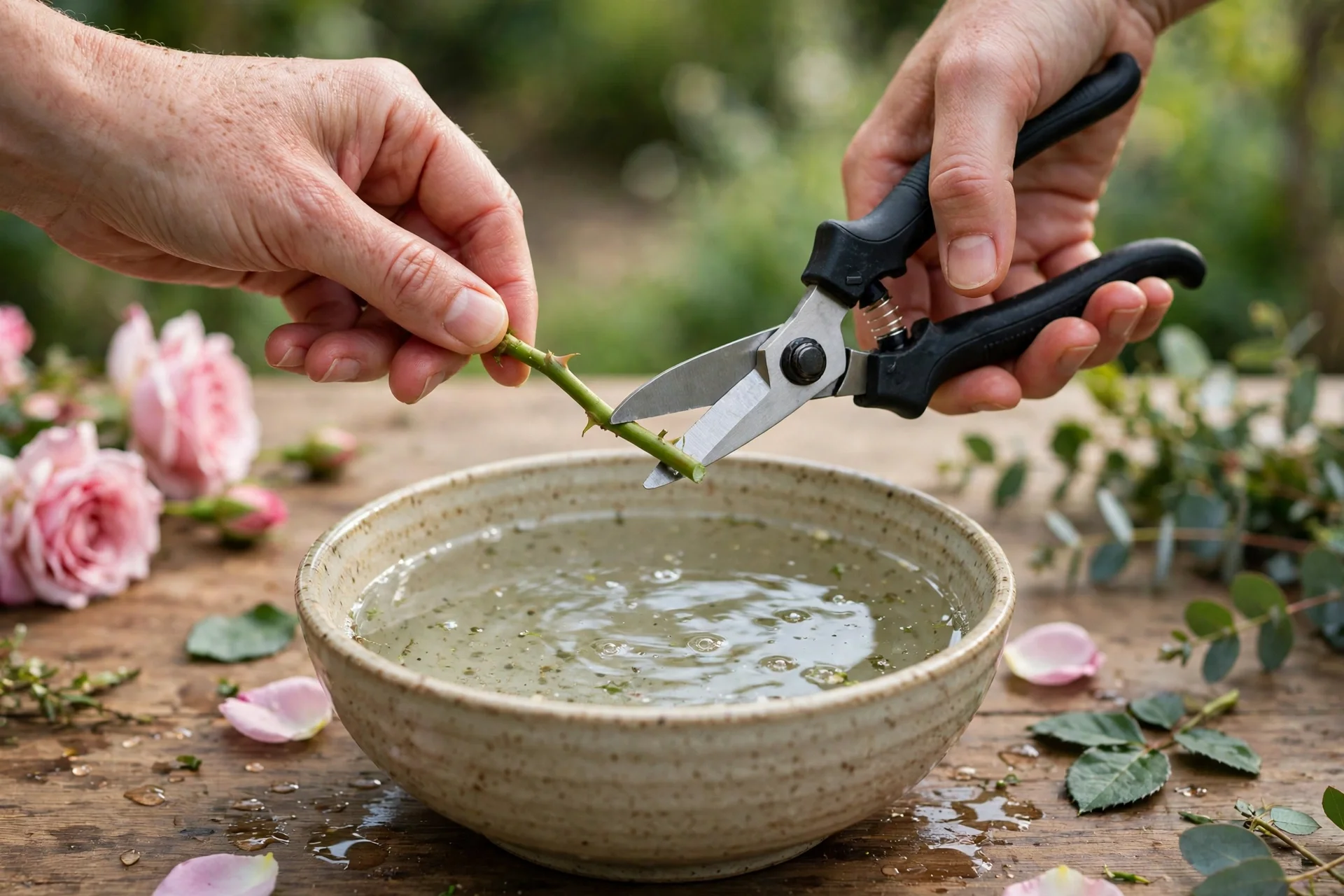
Fresh christmas centerpieces start with cut stems, so they feel lighter and more natural than heavy potted displays. You can mix tall stems, soft greens, and small blooms in one low arrangement. As a result, guests can still see each other across the table. In addition, you can rebuild the arrangement each week with new stems, so it never looks tired.
By contrast, a potted plant stays in one pot all season. It limits your color choices and your container choices. Cut flowers give you far more freedom. You can change the palette from red and white one week to blush and gold the next. For that reason, many hosts now build fresh centerpieces instead of buying one fixed display.
Finally, fresh centerpieces suit any table size. A small bowl of roses works on a tiny breakfast table. A long runner of greens and blooms suits a large dining table. The method stays the same, and only the stem count changes. That flexibility is the main reason fresh centerpieces have become so popular.
The Best Fresh Flowers for a Holiday Table
Roses are the easiest starting point for a holiday centerpiece. Red roses feel classic, while white roses look calm and elegant. In addition, garden roses open wide and fill space fast, so you need fewer stems. Choose blooms that feel firm and show no brown edges. A firm bloom lasts longer on the table.
Next, consider amaryllis stems for height and drama. One tall amaryllis stem can anchor a whole arrangement. Its large trumpet blooms open in red, white, or pink. However, amaryllis stems are hollow and heavy, so place them deep in the container. A tall vase or a sturdy bowl works best for these stems.
Ranunculus and anemones add a softer, more modern feel. Ranunculus blooms look like small layered roses, and they come in red, white, blush, and burgundy. Anemones have dark centers and bold petals, so they stand out among greens. Together, these two flowers give a centerpiece a fresh, garden-like look that feels less formal than roses alone.
For scent, add paperwhites or a few sprigs of winter jasmine. Paperwhites smell sweet and strong, so use only two or three stems in a small room. Winter jasmine gives a lighter scent and a soft yellow accent. Meanwhile, fresh evergreen branches form the base of the arrangement. Pine, fir, and cedar add scent, texture, and a deep green background for the blooms.
Avoid flowers that drop petals fast in warm rooms. Tulips, for example, keep growing after cutting and may bend out of shape near heat. Similarly, very delicate blooms may wilt fast in a heated dining room. Stick with firm roses, amaryllis, ranunculus, and anemones for the most reliable display.
How to Build a Fresh Centerpiece Step by Step
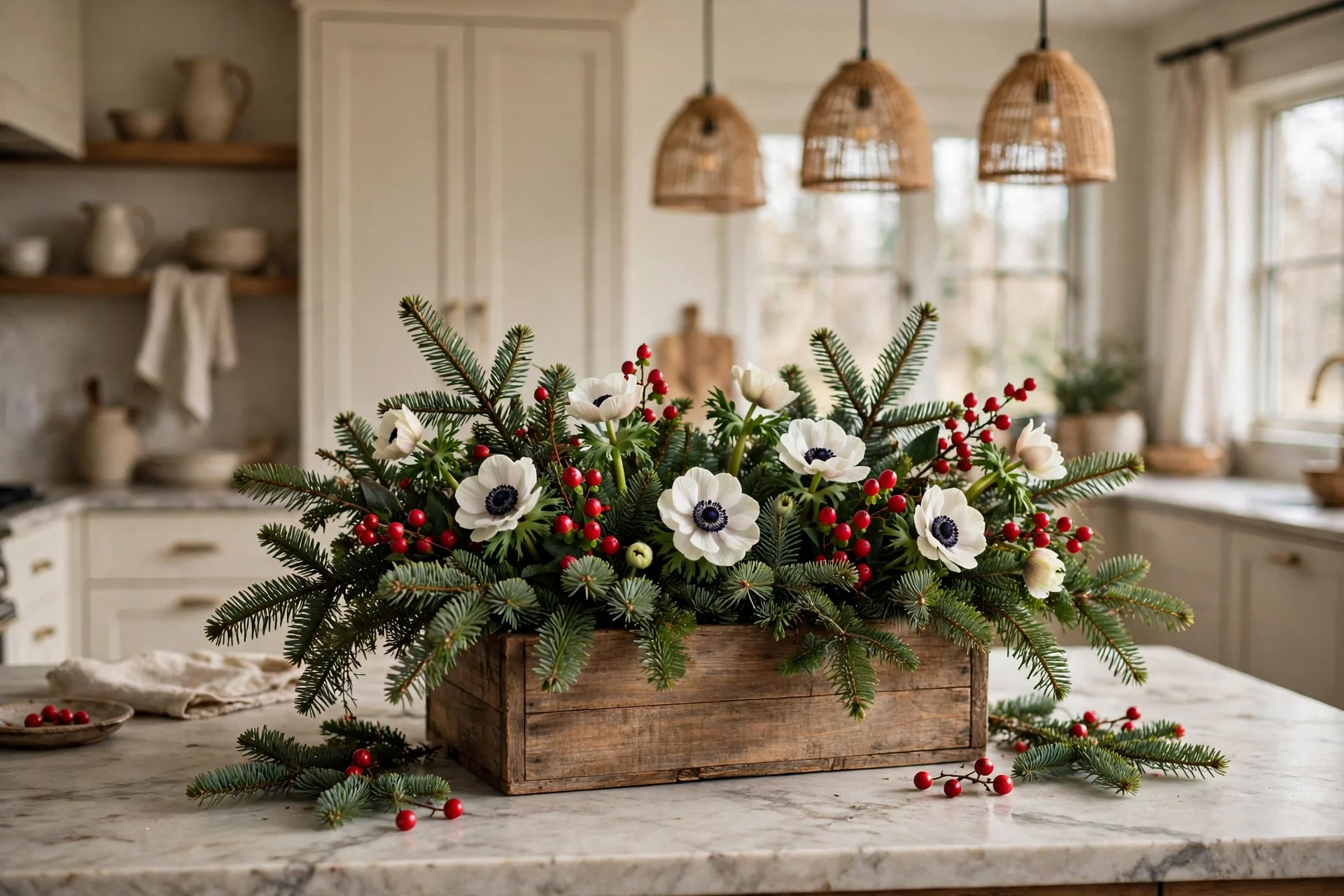
First, pick a low, wide container. A shallow bowl, a wooden box, or a long tray all work well. A low container keeps sight lines open across the table. In addition, it holds water well and keeps stems stable. Line a wooden box with plastic or a small waterproof tray before you add water.
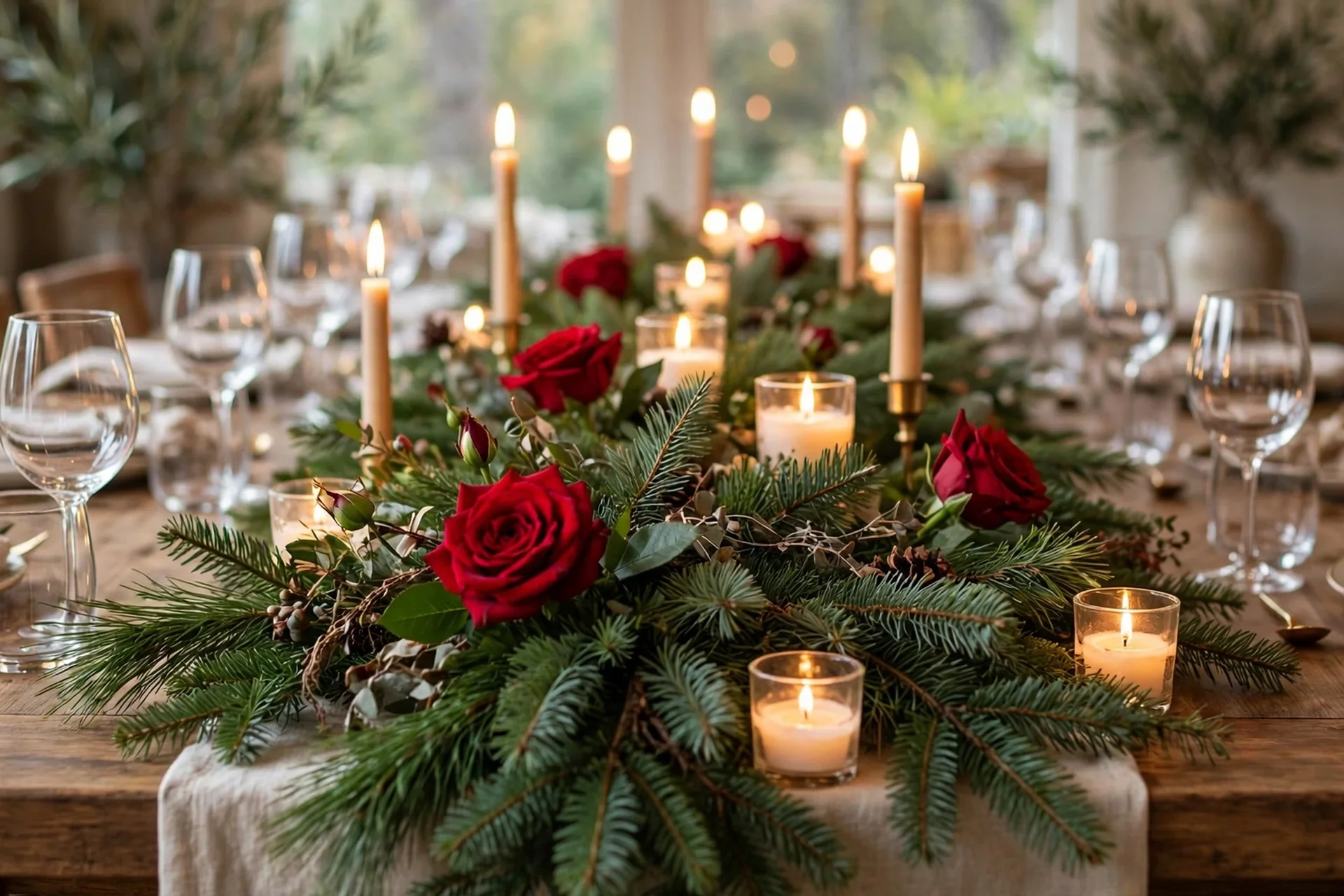
Next, build a base of fresh evergreen branches. Lay pine or fir branches across the container, and let a few ends spill over the edge. This base hides the container rim and gives the arrangement a full shape. For a table runner style, lay branches end to end down the center of the table instead of using a container. Overlap each bundle so the next one starts about halfway down the first, and bind the bundles with floral wire or tape. This method comes from classic greenery garland making, as shown in the Better Homes and Gardens guide to greenery garlands, and it works just as well for a centerpiece runner.
Then, add your tallest flowers first. Place amaryllis stems near the center, and keep them slightly off center for a natural look. After that, add roses in groups of three at different heights. Grouping blooms in odd numbers looks more natural than spacing them evenly. Finally, fill gaps with ranunculus, anemones, and small evergreen sprigs.
For a simple table runner, you can skip the container entirely. Lay a runner of greens down the table, then nestle fresh flowers along it for color. This style looks relaxed and lush, and it costs less than a formal arrangement. For more ideas on setting the table itself, see our guide to traditional dining room styling.
A Simple Recipe for a Six Seat Table
| Part | What to use | How many |
|---|---|---|
| Base greens | Pine and fir branches | 8 to 10 stems |
| Tall flowers | Amaryllis stems | 3 stems |
| Main blooms | Red or white roses | 9 stems |
| Soft accents | Ranunculus or anemones | 6 stems |
| Scent accents | Paperwhite stems | 2 stems |
| Finishing touches | Pinecones and small ornaments | 5 to 7 pieces |
This recipe fills a table for six without blocking views. If your table seats more people, make two smaller arrangements instead of one huge piece. That way, every guest gets a view of the flowers. In addition, two smaller pieces are easier to water and refresh during the week.
Fresh Christmas Centerpieces That Last: The Care Routine
Cut flowers last longer with a simple care routine. Healthy cut flowers can last 10 to 14 days with good care, according to extension experts. That means one arrangement can cover a full week of holiday meals, and a quick refresh can carry it into the next week. The routine below takes only a few minutes each day.
First, cut every stem at a 45 degree angle before arranging. Cut at least half an inch from the stem end, and cut under water if you can. An angled cut gives the stem more surface to drink from. Next, remove all leaves that would sit below the waterline. Leaves in water rot fast, and rotten leaves cloud the water and shorten flower life.
Then, place the stems in fresh lukewarm water. Let them rest in a cool, dark spot for one to two hours before you arrange them. This step, called conditioning, helps the stems drink well after the shock of cutting. Use a commercial floral preservative in the water if you have it, since tests show it works better than home mixtures. For expert detail on each step, read the NC State Extension guide to cut flower care.
After arranging, keep the centerpiece cool and out of direct sun. Move it away from heat vents, radiators, and fireplaces. Warm air dries blooms fast, so a cool dining room is ideal. Check the water level every day, and top it up as needed. Every two to three days, wash the container, change the water, and recut the stems. This one habit adds several days to your arrangement.
Freshness Calendar for Your Centerpiece
| When | What to do |
|---|---|
| Build day | Cut stems at an angle, remove low leaves, condition in lukewarm water for one to two hours, then arrange |
| Every day | Check water level, top up, remove faded blooms and fallen petals |
| Every 2 to 3 days | Wash the container, change the water, recut stems, add fresh preservative |
| Day 7 | Replace tired roses, add fresh ranunculus or greenery sprigs to fill gaps |
| Day 10 to 14 | Rebuild with new main blooms if needed, reuse the container and greens that still look fresh |
Centerpiece Ideas by Table and Room
A formal dining table suits a classic red and white centerpiece. Use red roses, white ranunculus, pine branches, and gold pinecones. Add two or three tall candles in sturdy holders for height. Keep the whole display under about 12 inches tall in the middle, so guests can talk across the table with ease.
Meanwhile, a kitchen island suits a looser, more casual style. Try a wooden box filled with fir branches, white anemones, and a few red berries. This style looks gathered rather than arranged, and it survives daily kitchen use well. In addition, a box centerpiece lifts off the island easily when you need the space for cooking.
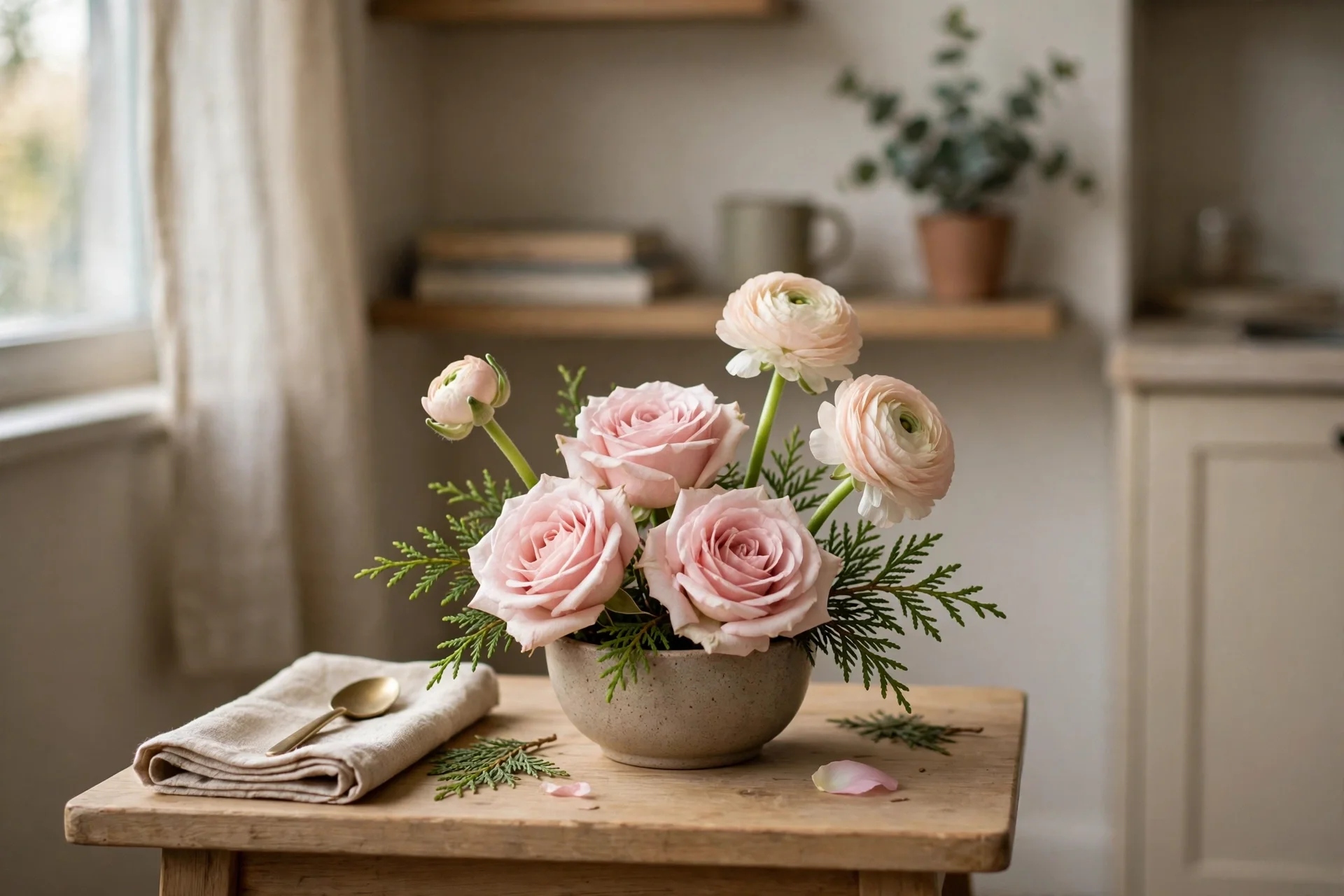
For a small apartment table, scale down to a single small bowl. Three roses, two ranunculus stems, and a few cedar sprigs make a full display in a tiny bowl. This small size still feels festive, and it leaves room for plates and glasses. If space is very tight, use a bud vase with one amaryllis stem and one cedar sprig as a mini centerpiece.
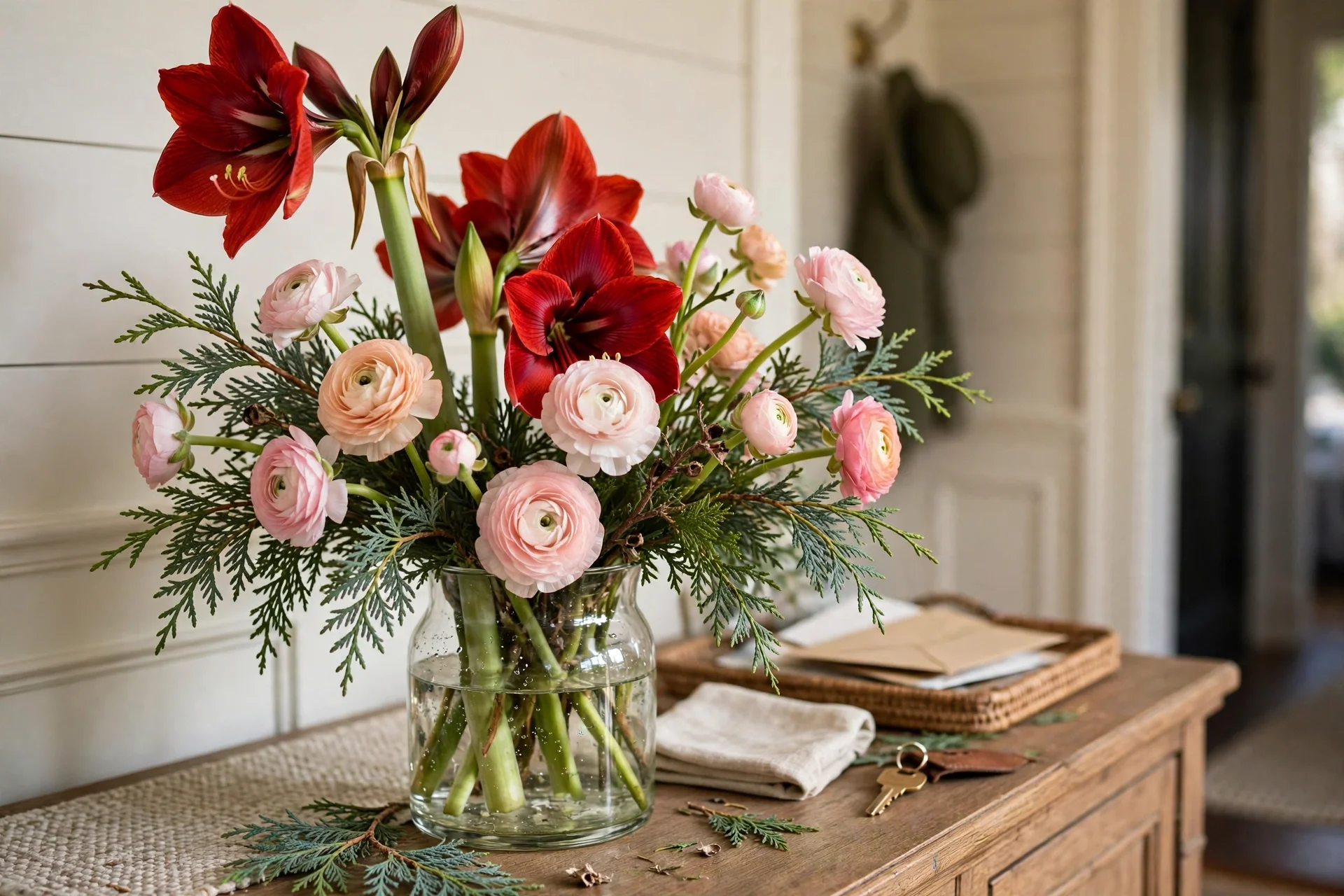
An entryway console can hold a taller version of the same idea. Use a tall vase with amaryllis stems, pine branches, and red berries for a strong first impression. However, keep fresh flowers away from the front door draft, since cold air shortens their life. Place the vase on the side of the console away from the door swing.
Mistakes That Shorten Fresh Flowers
One common mistake is building the centerpiece too early. Fresh flowers last 10 to 14 days at best, so build your main display no more than a few days before your big meal. If you host several events, build a fresh one each week instead of stretching one arrangement for a month. This keeps every event looking its best.
Another mistake is placing flowers near fruit. Ripening fruit gives off a gas that makes flowers age faster. Keep your centerpiece away from fruit bowls, especially apples and bananas. Similarly, keep flowers away from cigarette smoke and cooking fumes, since both shorten bloom life.
A third mistake is skipping the water change. Many people top up the water but never change it. Old water grows bacteria, and bacteria block the stems from drinking. Washing the container and changing the water every two to three days solves this problem. In addition, recut the stems each time you change the water, since cut ends seal over time.
Finally, avoid using a container that leaks or tips easily. A top heavy arrangement with tall amaryllis stems can tip if the container is too light. Use a heavy bowl or add stones to the base for weight. Test the balance before guests arrive, and move the arrangement to a safer spot if it wobbles.
Freshness and Safety Notes
Fresh flowers are safe for most homes, but a few care points matter. Poinsettia stems, if you use them as cut flowers, release a milky sap that can irritate skin. Wear gloves when you cut poinsettia stems, and wash your hands after arranging. Keep holly berries away from small children and pets, since the berries can cause illness if eaten.
Also, keep all fresh greenery away from open flames. Dry pine branches catch fire easily, so never place candles directly inside a greenery arrangement. Use sturdy candle holders beside the arrangement instead, and never leave burning candles alone in a room. Battery candles give the same warm glow with no risk near fresh greens.
For a full seasonal flow, many homes move from fall decor to fresh winter greens in late November. You can reuse trays, vases, and lanterns from your fall displays, and simply swap autumn leaves for pine and fresh blooms. For fall ideas that lead into this change, see our guide to decorating tips for fall.
Frequently Asked Questions
How long do fresh cut flower centerpieces last?
A fresh cut flower centerpiece usually lasts 10 to 14 days with daily water checks and regular water changes. Roses and amaryllis often last the longest, while ranunculus may fade sooner in warm rooms. Replace tired stems as needed to extend the display through the holidays.
Which fresh flowers work best for a holiday table?
Roses, amaryllis, ranunculus, and anemones work best for a holiday table because they hold up well indoors. Pair them with pine, fir, or cedar branches for a full look. Add paperwhites for scent, but use only two or three stems since their scent is strong.
How do I keep cut flowers fresh for two weeks?
Cut stems at a 45 degree angle and remove leaves below the waterline before arranging. Use fresh lukewarm water with commercial floral preservative, and keep the display cool and out of direct sun. Change the water and recut stems every two to three days for the longest life.
Can I build a centerpiece the week before Christmas?
Yes, you can build a centerpiece a few days before Christmas, since healthy cut flowers last 10 to 14 days. Build it three to four days early for the freshest look on the day. Refresh the water and replace any tired stems on Christmas morning if needed.
What container works best for a fresh flower centerpiece?
A low, wide bowl or tray works best because it keeps sight lines open across the table. A wooden box lined with plastic also works well for a rustic look. For a table runner style, skip the container and lay greens and flowers directly along the table center.
Are fresh flower centerpieces safe around pets?
Most fresh centerpiece flowers are fine around pets, but a few need care. Keep holly berries out of reach, since they can cause illness if eaten. Poinsettia sap can irritate skin, so wear gloves when handling those stems. Choose roses, ranunculus, and plain evergreens for low displays pets can reach.
Conclusion
In short, fresh christmas centerpieces give your holiday table living color, scent, and a personal touch. Start with firm, healthy stems, build a base of fresh evergreens, and follow a simple water routine. This year, build one centerpiece you love, then refresh it each week until the holidays end.