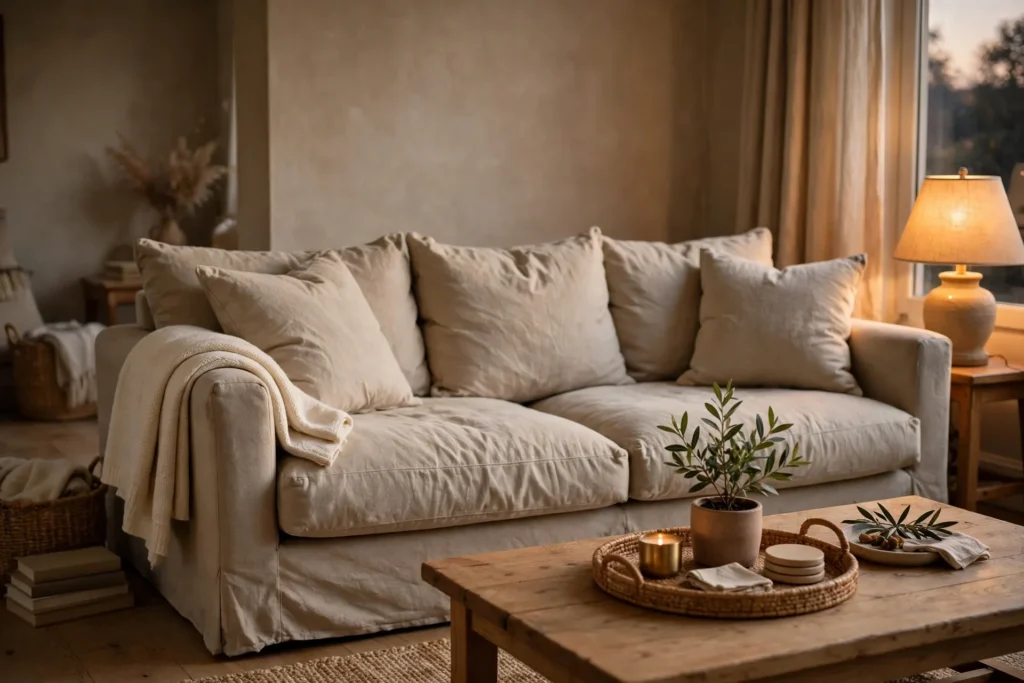
Modern vintage interior design mixes old pieces with clean, modern rooms. You keep the charm of vintage finds, yet the room still feels fresh and easy to live in. This guide shows how to pick vintage pieces, balance old and new, and avoid a cluttered look.
What Modern Vintage Interior Design Means
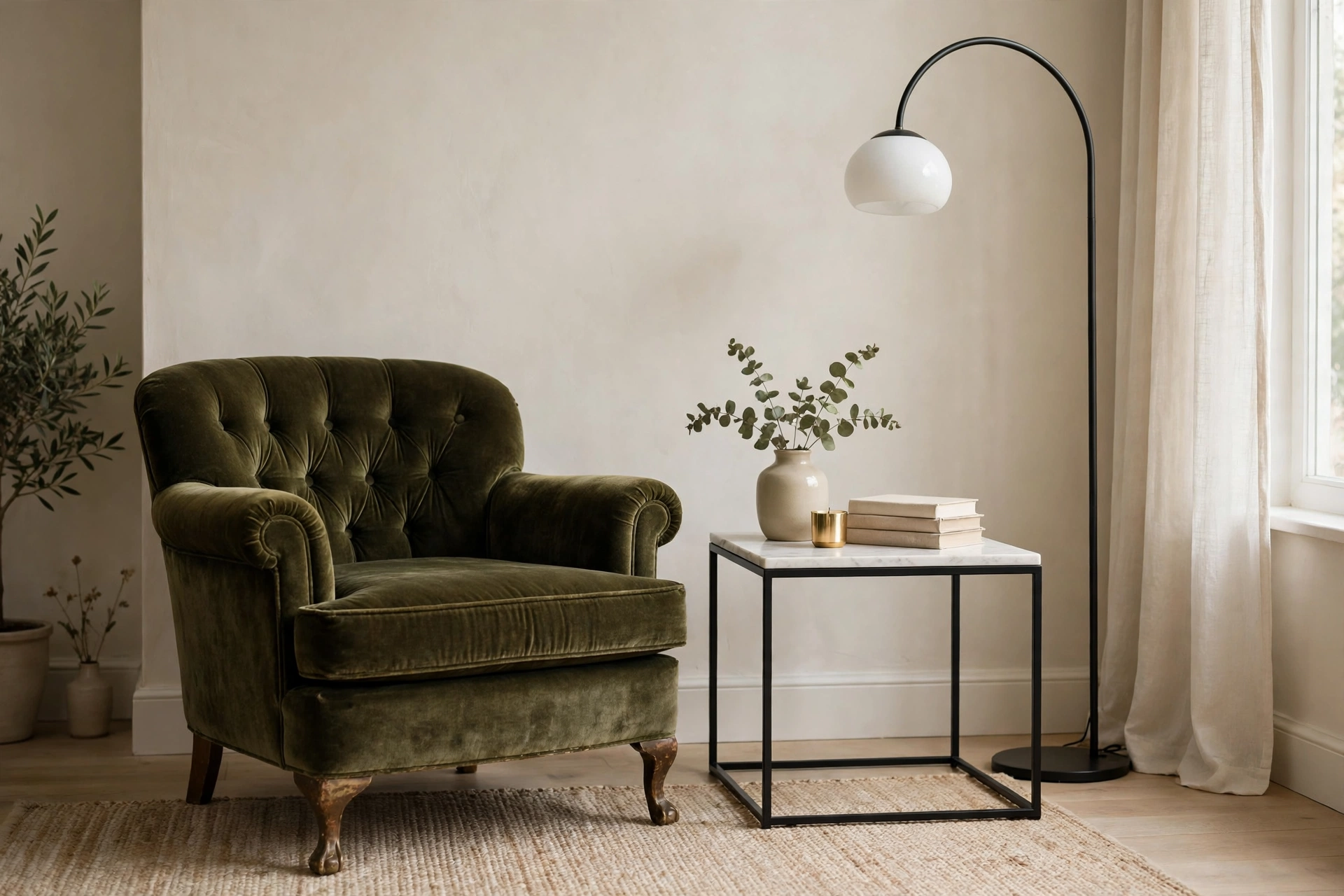
Modern vintage style is not a full period room. Instead, it pairs a few older pieces with modern shapes, calm colours, and open space. The vintage piece adds warmth and story. The modern base keeps the room from feeling heavy or dated.
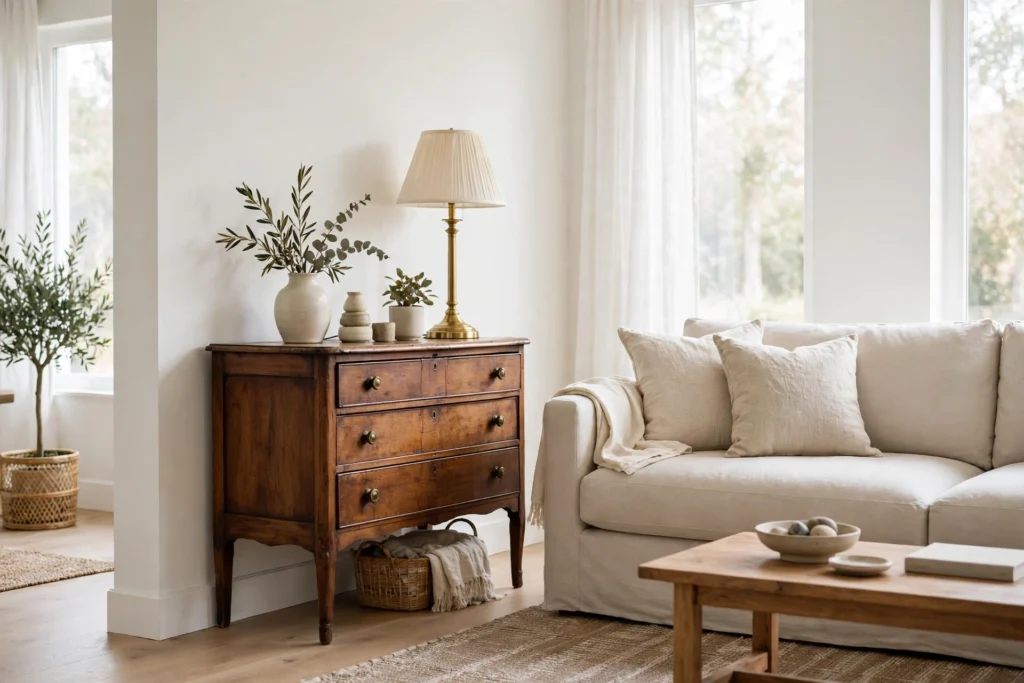
Think of a worn wooden sideboard beside a plain sofa. Or a brass lamp on a sleek side table. Each pair works because one side is old and one side is new. Neither side takes over the room.
Also, vintage does not mean fragile or precious. It means a piece with age, patina, or a design from an earlier era. It could be a family heirloom, a market find, or a second hand chair. The key test is simple. Does it add character without fighting the rest of the room?
In contrast, a room full of vintage items can feel like a museum. A room with no old pieces can feel flat and cold. Modern vintage sits in the middle. It feels collected over time, not bought in one day.
How to Pick Vintage Pieces That Work
Start with one hero piece per room. A hero piece is the vintage item people notice first. It could be a wooden dresser, a velvet armchair, or a large mirror. Pick one, then build the room around it.
Next, check the shape. Clean, simple vintage shapes blend best with modern rooms. A straight legged sideboard fits a modern space better than a heavily carved cabinet. Also, check the size. Measure the spot first, then measure the piece. A vintage find that blocks a walkway will annoy you daily, no matter how pretty it looks.
Then look at condition. Small wear is fine, and it often adds charm. However, wobbly legs, broken joints, or a musty smell are warning signs. Ask if the piece can be fixed with a simple repair. If it needs major work, walk away unless you love it deeply.
Also, think about use. A vintage piece should earn its place. A sideboard can hold board games and chargers. An old trunk can serve as a coffee table with storage inside. When a piece works hard, it feels at home rather than staged.
Finally, buy slowly. One strong vintage piece beats five weak ones. Live with your first pick for a few weeks. You will soon see what the room still needs, and what it does not.
The 70-30 Balance Rule
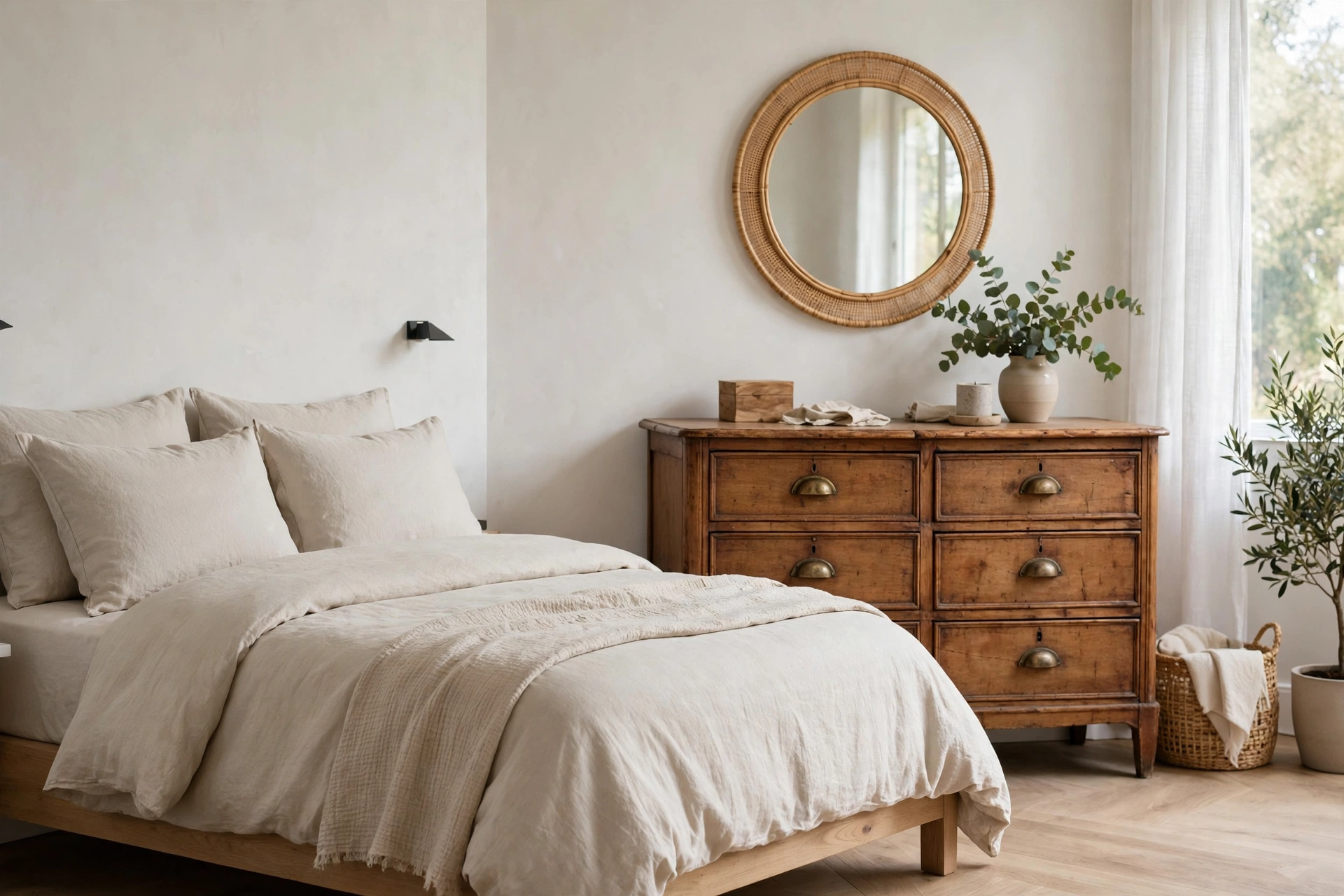
Balance is the heart of this style. A simple rule helps a lot. Aim for about 70 percent modern and 30 percent vintage in each room. The modern base covers large items like the sofa, the rug, and the wall colour. The vintage share covers accent pieces like side tables, lamps, art, and mirrors.
For example, a modern living room might have a plain sofa, a simple rug, and white walls. That is the 70 percent. Then add a vintage wooden coffee table, a brass floor lamp, and an old framed print. That is the 30 percent. The room now feels warm, yet it still breathes.
This rule also stops clutter. When you want a new vintage find, check the balance first. If vintage items already fill the room, skip it or swap one out. One in, one out keeps the mix honest.
Use this quick checklist before you buy any vintage piece:
- Does it have a clear job in the room, or is it just pretty?
- Does its size fit the spot, with room to walk past it?
- Does it share a colour, wood tone, or metal finish with something already there?
- Is it stable, clean, and easy to care for?
- Would the room still feel calm if you added it today?
If you answer no to two or more checks, leave the piece behind. A good find passes most of the list with ease. This habit saves money, and it saves you from rooms that slowly fill up.
Which Rooms Suit the Mix Best
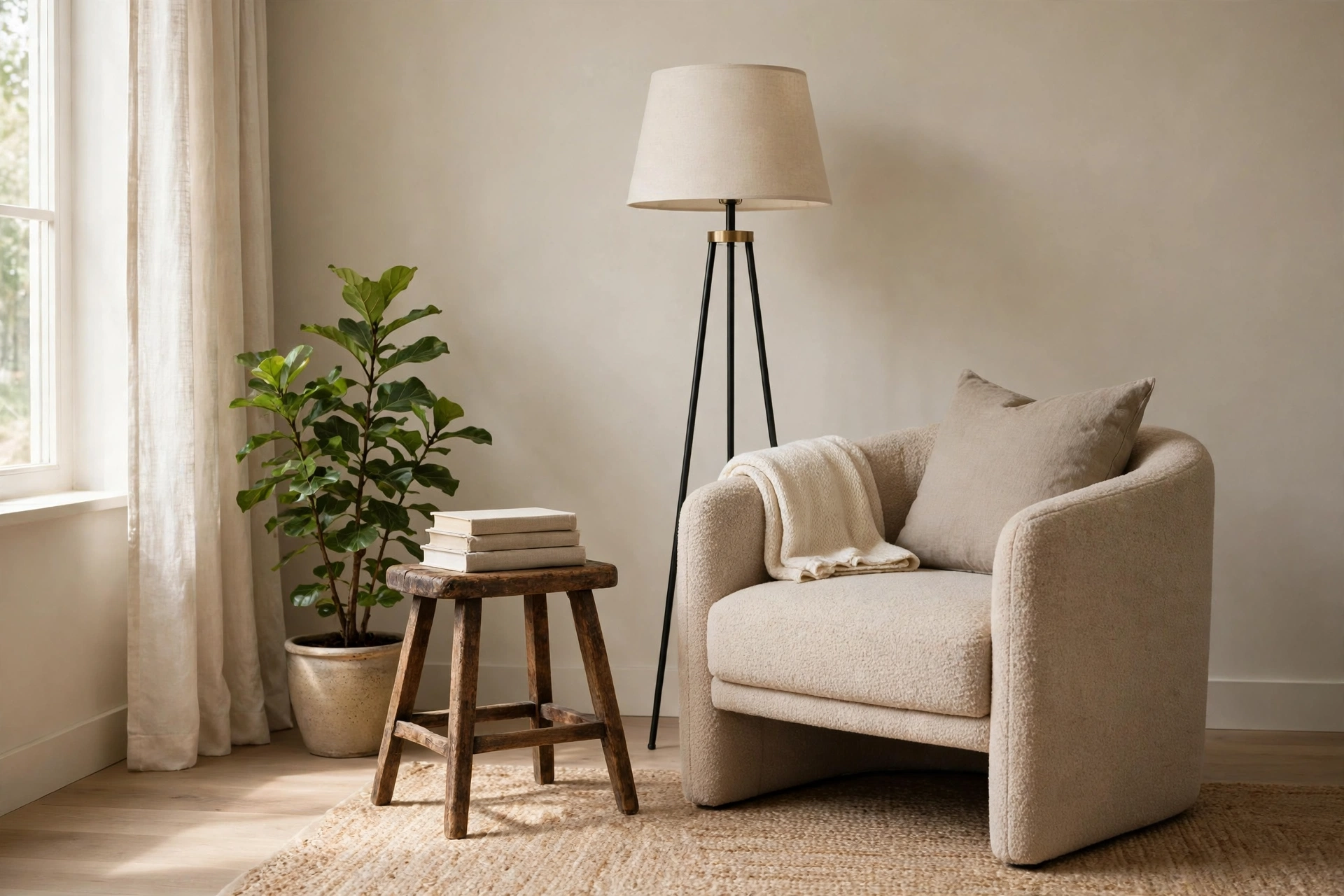
Living rooms suit this mix very well. They hold large furniture, so one vintage sideboard or coffee table makes a clear statement. Also, living rooms are social spaces. Guests notice a story filled piece, and it gives the room a talking point. For a warm base to pair with vintage wood, see these warm and cozy living room ideas.
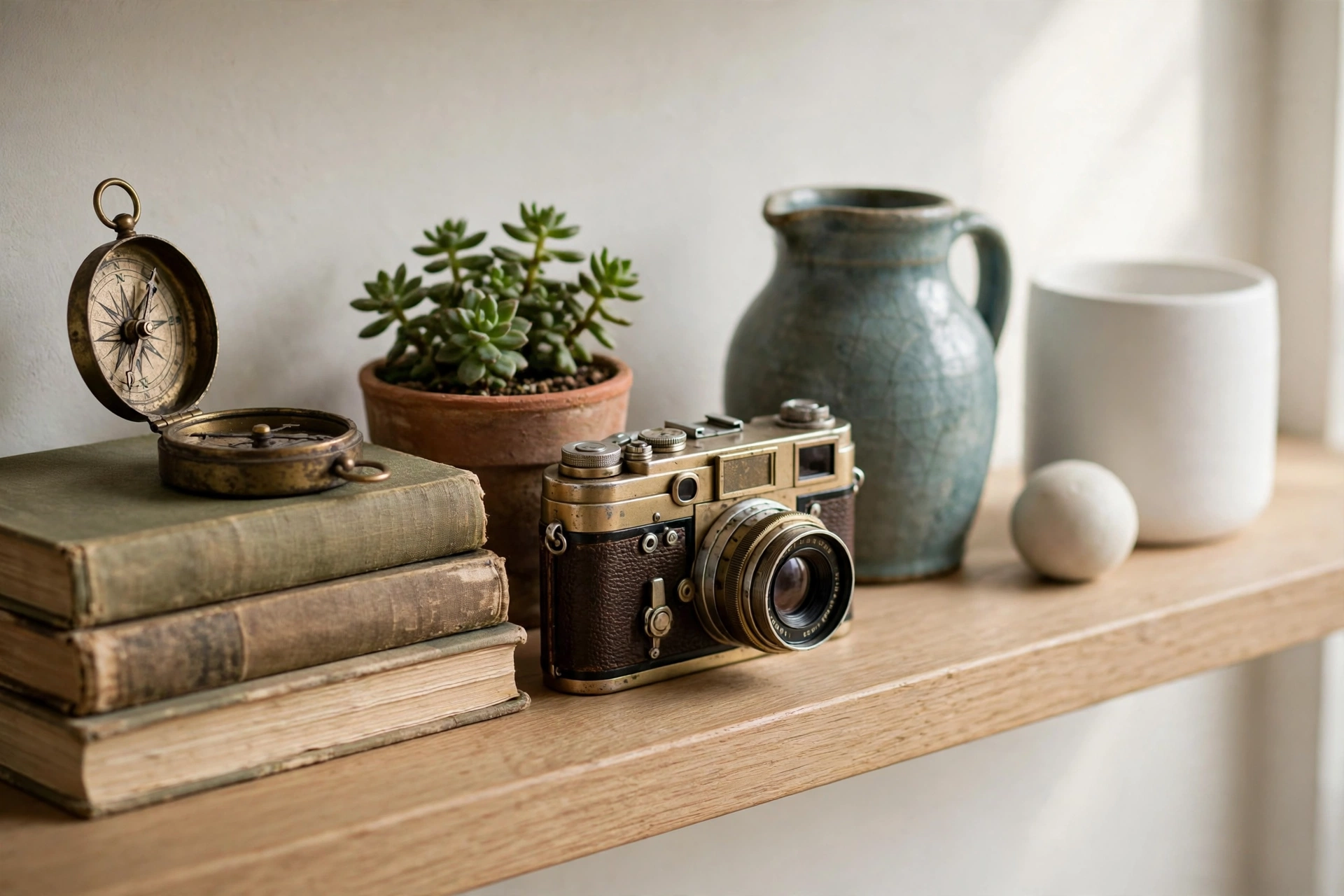
Bedrooms suit the mix too, but keep it soft. A vintage dresser or bedside table adds warmth without waking the room up. Pair it with plain bedding and calm walls. Then the vintage piece feels restful, not busy. For more bedroom styling help, see this guide on how to decorate your bedroom.
Home offices and reading corners are great for small vintage finds. An old desk lamp, a wooden crate for books, or a framed map can add charm fast. Since these rooms are small, one or two vintage items are plenty. More than that can crowd a desk and break focus.
Kitchens and dining rooms need care. A vintage hutch or set of mismatched chairs can look lovely. But keep worktops clear and paths open. In a kitchen, function comes first. If a vintage piece blocks cooking or cleaning, it does not belong there.
Bathrooms suit only small vintage touches. A wooden stool, an old mirror, or a brass tray can work well. Avoid large wooden pieces in damp spots, since moisture can damage them over time. Small touches give charm without risk.
Colour, Texture, and Light That Tie Old and New Together
Colour ties eras together. Pick a calm base first, such as warm white, soft grey, or pale sage. Then repeat one or two accent colours across old and new pieces. For example, if your vintage rug has rust tones, add a rust cushion on a modern sofa. That repeat makes the mix look planned.
Texture does the same job. Vintage wood, worn leather, and aged brass add roughness and warmth. Modern glass, smooth metal, and plain linen add calm and light. Mix both kinds in each room. A room with only smooth surfaces feels cold. A room with only rough textures feels heavy.
Light matters a lot too. Vintage pieces often have dark wood or deep colours, so they need good light to shine. Place a vintage sideboard near a window when you can. Add a modern lamp beside a dark vintage chair. Good light keeps old pieces from dragging the room down.
Also, watch your metal finishes. Brass, black metal, and chrome can all live in one room. But limit yourself to two main finishes per room. Too many metals at once can feel messy, even if each piece is lovely on its own.
Finally, use art to bridge the gap. Hang a vintage print in a plain modern frame. Or hang modern art above a vintage chest. That swap links the eras in one glance. For ideas on choosing and hanging art, see this guide to wall art for bedroom spaces, since the same framing tricks work in living rooms too.
Mistakes That Turn Vintage into Clutter
Too much vintage is the top mistake. When every item is old, the room stops feeling modern. It starts to look like a thrift shop, with no clear focal point. Remember the 70-30 rule. If you cannot see the modern base, remove a vintage piece or two.
Next, avoid matching eras too hard. A room full of items from one decade can feel like a film set. Mix decades lightly. A 1960s lamp can sit beside a 1980s mirror and a modern sofa. That mix feels collected, not staged.
Another mistake is ignoring scale. A huge vintage wardrobe can crush a small room. Likewise, tiny vintage trinkets can vanish in a large room. Match the piece to the room size, and give large pieces breathing room on all sides.
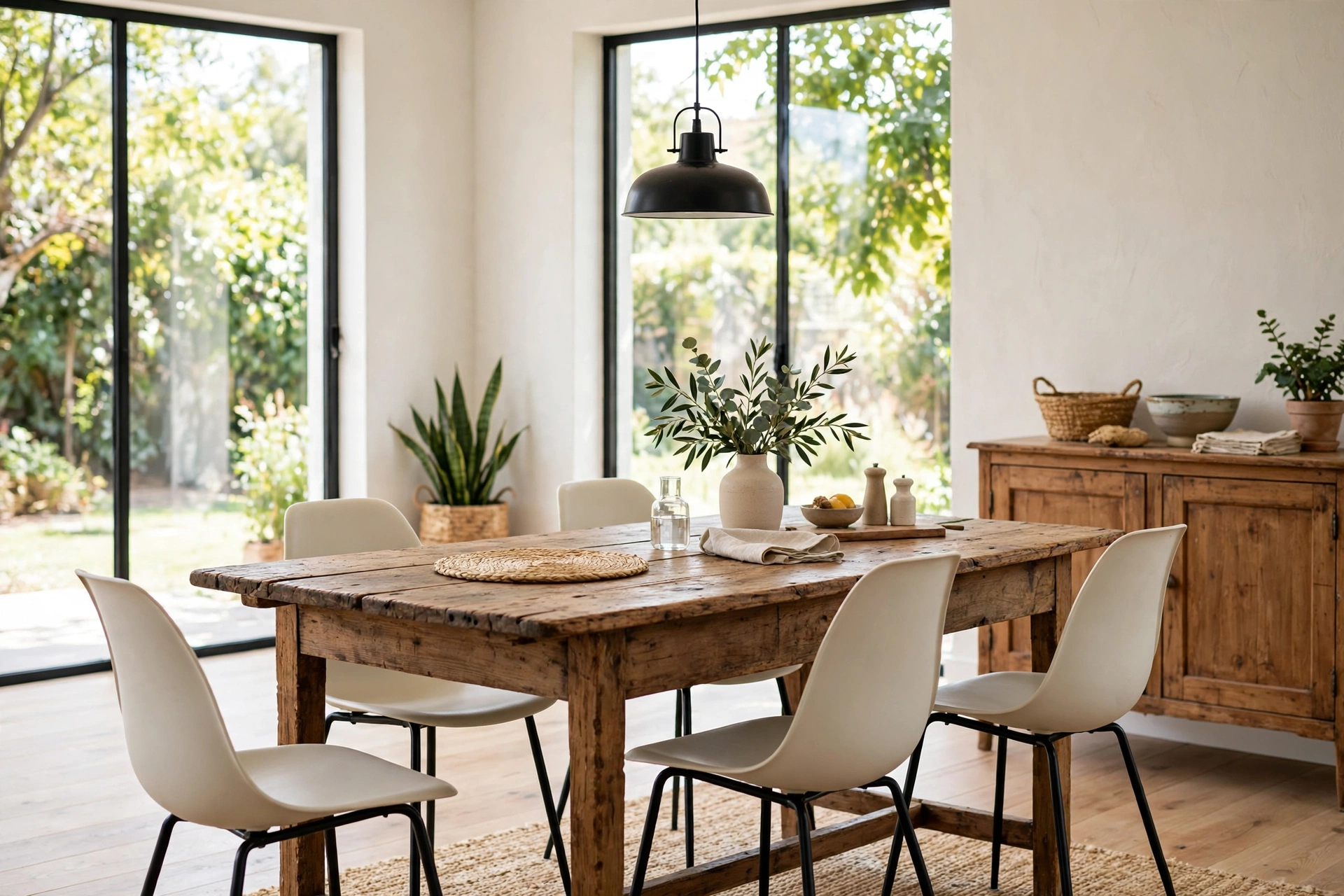
Also, avoid piling small vintage objects on every surface. A shelf with ten tiny items looks busy. A shelf with three well chosen items looks curated. Group small objects in odd numbers, and leave empty space around them. Empty space is not wasted space. It lets each piece stand out.
Finally, do not keep a vintage piece out of guilt. A gift from family or a pricey market find can feel hard to part with. But if it does not fit, it hurts the whole room. Move it to another room, or pass it on. Your home should serve your life, not store your guilt.
For help styling shelves without crowding them, see these book shelf decor ideas. The same rules apply here. Fewer pieces, clear groups, and space to breathe make vintage styling work.
A Room by Room Step Plan
Use this simple plan when you start a room from scratch. It keeps the mix balanced and stops impulse buys.
First, clear the room and note what stays. List the modern base pieces you already own, such as the sofa, bed, or desk. Next, pick your one hero vintage piece. Measure its spot and check the balance rule before you buy.
Then set your palette. Choose a calm wall colour and two accent colours. Pull one accent colour from the vintage piece itself. This step links old and new from the start.
After that, add vintage accents one at a time. Start with lighting, since lamps change a room fast. Then add one wooden piece, such as a side table or stool. Finally, add art or a mirror. Pause after each step and live with the room for a few days.
Next, check the balance. Stand at the door and scan the room. Can you spot the modern base at once? Does one vintage piece lead, with the rest supporting it? If the room feels busy, remove the weakest vintage item.
Finish with Plants and Textiles
Finally, finish with plants and textiles. A plant softens dark wood, and a plain throw calms a patterned vintage rug. For plant styling that suits mixed rooms, see these plant decor ideas. Small, living touches keep the room feeling fresh rather than frozen in time.
Designers agree that restraint makes this mix work. In a guide on mixing old and new, Homes and Gardens notes that a room can only handle so many bold moments before it tips into chaos, and that thoughtful restraint is key. For more on that balance, read this guide to mixing old and new without chaos.
Also, small updates can modernise a vintage piece without erasing its charm. Swapping hardware, adding a modern lamp beside it, or hanging fresh art above it can shift the whole feel. For practical ideas, see this guide to modernising antique furniture.
Frequently Asked Questions
What does modern vintage style mean?
This style mixes a few older, character filled pieces with a clean modern base. The modern base covers large items like sofas, rugs, and wall colours. Vintage pieces add warmth, texture, and story as accents. The goal is a room that feels collected and lived in, not themed or cluttered.
How many vintage pieces should a room have?
One hero piece plus two or three smaller vintage accents works well in most rooms. Aim for about 70 percent modern and 30 percent vintage overall. Small rooms need even fewer vintage items, since each one shows more. If the room starts to feel busy, remove the weakest piece first.
How do I stop vintage decor from looking like a thrift shop?
Keep a calm modern base and limit vintage items to a clear share of the room. Give each vintage piece space around it, and avoid filling every surface with small old objects. Repeat one colour or finish across old and new pieces. That repeat makes the mix look planned rather than random.
Can I mix vintage pieces from different decades?
Yes, mixing decades often looks better than matching one era exactly. A 1960s lamp can sit well beside a newer sofa and an older mirror. The trick is a shared colour, wood tone, or scale that links them. Avoid filling a room with items from one decade only, since that can feel like a film set.
What vintage pieces are best for beginners?
Start with pieces that are easy to place and hard to get wrong. A wooden side table, a brass lamp, a framed vintage print, or a simple mirror are all safe first picks. They add warmth without taking over the room. Avoid large carved cabinets at first, since they are harder to balance in modern spaces.
Should I repaint or restore a vintage find?
Only restore what improves use or safety, such as fixing a wobbly leg or cleaning grime. Keep original patina when you can, since it carries the charm. A fresh coat of paint can help a tired piece, but test it first and keep the change simple. If a piece has real antique value, get advice before you alter it.
Conclusion
This mix works when old pieces add warmth and new pieces add calm. Pick one hero vintage item, keep the 70-30 balance, and give each piece room to breathe. Your next step is simple: choose one room, pick one vintage piece, and style it beside your modern base this week.