

A christmas floral arrangement brings fresh color, scent, and warmth into your home for the holidays. It can be a small vase of pine branches, or a grand table centerpiece. In this guide, you will learn which flowers and greens to use, how to build table, mantel, and entryway arrangements, and how to keep them fresh all season.
What Makes a Christmas Floral Arrangement Special
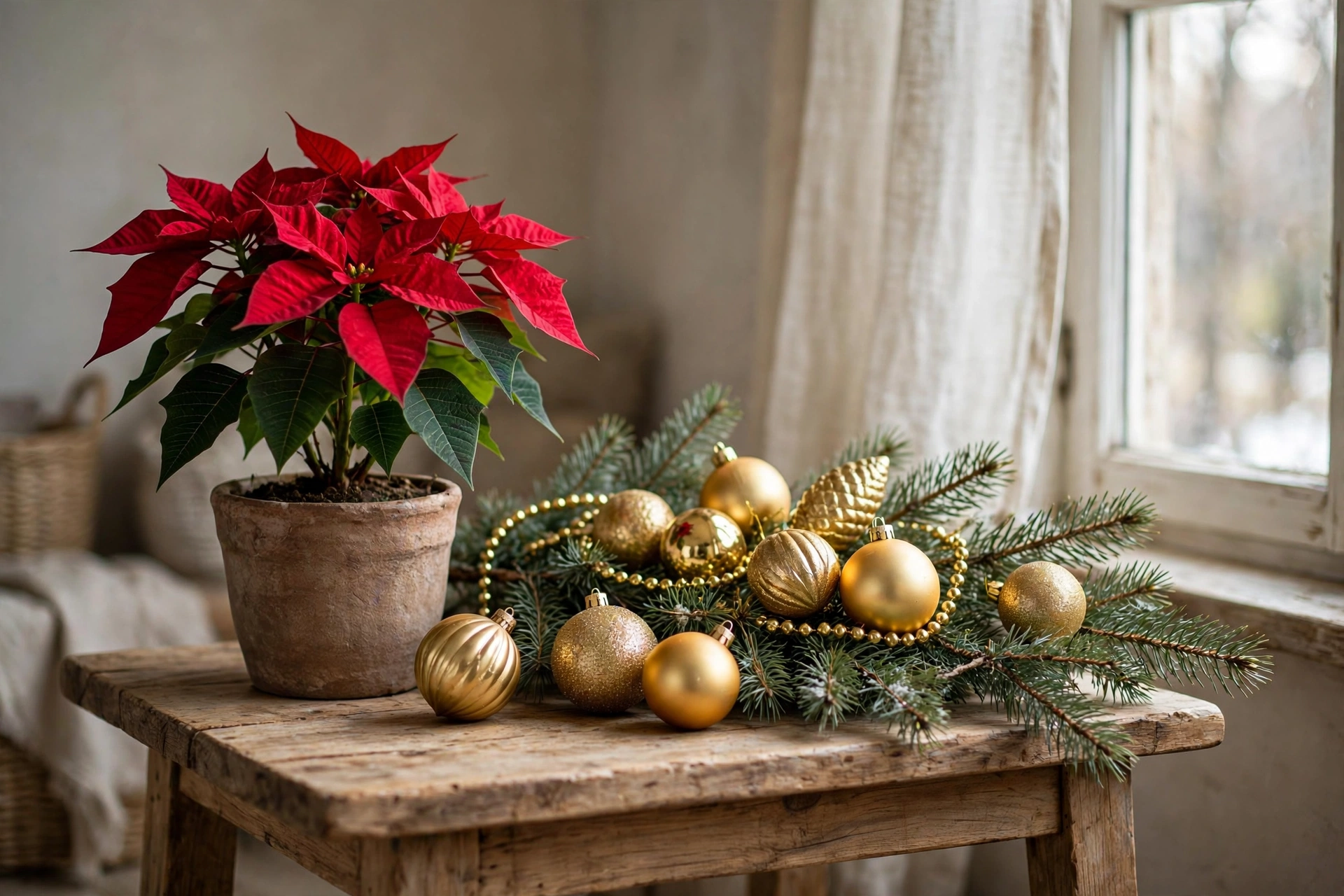
A christmas floral arrangement is different from everyday flowers. It uses seasonal plants that only shine in winter, such as poinsettias, holly, and fresh evergreens. These plants carry the colors and scents we link with Christmas. Red, green, white, and gold all work together in one display.
In addition, a holiday arrangement sets the mood for the whole room. A single centerpiece can make a plain dining table feel festive. Similarly, a mantel arrangement can turn a fireplace into the focal point of the living room. For that reason, many families build one main arrangement first, then add smaller ones around the house.
Finally, Christmas arrangements are meant to last for weeks, not days. That means you need to pick hardy greens and care for them well. With the right choices, your arrangement can look fresh from the first week of December right through to New Year.
Poinsettias: The Classic Christmas Flower
Poinsettias are the most famous Christmas flower, and for good reason. In fact, their bright red, pink, or white bracts look like petals, but they are actually colored leaves. The tiny yellow flowers sit in the center of each cluster. Together, they create a bold splash of color that suits any holiday room.
First, choose a healthy plant when you shop. Look for full, even color and firm leaves with no yellow edges. Also, check that the soil feels slightly moist, not dry or soaking wet. A plant with drooping leaves has already been stressed, so skip it.
Next, give your poinsettia the right spot at home. It likes bright, indirect light and room temperatures between 65 and 70 degrees Fahrenheit. Keep it away from cold drafts, heat vents, and fireplaces, since sudden temperature swings can make it drop leaves. Water only when the soil surface feels dry to the touch, and always let the pot drain fully.
For more detail on poinsettia care, see the University of Minnesota Extension guide to poinsettias. It explains light, water, and temperature needs in plain terms.
Poinsettias also work well inside mixed arrangements. For example, you can place a small potted poinsettia in a basket, then tuck pine branches and pinecones around the pot. This hides the plain pot and gives the plant a fuller, more festive look. However, keep the plant in its own pot so you can water it without soaking the other greens.
Note the contrast here: everyday houseplants stay in your home all year, while poinsettias are seasonal stars. If you enjoy year-round greenery, our guide to indoor plant styling shows how to style plants for daily living. Christmas arrangements, by contrast, are built for one joyful season.
Evergreens, Holly, and Amaryllis
Evergreen branches form the backbone of most Christmas arrangements. Pine, fir, cedar, and spruce all hold their needles well indoors, and they add a fresh forest scent. Fraser fir tends to hold its needles longer than many other types, so it is a smart pick for arrangements that must last for weeks.
Meanwhile, holly adds a second layer of interest. Its glossy green leaves and bright red berries give instant Christmas color. However, holly berries can be toxic if eaten, so keep holly arrangements out of reach of small children and pets. Also, avoid letting cut holly freeze, since frozen berries and leaves may turn black.
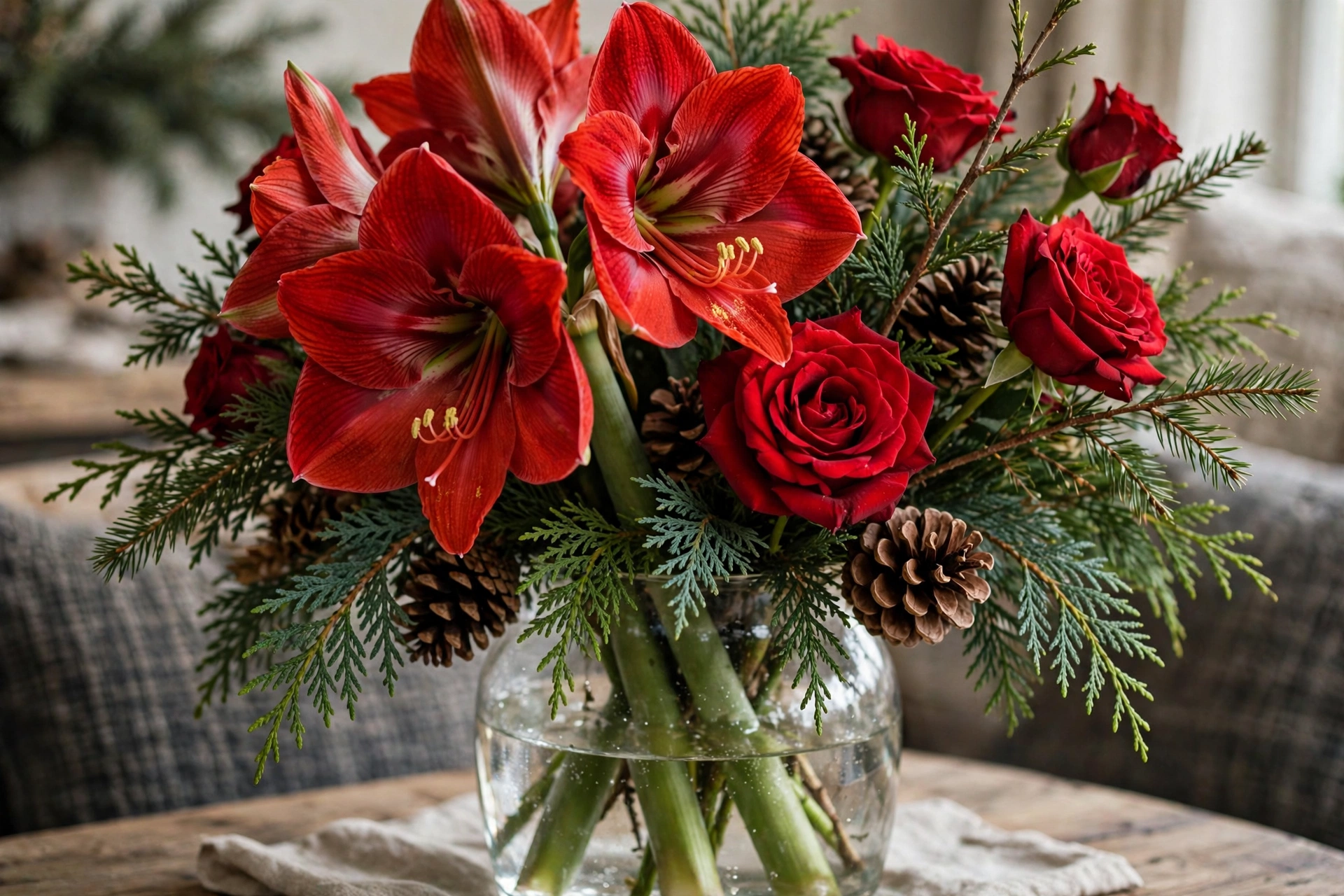
In addition, amaryllis brings height and drama to holiday displays. Its large trumpet-shaped blooms open in red, white, pink, or striped patterns. A single amaryllis stem in a tall vase can anchor a whole arrangement. In addition, amaryllis bulbs can be grown in a pot and reused as a living plant after the holidays.
Other seasonal flowers also deserve a place. Paperwhites offer sweet scent and white blooms, while red roses add classic elegance to a centerpiece. Anemones in deep red or white give a modern twist. Mix one or two of these with evergreens, and your arrangement will look full without feeling crowded.
Christmas Floral Arrangement Ideas for the Table
The dining table is the heart of holiday gatherings, so your centerpiece deserves care. Start with a low, wide container so guests can still see each other across the table. A shallow bowl, a wooden box, or a long tray all work well.
First, lay a base of evergreen branches across the container. Let the branches spill slightly over the edges for a natural look. Next, add three or five candles in holders of different heights. Then, tuck in poinsettia blooms, holly sprigs, and pinecones between the greens. Finally, add a few small ornaments or a string of beads for sparkle.
Above all, keep the centerpiece low, no more than about 12 inches tall in the middle, so conversation stays easy. If your table is long, make two smaller arrangements instead of one huge piece. That way, every guest gets a view of the flowers. For more ideas on setting the table itself, see our guide to traditional dining room styling.
For a simpler table look, try a runner of loose greens down the center of the table. Lay pine and cedar branches end to end, then scatter candles and a few red berries along the runner. This style looks relaxed and lush, and it costs less than a formal arrangement. In addition, you can refresh it easily by swapping out any tired branches.
Mantel Arrangements That Frame the Room
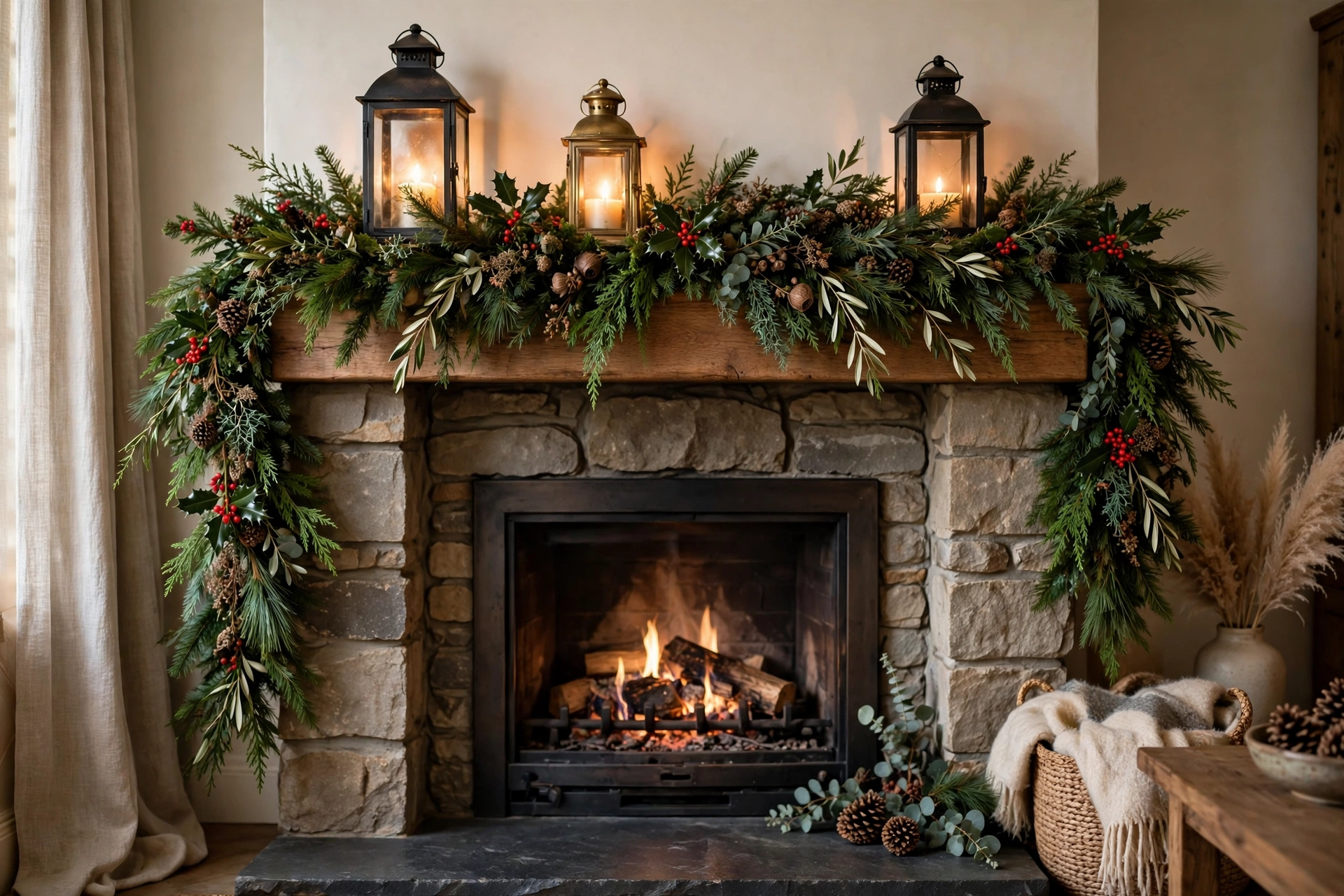
A mantel arrangement frames your fireplace and draws the eye upward. Start with a long garland of mixed evergreens as the base. Drape it along the mantel, and let the ends hang down slightly on each side. This soft, flowing shape looks natural and welcoming.
Next, add height at the ends with tall branches or slim candlesticks. Then, place a focal point in the center, such as a small wreath, a lantern, or a vase of amaryllis stems. After that, fill gaps with holly sprigs, pinecones, and small ornaments. Step back often to check the balance from across the room.
Above all, safety matters on a mantel. Keep all fresh greens and dried items well away from open flames and hot surfaces. Never place candles directly under a garland, and never leave burning candles unattended. If you use a real fire, choose a simpler mantel display with fewer flammable items, or use battery candles for a safe glow.
For a modern mantel, try a single line of eucalyptus mixed with pine, plus white candles and silver ornaments. For a classic look, use deep green fir, red berries, and gold ribbon. Both styles work, so pick the one that matches the rest of your room.
Entryway Arrangements for a Warm Welcome
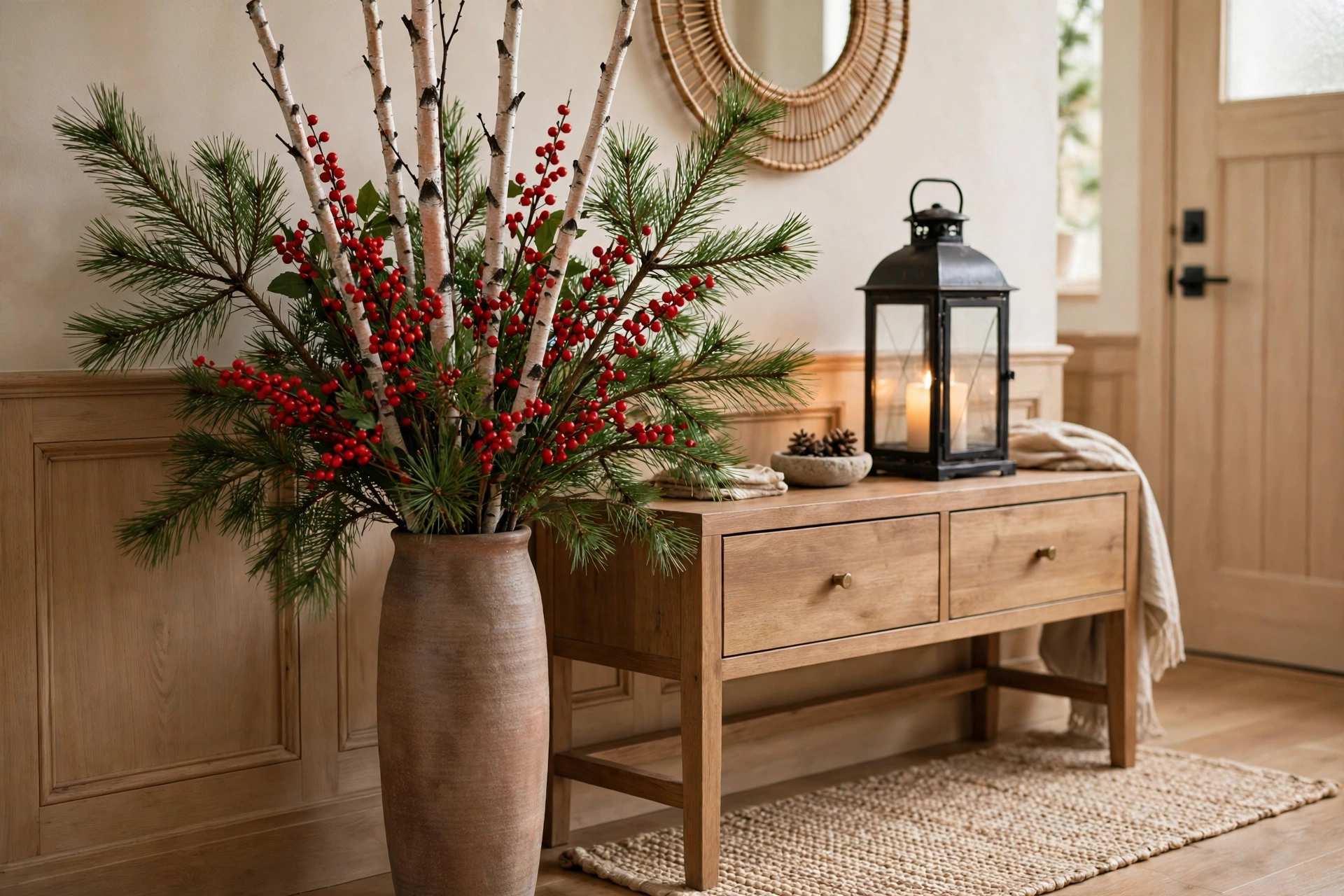
First of all, the entryway is the first place guests see, so a Christmas arrangement here sets the tone. A tall vase of pine branches, red berries, and curly willow stems makes a strong first impression. Place it on a console table, and add a small lantern beside it for warmth.
Alternatively, flank your front door with two matching planters. Fill each with evergreen branches, birch stems, and a few red ornaments. This symmetrical look feels grand and festive. In addition, outdoor planters last longer in cool air, so they need less care than indoor pieces.
Inside the entry, a small bowl of pinecones, holly, and a single amaryllis stem can sit on a side table. Keep the scale small so the space stays easy to walk through. Finally, add a scented candle or a sprig of fresh cedar near the door, since scent is often the first thing guests notice.
Arrangement Recipes by Spot
In short, use this table as a quick recipe guide. Pick the spot, then gather the listed base, stars, and extras.
| Spot | Base greens | Star flowers | Extras |
|---|---|---|---|
| Dining table centerpiece | Pine and fir branches | Poinsettia blooms, red roses | Candles, pinecones, gold beads |
| Fireplace mantel | Mixed evergreen garland | Amaryllis stems, holly sprigs | Lantern, ornaments, ribbon |
| Entryway console | Pine and cedar branches | Red berries, paperwhites | Lantern, birch stems |
| Side table or shelf | Cedar sprigs | Single amaryllis stem | Pinecones, small candle |
| Front door planters | Fir and pine branches | Holly, red ornaments | Birch stems, ribbon bow |
This recipe approach saves time and avoids guesswork. Once you know the base and the stars, you can shop with a clear list. As a result, you spend less and waste fewer stems.
Keeping Arrangements Fresh All Season
First, fresh greens dry out over time, so a simple care routine makes a big difference. Cut stems at an angle before arranging, and place cut ends in water right away. This helps the stems take up more water. Keep arrangements in a cool spot, away from direct sun, heat vents, and fireplaces.
Check water levels every day, and top up as needed. Mist evergreen branches lightly with water if your home air feels dry. Remove any needles or blooms that turn brown, since one dry piece can make the whole arrangement look tired. With steady care, most evergreen arrangements stay fresh for two to four weeks.
For expert tips on keeping cut greens fresh, read the NC State Extension guide to holiday greenery. It covers cutting, watering, and placement in clear steps.
Freshness Care Schedule
| When | What to do |
|---|---|
| Day 1: Build day | Cut stems at an angle, soak greens in water overnight if possible, arrange in a water-filled container |
| Every day | Check water level, top up, remove fallen needles and faded blooms |
| Every 3 to 4 days | Mist evergreens lightly, trim any brown stem ends, refresh water in vases |
| Week 2 | Replace tired holly or flowers, add fresh cedar sprigs to fill gaps |
| Week 3 to 4 | Swap out dry branches, keep the arrangement cool and out of direct sun |
| After the season | Compost greens, save reusable containers, vases, and ornaments |
Meanwhile, potted poinsettias need a different routine. Water when the soil surface feels dry, and empty any saucer so the pot never sits in water. Keep the plant in bright, indirect light. With this care, poinsettia color can last for many weeks.
Safety Tips for Fresh Greens and Candles
Above all, fresh greenery looks lovely, but dry greens can catch fire easily. Keep every arrangement away from candles, fireplaces, and heaters. Check branches often with a simple bend test: if needles bend, the branch is still fresh, but if they snap or crumble, replace that branch right away.
Use sturdy candle holders, and place candles where they cannot tip over. Never leave burning candles alone in a room. Battery candles give the same warm glow with no risk, so they are a smart choice near garlands and centerpieces.
Also, keep holly berries and poinsettia sap away from children and pets. Holly berries can cause illness if eaten, and poinsettia sap can irritate skin. Wear gloves when you handle poinsettia stems, and wash your hands after arranging. These small steps keep the holidays safe and joyful.
Seasonal Decor Flow: From Fall to Christmas

In fact, Christmas arrangements do not appear out of nowhere. They follow the seasonal decor you already have in place. Many homes move from warm fall colors to fresh winter greens in late November. That shift feels natural when you swap autumn leaves and pumpkins for pine, holly, and red blooms.
If you decorated for fall, you can reuse some pieces. Wooden trays, lanterns, and neutral vases work for both seasons. Simply replace fall foliage with evergreens, and change orange accents to red and gold. This saves money and keeps your home looking fresh. For fall ideas that lead into this change, see our guide to decorating tips for fall.
Finally, plan your Christmas arrangements for the last week of November or the first week of December. That timing gives evergreens the longest fresh life through Christmas and New Year. If you build too early, greens may dry out before the big day.
Frequently Asked Questions
How long does a fresh holiday arrangement last?
A fresh evergreen arrangement usually lasts two to four weeks with daily water checks and a cool spot away from heat. Potted poinsettias can hold their color for six to eight weeks with bright, indirect light and careful watering. Replace tired stems as needed to extend the display.
Which flowers are best for a Christmas centerpiece?
Poinsettia blooms, red roses, amaryllis stems, and paperwhites all work well in a centerpiece. Pair them with pine, fir, or cedar branches for a full look. Add holly sprigs and pinecones for texture and color. Keep the arrangement low so guests can talk across the table with ease.
How do I keep cut evergreens from drying out?
Cut stems at an angle and place them in water right away. Keep arrangements cool and out of direct sun and away from heat vents. Check water daily and mist branches lightly in dry indoor air. Replace any branch whose needles snap instead of bending, since that branch is dry.
Can I use poinsettias in a cut flower arrangement?
Yes, you can use poinsettia stems as cut flowers, but they need special care. Seal the cut stem end briefly in hot water to stop the sap flow, then place the stem in cool water. Cut poinsettias last about one to two weeks. For a longer display, use potted poinsettias tucked into a basket instead.
Are holiday floral arrangements safe around pets?
Some holiday plants need care around pets. Holly berries can cause illness if eaten, and poinsettia sap can irritate skin and stomachs. Keep these plants out of reach, and choose safer options like roses, paperwhites, and plain evergreens for low displays. Check with your vet if a pet eats any holiday plant.
When should I build my Christmas arrangements?
Build evergreen arrangements in late November or early December for the best fresh life through Christmas. Potted poinsettias can be bought earlier, since they last longer indoors. If you host a New Year party, refresh your arrangements in the last week of December with new cedar and holly sprigs.
Conclusion
In short, a christmas floral arrangement is one of the simplest ways to make your home feel festive. Start with fresh evergreens, add poinsettias or amaryllis for color, and finish with candles and pinecones for warmth. Care for your arrangement with daily water checks, and it will stay fresh through the whole season. This year, build one arrangement you love, then enjoy it every day until the holidays end.